


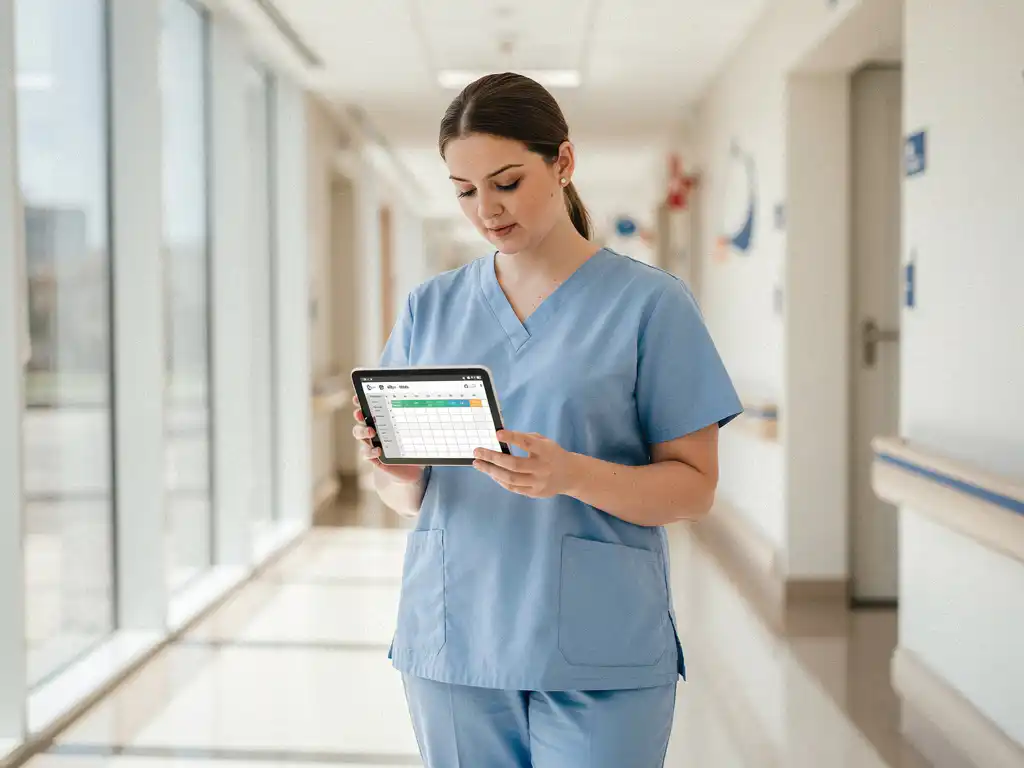
Fall prevention for seniors is becoming increasingly important in a time when healthcare organizations are struggling with staff shortages and growing demand for care. The impact of effective fall prevention extends far beyond the direct safety of residents and has major implications for how care teams organize and plan their work. By implementing smart technology, senior care facilities can not only improve the well-being of their residents but also optimize their staffing plans.
In this article, we explore how fall prevention systems affect the workload of care staff, what cost savings are possible, and how to successfully implement this technology without causing staff turnover.
What is fall prevention and why is it crucial for senior care facilities?
Fall prevention for seniors encompasses all measures and technologies aimed at preventing fall incidents or minimizing their consequences. This includes both proactive measures, such as environmental modifications, and reactive systems that immediately sound an alarm when a fall is detected.
For senior care facilities, fall prevention is crucial because falls are the most common cause of injuries among older adults. Approximately 30% of people over 65 fall at least once per year, and this percentage rises to 50% for people over 80. The consequences can be severe: from bone fractures to head injuries and, in the worst case, death.
Modern fall prevention systems use artificial intelligence and computer vision to provide 24/7 monitoring. This technology can analyze movement patterns, recognize unsafe situations, and immediately sound an alarm when someone falls. The advantage is that care staff are alerted within seconds, enabling rapid assistance and preventing serious complications.
How does fall prevention technology affect the daily workload of care staff?
Fall prevention technology significantly reduces the daily workload of care staff by taking over continuous monitoring and only alerting when actual intervention is needed. This means staff can focus on other important care tasks instead of having to maintain constant physical supervision.
Traditionally, care staff had to make regular rounds to check if residents were safe. This consumed a lot of time and often interrupted other care tasks. With fall prevention systems, staff only receive an alert when something is actually wrong. This results in a more efficient way of working where the focus is on quality of care rather than routine checks.
Additionally, the technology helps reduce stress and anxiety among staff. Care workers often worry about residents who are alone, especially during night shifts. With reliable fall detection, they can be confident that they will be immediately alerted if help is needed, leading to greater peace of mind and confidence.
What cost savings does fall prevention realize in staffing plans?
Fall prevention systems realize significant cost savings in staffing plans by reducing the required staffing for supervision and preventing costly fall incidents. Organizations can deploy their staff more efficiently and need fewer employees scheduled for purely monitoring tasks.
The greatest cost savings come from preventing fall incidents themselves. An average fall incident in a care facility costs between 15,000 and 25,000 euros in direct medical costs, rehabilitation, and additional care. By preventing falls or minimizing their consequences through rapid intervention, these costs can be drastically reduced.
Additionally, fall prevention technology provides better work-life balance for employees. Less stress and more efficient working methods lead to less sick leave and lower staff turnover. This saves significant costs for recruitment, selection, and training of new staff. Studies show that replacing one care worker costs an average of 20,000 euros.
How do you implement fall prevention systems without causing staff turnover?
Successful implementation of fall prevention systems requires careful planning, extensive training, and transparent communication with staff about the benefits and operation of the technology. It is essential to involve employees in the implementation process from the beginning.
Start by organizing information sessions where you explain how the technology works and what benefits it offers for both residents and staff. Emphasize that the system is not intended to replace staff, but to support them in their work. Show how the technology respects privacy by only sounding an alarm when necessary, without images being viewed by humans.
Ensure thorough training so all employees know how to work with the system. Start with a pilot phase in a limited number of rooms so staff can get used to the new way of working. Collect feedback and adjust the implementation based on employee experiences. Communicate regularly about the positive results and improvements the system delivers.
How Kepler Vision Technologies helps with fall prevention for seniors
We at Kepler Vision Technologies offer advanced AI solutions specifically developed to address the challenges of fall prevention in senior care facilities. Our systems help care organizations in various ways:
- 24/7 monitoring: Our Kepler Night Nurse continuously watches over residents and immediately detects when someone falls, alerting care staff within seconds.
- Minimal false alarms: With only one false alarm per 92 days, our technology is 1,000 times more reliable than traditional systems.
- Privacy guaranteed: Images are never viewed by humans; care staff only enter the room when the software requests it.
- Simple implementation: Our plug-and-play concept ensures easy installation without major changes to existing infrastructure.
Want to learn more about how our fall prevention technology can optimize your staffing plans? Contact us through our website for a personal conversation about the possibilities for your care organization.
Frequently Asked Questions
How long does it take for staff to get used to fall prevention systems?
Most care workers get used to fall prevention systems within 2-4 weeks. By starting with a pilot phase and organizing regular feedback sessions, employees can gradually become familiar with the technology. Experience shows that resistance often disappears once staff experience the benefits in practice.
What happens if the fall prevention system temporarily fails?
Modern fall prevention systems have built-in backup systems and immediately warn of technical malfunctions. During maintenance or outages, care facilities fall back on traditional control methods. It is important to have clear protocols for such situations and train staff about them.
Can fall prevention systems also detect other care situations besides falls?
Yes, advanced AI systems can also recognize other emergency situations, such as when someone lies motionless on the ground for extended periods, shows unusual movement patterns, or needs help getting up. This makes the technology even more valuable for overall resident care and staff support.
How do you determine which rooms get priority during implementation?
Start with rooms of residents with the highest fall risk: people with dementia, mobility limitations, or a previous fall history. Rooms where many fall incidents have occurred are also priority. Start small with 5-10 rooms to gain experience before expanding to other departments.
What training do care workers need for fall prevention systems?
Employees need basic training on interpreting alarms, using the interface, and protocols for fall detection. Privacy aspects and explaining the system to residents and families is also important. Most suppliers offer 2-4 hours of training, followed by practical guidance in the first weeks.
How do you communicate about fall prevention technology with residents and their families?
Be transparent about how the system works, what benefits it offers, and how privacy is guaranteed. Organize information meetings and provide written information. Emphasize that the system improves care and enables faster help. Give families the opportunity to ask questions and voice concerns.
Related Articles
- How does fall prevention for elderly people scale to multiple locations?
- What are the energy-saving aspects of fall prevention for elderly people?
- What role does innovation play in improving patient safety?
- How can healthcare institutions strategically deploy innovation?
- Why is innovation becoming increasingly crucial in the healthcare sector?
This content was generated with the help of AI and it may contain mistakes