


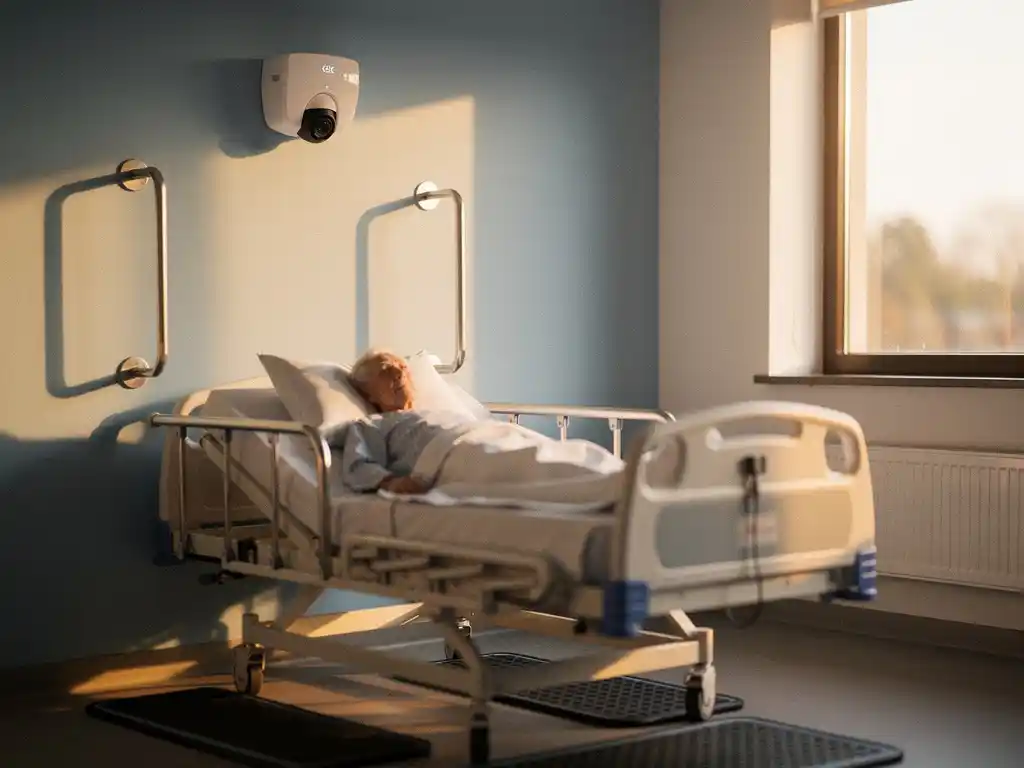
Fall prevention for seniors is a crucial investment for healthcare organizations, but effective equipment requires regular maintenance to function optimally. At Kepler Vision Technologies, we understand that healthcare professionals want to know what maintenance requirements come with fall detection systems.
From cameras to sensors: every component of fall prevention equipment has specific maintenance requirements that determine reliability and lifespan. This article answers the key questions about maintaining fall prevention technology.
What is fall prevention equipment and why does it need maintenance?
Fall prevention equipment consists of integrated systems of cameras, sensors, and software that monitor the movements of seniors to detect or prevent falls. This technology needs maintenance because electronic components wear out, software updates are required, and sensors need calibration.
The equipment operates 24/7 in healthcare environments where dust, moisture, and temperature fluctuations can affect performance. Camera lenses can become dirty, sensors can drift out of alignment, and software can become outdated. Without regular maintenance, accuracy decreases and the risk of false alarms or missed detections increases.
Modern AI systems like our Kepler Night Nurse require specific maintenance of computer vision components and machine learning algorithms to maintain the unprecedented reliability of just one false alarm per 92 days.
How often should fall prevention equipment be maintained?
Fall prevention equipment should be visually inspected monthly, thoroughly cleaned quarterly, and professionally serviced annually. The exact frequency depends on environmental factors and the type of technology being used.
For camera-based systems, monthly lens cleaning is essential, while sensors should be calibrated quarterly. Software updates may be needed more frequently, sometimes monthly, depending on the vendor and new functionalities.
Healthcare organizations should establish a maintenance schedule that accounts for the specific environment. Rooms with high dust or moisture require more frequent cleaning, while high-traffic areas show more component wear.
Which components of fall detection systems require the most maintenance?
Cameras and sensors require the most maintenance in fall detection systems, followed by mounting hardware and network components. These parts are most exposed to environmental influences and mechanical wear.
Camera lenses collect dust and fingerprints, which reduces image quality. Mounting brackets can loosen due to vibrations and temperature changes. Sensors can drift, causing sensitivity changes.
- Camera lenses – weekly cleaning recommended
- Mounting hardware – monthly check for loosening
- Sensors – quarterly calibration check
- Cabling – annual inspection for wear
- Software – regular updates according to vendor schedule
How much does maintenance of fall prevention equipment cost?
Maintenance of fall prevention equipment costs an average of 10-15% of the purchase price per year, including preventive maintenance, software updates, and any repairs. This amount varies significantly depending on the type of system and environmental factors.
Basic maintenance costs include cleaning supplies, calibration tools, and labor time from technical personnel. More advanced systems may incur higher maintenance costs due to specialized expertise and more expensive replacement parts.
Healthcare organizations must account for both planned and unplanned maintenance costs. Preventive maintenance prevents expensive failures and extends equipment lifespan, ultimately proving cost-effective.
Can healthcare staff perform maintenance on fall detection systems themselves?
Healthcare staff can perform basic maintenance, such as cleaning camera lenses and visual inspections, but technical calibration and software updates require specialized knowledge. Training is essential for safe and effective maintenance.
Simple maintenance tasks that healthcare personnel can perform include wiping cameras with a clean, dry cloth and checking that all LED indicators are functioning normally. Checking mountings for looseness is also within their capabilities.
More complex tasks, such as sensor calibration, software configuration, and troubleshooting network issues, must be performed by qualified technicians. Incorrect adjustments can compromise system accuracy and lead to missed fall detections.
How do you prevent failures in fall prevention equipment?
You prevent failures in fall prevention equipment through preventive maintenance, proper installation, and monitoring environmental factors like temperature and humidity. A structured approach significantly reduces unplanned downtime.
Regular inspections help identify problems before they lead to failures. Keeping a maintenance log reveals patterns and helps optimize maintenance schedules.
Environmental management plays a crucial role in preventing failures. Controlling dust, moisture, and temperature fluctuations extends the lifespan of electronic components and reduces the chance of defects.
How we help with fall prevention maintenance
At Kepler Vision Technologies, we offer comprehensive support for maintaining our fall prevention systems. Our AI solutions are designed with minimal maintenance requirements and maximum reliability.
Our advantages for maintenance ease:
- Plug-and-play installation that minimizes technical complexity
- Self-diagnostic functions that proactively signal problems
- Remote monitoring capabilities for preventive maintenance
- Comprehensive training for healthcare staff
- 24/7 technical support
Would you like to learn more about our low-maintenance fall prevention solutions? Contact us for a personal consultation about how our technology can support your healthcare organization with minimal maintenance burden.
Frequently Asked Questions
What happens if I skip maintenance on my fall detection system?
Skipping maintenance can lead to reduced detection accuracy, more false alarms, and ultimately missed fall detections. Cameras become dirty, reducing image quality, sensors can drift out of calibration, and software becomes outdated, putting resident safety at risk.
How do I establish an effective maintenance schedule for my healthcare facility?
Start with the vendor’s recommendations and adapt them based on your specific environment. Create a checklist with daily visual checks, weekly camera lens cleaning, monthly system checks, and quarterly calibration checks. Document all activities in a maintenance log.
What warning signs indicate problems with fall prevention equipment?
Watch for increased false alarms, reduced detection sensitivity, blurry camera images, loose mountings, system error messages, and unusual sounds from fans. These signals indicate the need for immediate maintenance or calibration.
Is it possible to reduce maintenance costs without compromising quality?
Yes, by planning preventive maintenance instead of acting reactively, training healthcare staff for basic maintenance tasks, and choosing systems with self-diagnostic functions. Investing in quality equipment with longer lifespan also reduces long-term costs.
What should I do if my fall detection system fails during a malfunction?
Immediately switch to manual monitoring and contact your technical support. Document the failure for future reference and ensure all residents receive extra attention until the system is fully operational. Always have an emergency plan ready for such situations.
How can I best train my healthcare staff to perform basic maintenance?
Organize practical training with hands-on experience, provide clear step-by-step instructions, and designate specific staff members as maintenance coordinators. Ensure regular refresher courses and let staff practice recognizing common problems.
Related Articles
- How does workload affect employee engagement?
- What is the reliability of modern fall prevention systems for the elderly?
- How do you get started with fall prevention for seniors?
- How does AI support continuous care without physical presence?
- What does real-time care monitoring mean for healthcare institutions?
This content was generated with the help of AI and it may contain mistakes