

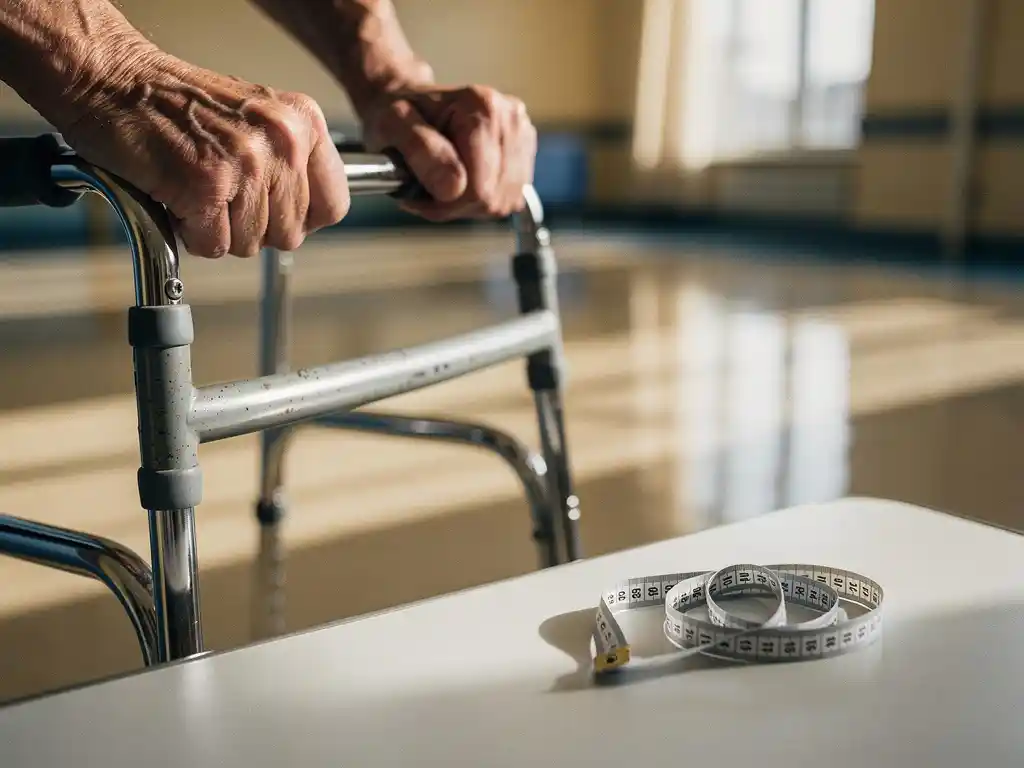
Fall prevention for seniors is a crucial component of modern healthcare, with organizations increasingly investing in programs to reduce fall incidents. Measuring the success of these programs is essential for healthcare organizations that want to demonstrate that their investments actually lead to better patient outcomes and cost savings.
Tracking the right metrics not only helps healthcare providers evaluate the effectiveness of their fall prevention strategies, but also enables continuous improvement and demonstrates compliance with quality standards. In this article, we discuss the key ways to measure and optimize the success of fall prevention programs.
What is fall prevention for seniors and why is measuring success important?
Fall prevention for seniors is a systematic approach where healthcare organizations take measures to reduce the risk of falls in elderly patients through risk assessment, environmental modifications, and monitoring technologies.
Measuring success is crucial because fall incidents in seniors lead to serious consequences, such as hip fractures, head injuries, and prolonged hospital stays. Without adequate measurements, healthcare organizations cannot determine whether their interventions actually work. Moreover, quality standards and insurers increasingly require evidence of effectiveness.
Successful fall prevention programs can significantly reduce healthcare costs. A single fall incident can cost thousands of euros in treatment and rehabilitation, while effective prevention avoids these costs and improves patients’ quality of life.
Which KPIs and metrics are most important for fall prevention programs?
The most important KPIs for fall prevention are the number of fall incidents per 1,000 patient days, the severity of injuries from falls, and the time between detection and assistance during fall incidents.
Primary metrics include:
- Fall frequency: the total number of falls divided by the number of patient days
- Injury rate: the percentage of falls that result in injuries
- Response time: the average time between fall detection and assistance
- False alarm ratio: the number of false alarms per actual fall incident
Secondary metrics that provide valuable insights are patient satisfaction, staff workload, and cost savings. These help understand and communicate the broader impact of fall prevention programs to stakeholders.
How do you effectively collect and analyze data on fall incidents?
Effective data collection on fall incidents requires a structured reporting system where all staff members consistently register incidents using standardized forms that capture time, location, circumstances, and consequences.
The collection process must begin with clear definitions of what constitutes a fall incident and what information needs to be recorded. Staff must be trained in using digital reporting systems that can capture and analyze real-time data.
For analysis, it’s important to identify trends by segmenting data by time, location, patient characteristics, and type of incident. Regular evaluations of this data help recognize patterns and implement targeted improvement measures. Modern technologies can automate this process and deliver more accurate data than manual registration.
What is the difference between traditional and AI-based fall prevention monitoring?
Traditional fall prevention monitoring is reactive and dependent on human observation, while AI-based systems monitor proactively and continuously, with automated detection and alerting within seconds of an incident.
Traditional methods include:
- Periodic risk screenings by staff
- Manual observation and rounds
- Reactive response after reported incidents
- Dependence on patients to call for help
AI-based monitoring offers:
- 24/7 continuous surveillance without human intervention
- Immediate detection and alerting during fall incidents
- Very low false alarm ratios
- Privacy-friendly monitoring without human observation of images
The difference in accuracy is significant: modern AI systems can reduce false alarms to just one per 92 days, which is 1,000 times better than traditional technologies.
How do you establish realistic goals and benchmarks for fall prevention?
Realistic goals for fall prevention are established by first collecting baseline measurements for 3 to 6 months, comparing these with industry benchmarks, and then setting gradual improvement targets of 10 to 20% reduction per year.
The process begins with establishing your current performance. Collect data on fall frequency, injury rates, and response times before implementing interventions. This baseline forms the foundation for all future comparisons.
Industry benchmarks vary by care environment, but general guidelines are:
- Hospitals: 3-5 falls per 1,000 patient days
- Nursing homes: 1.5-3 falls per bed per year
- Injury rate: less than 30% of falls result in injuries
Set SMART goals: specific, measurable, acceptable, realistic, and time-bound. Start with small improvements and gradually increase your ambitions as your systems improve.
How Kepler Vision Technologies helps with fall prevention monitoring
We offer advanced AI solutions that revolutionize the measurement and improvement of fall prevention programs. Our Kepler Night Nurse and Kepler NurseAssist software deliver:
- Real-time fall detection with 99.9% accuracy
- Automated data collection and reporting
- Only one false alarm per 92 days
- 24/7 monitoring without privacy invasion
- Direct alerting of healthcare staff within seconds
Our technology helps healthcare organizations drastically improve their fall prevention KPIs while reducing staff workload. Thanks to reliable, continuous monitoring, organizations can finally have access to the accurate data needed to measure and optimize the success of their fall prevention programs.
Would you like to know how our AI solutions can strengthen your fall prevention program? Contact us for a personal demonstration and discover how we can help your organization achieve measurable improvements in patient safety.
Frequently Asked Questions
How often should we evaluate and adjust our fall prevention metrics?
It is recommended to evaluate fall prevention metrics monthly for operational adjustments and analyze them comprehensively every quarter for strategic decisions. During significant changes in patient population or new interventions, you should temporarily increase the evaluation frequency to quickly measure the impact.
What are the most common mistakes when implementing fall prevention monitoring?
The biggest mistakes are incomplete data collection due to insufficient staff training, setting unrealistic goals without adequate baseline measurements, and ignoring false alarms which leads to ‘alarm fatigue.’ It’s also often forgotten to involve patients and family in the monitoring process.
How do I convince management of the ROI of fall prevention investments?
Present concrete figures: one fall incident costs an average of €15,000-€25,000 in treatment and legal costs, while effective prevention avoids these costs. Also show indirect benefits such as improved patient satisfaction scores, lower staff turnover, and better reputation that attracts new patients.
What challenges do we encounter when transitioning from traditional to AI-based monitoring?
The biggest challenges are change management with staff accustomed to traditional methods, initial investment costs, and concerns about privacy and technology acceptance by patients. Start with pilot projects on smaller departments and invest heavily in training and communication about the benefits.
How can we use fall prevention data for quality accreditation and insurers?
Systematically document all metrics in standardized report formats that comply with HKZ or JCI standards. Ensure an audit trail of all interventions and their results, and present trend analyses that demonstrate your organization is continuously improving. Insurers especially value data on cost savings and patient outcomes.
What should I do if our fall prevention KPIs worsen despite new measures?
First analyze whether the deterioration is real or due to better reporting of previously unreported incidents. Conduct a root cause analysis to identify whether external factors (such as seasonal patient population) are the cause. Adjust your interventions based on the findings and consider bringing in external expertise for an objective evaluation.
Related Articles
- How do you use data and labor market analysis to predict staff shortages?
- What are the consequences of staff shortages for patients and clients?
- What do you do when the workload is too high due to understaffing?
- What role does environmental modification play in fall prevention for older adults?
This content was generated with the help of AI and it may contain mistakes