


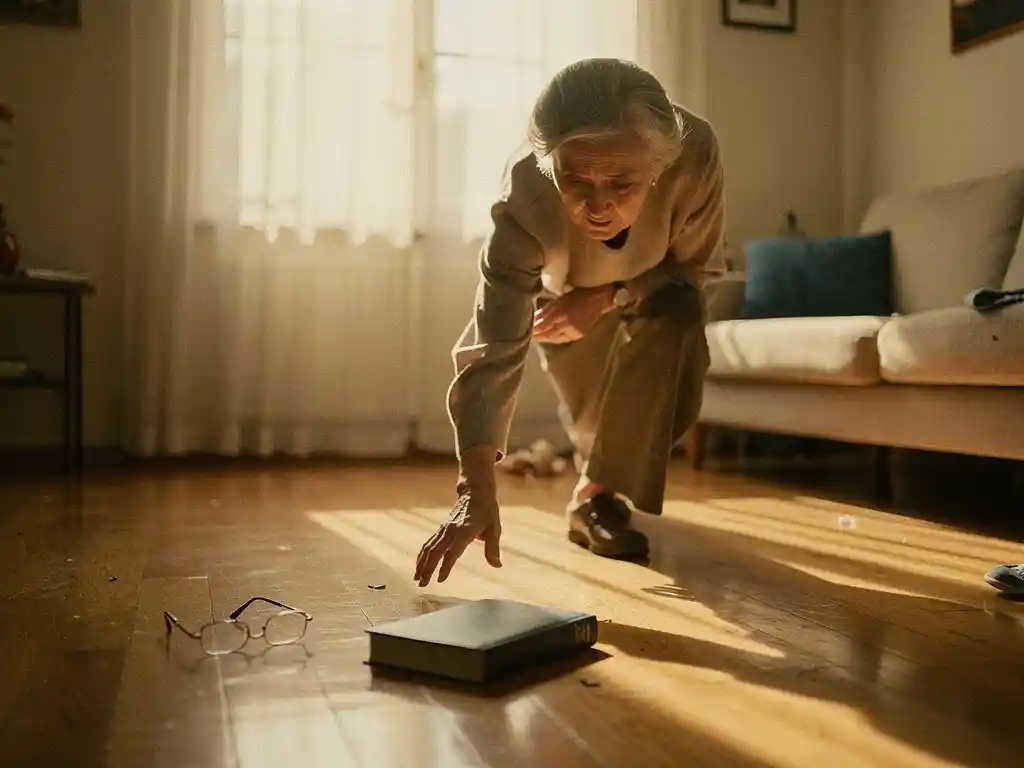
Falls among elderly people are a serious health problem that leads to thousands of hospital admissions annually. Approximately one in three elderly people aged 65 and older falls at least once per year, and this percentage rises to nearly 50% among people aged 80 and older. Understanding the underlying causes is crucial for effective fall prevention for elderly people and maintaining independence.
These falls are often not the result of a single factor, but arise from a complex interaction between physical, medical, and environmental factors. By recognizing and addressing these risk factors, caregivers and family members can significantly reduce the risk of falls.
What are the main causes of falls in elderly people?
The main causes of falls in elderly people are balance disorders, muscle weakness, medication side effects, and environmental hazards. These factors often work together and amplify each other’s effects, causing the risk of falls to increase dramatically.
Balance disorders arise from changes in the inner ear, reduced proprioception (the sense of body position), and neurological conditions. Muscle weakness, especially in the legs and core muscles, makes it more difficult to restore balance after a disturbance. Additionally, visual problems such as reduced vision, cataracts, or glaucoma play an important role in assessing distances and obstacles.
Chronic conditions such as diabetes, arthritis, Parkinson’s disease, and dementia increase the risk of falls through their effect on mobility, cognition, and body control. Acute illnesses can also temporarily increase the risk of falls through weakness, dizziness, or confusion.
Which medications increase the risk of falls in elderly people?
Medications that increase the risk of falls are sleeping pills, blood pressure medications, antidepressants, and pain relievers. These drugs can cause dizziness, drowsiness, low blood pressure, or reduced reaction time, which directly contributes to fall incidents.
Benzodiazepines (such as lorazepam and diazepam) are particularly risky because they slow reaction time and reduce muscle tension. Blood pressure medications can cause orthostatic hypotension, where people become dizzy when standing up. Antidepressants, especially tricyclic antidepressants, have anticholinergic side effects that affect balance.
Polypharmacy, the simultaneous use of five or more medications, significantly increases the risk of falls through drug interactions and cumulative side effects. Pain relievers such as opioids can cause confusion and sedation, while diuretics can cause dehydration and electrolyte imbalances.
How do you recognize fall hazards in the living environment?
Fall hazards in the living environment are primarily loose rugs, poor lighting, slippery floors, and missing support points. These risk factors are responsible for approximately 60% of all fall incidents among elderly people in the home situation.
In the bathroom, slippery tiles, missing anti-slip mats, and the absence of grab bars by the toilet and in the shower pose major risks. Stairs without handrails or with poor lighting are particularly dangerous. Thresholds between rooms, electrical cords in walkways, and unstable furniture create tripping hazards.
Poor lighting, especially at night, makes it difficult to see obstacles. Inappropriate shoes, such as slippers without grip or shoes that are too large, also increase the risk of falls. Pets that walk between the legs can also cause unexpected falls.
Why do elderly people fall more often at night?
Elderly people fall more often at night due to reduced vision, drowsiness after getting up, medication effects, and the urge to quickly go to the bathroom. Approximately 20-30% of all fall incidents among elderly people occur between 10:00 PM and 6:00 AM.
Circadian rhythms change with age, causing elderly people to wake up more often at night for bathroom visits. In this half-awake state, reaction speed is reduced and the sense of balance is disturbed. Medications taken in the evening can still cause drowsiness at night.
Orthostatic hypotension is worse at night because the body needs time to adjust blood pressure after lying down. Poor lighting in bedrooms and hallways makes it difficult to see obstacles. The urgency to quickly go to the bathroom often leads to hasty movements without sufficient caution.
How can modern technology prevent falls in elderly people?
Modern technology prevents falls in elderly people through continuous monitoring, early detection of risk situations, and automatic alerting of caregivers. Smart sensors, cameras with AI technology, and wearable devices can provide 24/7 surveillance without violating privacy.
Motion sensors detect unusual movement patterns that may indicate an increased risk of falls. Smart floor sensors record walking patterns and can recognize instability before a fall occurs. Wearable devices such as smartwatches can monitor heart rate and activity to provide early warning signals.
Camera systems with artificial intelligence can recognize fall behavior and distinguish between normal activities and emergency situations. These systems can also analyze lying positions and warn of prolonged lying on the ground, which indicates a possible fall.
How Kepler Vision Technologies helps with fall prevention for elderly people
We at Kepler Vision Technologies offer advanced AI solutions specifically developed for fall prevention and detection in care facilities. Our technology combines the benefits of modern monitoring with respect for privacy and reliability.
Our solutions offer:
- Kepler Night Nurse: Detects falls within seconds with only one false alarm per 92 days
- 24/7 monitoring: Continuous surveillance without human intervention in image processing
- Fall prevention: Recognition of risky situations before a fall occurs
- Recognition of lying positions: Detection of unusual lying positions that may indicate a fall
- Privacy preservation: Images are never viewed by humans, but analyzed exclusively by AI
Our technology is 1,000 times more accurate than traditional systems and helps care organizations address staff shortages while improving quality of care. Through early detection, care staff can respond faster, preventing serious injuries and long waiting times. Would you like to know more about how our innovative fall prevention solutions can help your care organization? Contact us for a personal conversation about the possibilities.
Frequently Asked Questions
How long does it take for fall prevention measures to take effect?
Most physical adjustments in the living environment have immediate effect, such as installing grab bars or improving lighting. Exercise programs for balance and muscle strength usually show improvement after 6-8 weeks, while medication adjustments can be noticeable within days to weeks. For optimal results, a combined approach of 3-6 months is recommended.
What should I do if an elderly person falls multiple times per month?
With frequent falls (more than 2 times per month), immediate medical examination is necessary. Consult the family doctor for a comprehensive fall analysis, including medication review, balance tests, and investigation of underlying conditions. Consider temporary additional support and professional home care until the cause is found and addressed.
Can simple exercises at home really reduce the risk of falls?
Yes, daily balance and strength exercises can reduce the risk of falls by 20-30%. Effective exercises include standing on one leg (15-30 seconds), heel walking, sitting and standing from a chair, and tai chi movements. Start carefully with support from a stable chair and build up slowly under the guidance of a physiotherapist.
How do I know if my elderly person's medications increase the risk of falls?
Check if more than 4-5 medications are being used simultaneously and watch for side effects such as dizziness, drowsiness, or unsteadiness when walking. Ask the pharmacist for a medication review and discuss alternatives with the family doctor. Medications that are often problematic: sleeping pills, sedatives, some blood pressure medications, and certain antidepressants.
What are the costs of professional fall prevention technology for home use?
Simple fall detection systems cost between $50-200 per month, while advanced AI systems like those from Kepler Vision usually cost $300-800 per month depending on the functionalities. Many health insurers reimburse (partially) fall prevention technology with demonstrably high fall risk. Inquire with your health insurer about the possibilities for reimbursement.
How can I convince an elderly person to accept assistive devices?
Start with small, unobtrusive adjustments such as better lighting or anti-slip mats. Emphasize the benefits for independence rather than limitations, and involve the elderly person in choosing solutions. Show examples of how others have benefited from assistive devices and consider a trial period. Respect their autonomy and give time to adjust to new situations.
Related Articles
- How do you prevent staff shortages in your organization?
- What is the implementation time for fall prevention systems for elderly people?
- How do you prevent technical malfunctions in fall prevention for the elderly?
- Why is continuous monitoring a key to future-proof care?
- What does the healthcare of the future look like with smart technology?
This content was generated with the help of AI and it may contain mistakes