


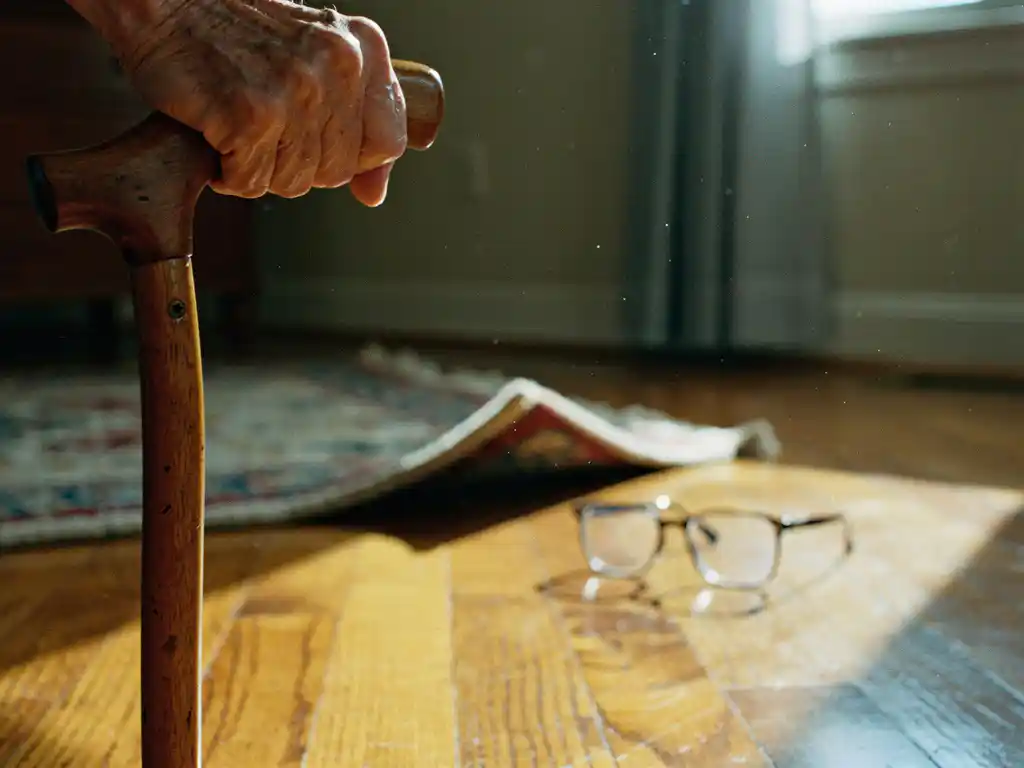
Falls are one of the most common causes of injury in the elderly, often with serious consequences for their health and independence. For healthcare organizations, recognizing risk factors is crucial to implementing effective fall prevention for seniors and optimally protecting their residents.
By gaining insight into which factors increase fall risk, healthcare providers can act proactively and take targeted measures. This article covers the main risk factors and how modern technology contributes to effective fall prevention.
What are the main risk factors for falls in the elderly?
The main risk factors for falls in the elderly are muscle weakness, balance problems, medication use, cognitive decline, and environmental factors such as poor lighting or slippery floors. These factors often work together and reinforce each other, causing fall risk to increase exponentially.
Physical factors play a dominant role in fall prevention for seniors. Muscle weakness in the legs reduces stability, while balance problems make it difficult to recover from sudden movements. Vision problems such as reduced depth perception or reduced peripheral vision make it difficult to detect obstacles in time.
Medication use poses an often underestimated risk. Certain medications, such as sleeping pills, blood pressure medications, and antidepressants, can cause dizziness, confusion, or muscle weakness. Elderly people who use four or more medications have a significantly higher fall risk.
Cognitive factors such as dementia or confusion affect judgment and reaction time. Residents may not properly assess dangerous situations or forget to be careful when getting up or walking.
Why does fall risk increase with age?
Fall risk increases with age due to natural aging processes that reduce muscle mass, bone density, reflexes, and sensory functions. These biological changes make older adults more vulnerable to falls while simultaneously increasing the chance of serious injuries.
Sarcopenia, the loss of muscle mass and strength, begins around age 30 and accelerates after age 60. This process particularly weakens the leg muscles, which are essential for stability and balance. At the same time, bone density decreases, making bones more fragile and increasing the chance of fractures during a fall.
The nervous system also undergoes changes that increase fall risk. Reflexes become slower, making it harder for older adults to react quickly to unsteady moments. The balance organ in the inner ear functions less effectively, and proprioception—the sense of body position—decreases.
Chronic conditions that are more common in older adults, such as diabetes, arthritis, and heart problems, contribute to increased fall risk. These conditions can cause pain, stiffness, or fatigue, reducing mobility.
How can healthcare organizations effectively identify fall risks?
Healthcare organizations can effectively identify fall risks by conducting systematic risk assessments, using validated screening instruments, and deploying multidisciplinary teams for holistic evaluations. A structured approach significantly increases the accuracy of risk identification.
Standardized screening instruments such as the Morse Fall Scale or the STRATIFY tool help healthcare providers objectively assess risk factors. These tools evaluate factors such as fall history, medication use, mobility, and cognitive status with a point system.
Regular observation of residents during daily activities provides valuable insights. Healthcare staff can notice changes in gait patterns, balance, or behavior that indicate increased fall risk. Recording near-miss incidents is essential in this process.
Multidisciplinary collaboration between nurses, physical therapists, pharmacists, and physicians ensures a complete risk assessment. Each discipline brings specific expertise that contributes to a complete picture of fall risk.
Technological tools can improve risk identification by enabling continuous monitoring. Sensors and AI systems can detect patterns that the human eye might miss.
What role does technology play in modern fall prevention?
Technology plays a crucial role in modern fall prevention by enabling 24/7 monitoring, early detection of fall risks, and immediate alerts when intervention is needed. AI-driven systems can recognize patterns that humans might overlook.
Modern camera systems with artificial intelligence can analyze movement patterns and detect abnormalities that indicate increased fall risk. These systems learn from behavioral patterns and can predict when someone might fall.
Wearable sensors such as smartwatches or motion detectors can record changes in activity, heart rate, or movement patterns. This data helps healthcare providers identify trends that can lead to preventive measures.
Automatic fall detection systems can detect a fall within seconds and immediately activate help. This significantly reduces the time between a fall and medical assistance, which is crucial for preventing complications.
Smart floor sensors and bed monitoring can detect unusual movements or leaving bed during high-risk moments, such as at night when fewer staff are present.
When is investment in fall prevention technology necessary for healthcare organizations?
Investing in fall prevention technology becomes necessary when healthcare organizations face staff shortages, a high number of fall incidents, rising liability costs, or an increasing number of high-risk residents. The costs of technology then weigh against the potential savings and improved quality of care.
Staff shortages make it difficult to adequately monitor all residents, especially during night shifts. Technology can fill these gaps by providing continuous monitoring without requiring additional staff.
When the number of fall incidents increases despite traditional prevention measures, it’s time to look at technological solutions. An increase in serious injuries or hospital admissions after falls justifies investments in advanced systems.
Financial considerations also play a role. High costs for liability insurance, lawsuits, or hospital admissions can make investment in prevention technology economically attractive.
Regulatory requirements and quality standards can also force healthcare organizations to invest in fall prevention technology to meet standards and maintain accreditation.
How Kepler Vision Technologies Helps with Fall Prevention for Seniors
At Kepler Vision Technologies, we offer a revolutionary solution for fall prevention in healthcare organizations with our AI-driven software Kepler Night Nurse. Our system combines advanced artificial intelligence with continuous monitoring to provide an unprecedented level of protection:
- 24/7 monitoring – Our software continuously watches over residents and immediately detects when someone falls.
- Unprecedented accuracy – Only one false alarm per 92 days, which is 1,000 times better than traditional technologies.
- Immediate alerts – Healthcare staff receive notification within seconds of a fall incident.
- Privacy protection – Images are never viewed by humans; healthcare staff only enter the room when the software requests it.
- Fall prevention – The system not only detects falls but also helps prevent them by identifying high-risk situations.
Our solution is specifically developed for healthcare organizations dealing with staff shortages and increasing care demands. By investing in our technology, organizations can better protect their residents while reducing their staff’s workload. Contact us to discover how our fall prevention technology can help your healthcare organization.
Frequently Asked Questions
How long does it take to successfully implement fall prevention technology in a healthcare organization?
Implementation of fall prevention technology typically takes 2-6 weeks, depending on the size of the organization and the number of rooms being equipped. The first week consists of installation and calibration, followed by a testing period where the system learns from the specific environment and residents.
What are the most common mistakes when implementing fall prevention protocols?
The biggest mistakes are ignoring individual risk factors, inadequate staff training, and not regularly updating risk assessments. Many organizations also focus too much on technology without addressing the underlying causes of falls, such as medication review or environmental modifications.
How can healthcare organizations calculate the ROI of fall prevention technology?
Calculate the costs of fall incidents (hospital admissions, liability, extra care hours) and compare these with the technology investment. On average, one hospital admission after a fall costs $8,000-15,000, while fall prevention technology often pays for itself within 3-6 months by preventing just a few serious fall incidents.
What privacy considerations are important when using camera systems for fall detection?
Choose systems that analyze images directly through AI without human intervention, like Kepler Night Nurse. Ensure clear informed consent from residents and families, transparent privacy policies, and GDPR compliance. Images should never be stored or viewed by humans; only AI analyses are permitted.
How do you train healthcare staff to optimally use fall prevention technology?
Start with theoretical training on how the system works and which alarms have priority. Organize practical simulations where staff learn to respond to different types of alerts. Ensure a clear escalation protocol and designate super users who can support colleagues with questions or technical problems.
What should you do if residents or families resist fall prevention technology?
Explain how the technology increases their safety without violating privacy. Show concrete benefits such as faster help in emergencies and reduced chance of serious injuries. Always offer the option to opt-out and respect personal choices, but document this for legal protection.
What additional measures are needed alongside technological fall prevention?
Combine technology with medication review by pharmacists, physical therapy for strength and balance, adequate lighting, and safe environmental design. Regular risk assessments and multidisciplinary team meetings remain essential. Technology is a tool, not a replacement for good basic care and preventive measures.
Related Articles
- What are the consequences of chronic work pressure?
- What is the impact of fall prevention for elderly people on staff planning?
- What does digitalization mean for the future of healthcare monitoring?
- What is the role of AI in improving patient outcomes?
This content was generated with the help of AI and it may contain mistakes