


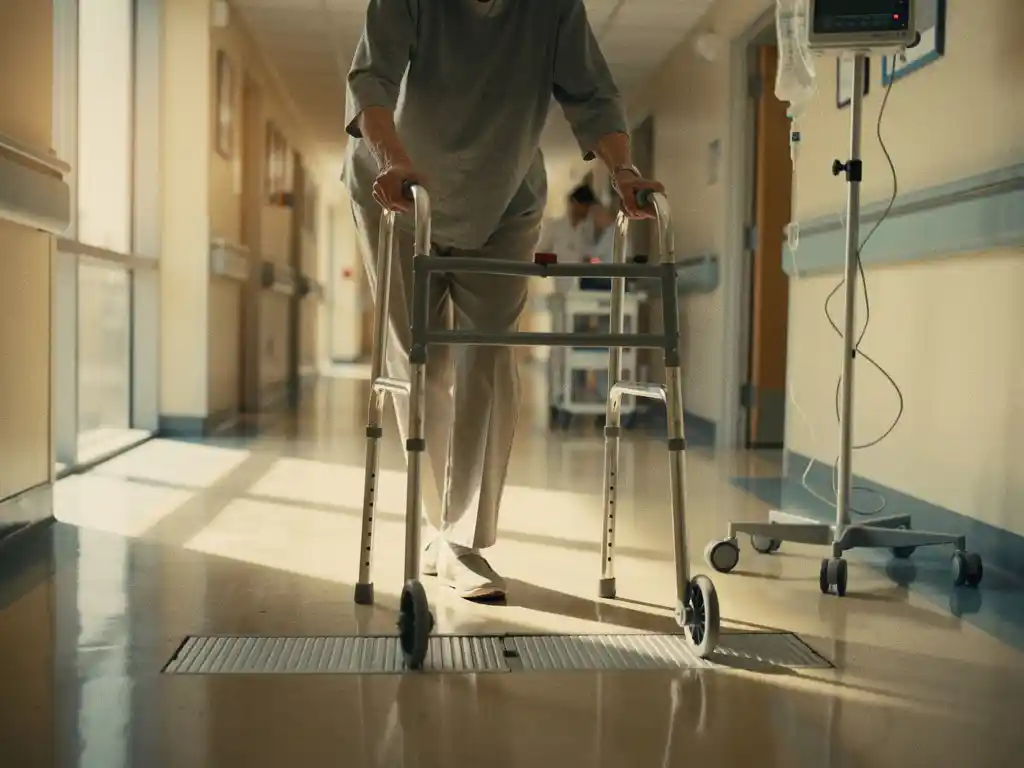
Falls are one of the greatest health risks for elderly people and represent a major challenge in care facilities worldwide. Effective fall prevention for the elderly requires thorough knowledge of risk factors, early warning signs, and preventive measures. By understanding these factors, healthcare providers can act proactively to prevent fall accidents and ensure the safety of residents.
Fall prevention goes beyond simply responding to incidents. It encompasses a holistic approach where physical, cognitive, and environmental factors are analyzed to minimize the risk of falling. This preventive approach is crucial for maintaining quality of life and preventing serious injuries.
What are the biggest risk factors that lead to falls?
The biggest risk factors for falls in elderly people are a combination of physical, cognitive, and environmental factors. Muscle weakness, balance problems, medication side effects, and cognitive decline form the primary risks that significantly increase fall risk.
Physical risk factors include reduced muscle strength in the legs, deteriorated balance and coordination, and vision problems. These factors make it more difficult for elderly people to maintain their balance during daily activities. Additionally, chronic conditions such as arthritis, diabetes, and cardiovascular diseases play an important role in increasing fall risk.
Environmental factors are often underestimated but crucial. Slippery floors, poor lighting, loose rugs, and obstacles in walkways create dangerous situations. Inappropriate footwear, such as slippers or shoes with smooth soles, also significantly increases the risk of slipping.
How do you recognize early warning signs of increased fall risk?
Early warning signs of increased fall risk include changes in gait patterns, increased fear of falling, frequent near-fall incidents, and reduced mobility. Healthcare providers should watch for subtle changes in movement patterns and behavior of residents.
Changes in gait patterns are often the first indicators of increased fall risk. This includes walking slower, hesitant steps, reduced arm swing, and a wider walking base. Residents who begin holding onto furniture or walls while walking show clear signs of diminished balance and reduced confidence.
Psychological warning signs are equally important. Residents who develop fear of certain activities, exhibit avoidance behavior, or limit their social activities due to fear of falling may already be experiencing a decline in their mobility. Frequent complaints about dizziness, fatigue, or stiffness can also indicate increased fall risk.
What is the difference between fall prevention and fall detection?
Fall prevention focuses on preventing falls by identifying and addressing risk factors, while fall detection concentrates on quickly recognizing and responding to fall incidents after they have occurred. Both approaches are complementary and essential for a complete fall safety strategy.
Fall prevention includes proactive measures such as physical therapy, medication review, environmental modifications, and education. This approach requires a thorough risk assessment of each resident, followed by personalized interventions. Preventive measures can range from balance training and muscle-strengthening exercises to adjusting medication dosages and improving lighting.
Fall detection, on the other hand, uses technology and monitoring to respond immediately when a fall occurs. This minimizes the time someone lies helplessly on the ground, which is crucial for preventing serious complications. Modern detection systems can distinguish between normal movements and actual fall incidents, minimizing false alarms.
What role does medication use play in fall risk?
Medication use plays a significant role in fall risk, with certain medication groups able to increase the risk of falling by 20-30%. Sedatives, antidepressants, blood pressure medications, and diuretics are among the medications with the highest fall risk for elderly people.
Psychoactive medications such as sleeping pills, antidepressants, and antipsychotics affect the central nervous system and can cause dizziness, confusion, and reduced reaction time. These side effects are particularly problematic in elderly people because their bodies process medications more slowly, causing effects to last longer.
Cardiovascular medications, including blood pressure medications and diuretics, can cause orthostatic hypotension. This means blood pressure suddenly drops when someone stands up, which can lead to dizziness and falls. Regular medication review and dose adjustments are therefore essential components of fall prevention.
How can technology help with fall prevention in care facilities?
Technology helps with fall prevention through continuous monitoring, risk analysis, and early warning systems that enable healthcare providers to act proactively. Modern systems can analyze movement patterns, identify risk factors, and suggest preventive interventions before falls occur.
Advanced monitoring systems use sensors and artificial intelligence to detect subtle changes in mobility and behavior. These systems can recognize patterns that indicate increased fall risk, such as changes in walking speed, balance, or activity levels. By analyzing this information, care teams can plan timely interventions.
Wearable technology, such as smartwatches and motion sensors, provides continuous monitoring of vital functions and activity levels. These devices can give warnings for unusual patterns and help track the effectiveness of preventive measures. They can also motivate residents to stay active within safe limits.
How Kepler Vision Technologies helps with fall prevention
We at Kepler Vision Technologies offer advanced AI solutions that enable revolutionary fall prevention in care facilities. Our technology combines fall detection with fall prevention and lying position recognition to provide a complete safety strategy:
- 24/7 monitoring with only one false alarm per 92 days – 1,000 times better than traditional systems
- Direct alerts within seconds after a fall incident
- Privacy-protecting technology where images are never viewed by humans
- Compliance with ISO 27001 and NEN 7510 standards for maximum data protection
Our Kepler Night Nurse and Kepler NurseAssist software helps international care organizations solve staffing shortages through intelligent monitoring that supports care staff. By combining fall detection with preventive analysis, care facilities can act proactively and significantly improve resident safety. Would you like to know more about how our technology can help your care facility? Contact us for a personal demonstration of our fall prevention solutions.
Frequently Asked Questions
How often should a risk analysis for fall prevention be performed?
A risk analysis for fall prevention should be performed at least every 3-6 months, or immediately after changes in a resident’s health condition. For new residents, an initial assessment within 48 hours of admission is essential. The risk analysis should also be repeated after a fall incident, medication change, or hospital admission.
Which exercises are most effective for fall prevention in elderly people?
Balance training, such as tai chi and specific balance exercises, are most effective for fall prevention. Muscle-strengthening exercises for the legs and core stability are equally crucial. A combination of 2-3 sessions per week of 30-45 minutes, under the guidance of a physical therapist, can reduce fall risk by 20-30%.
How can I train staff to recognize early warning signs?
Train staff to systematically observe during daily care activities and use checklists for warning signs. Organize monthly training sessions with practical examples and role-playing. Implement a reporting system where all staff members can report subtle changes in gait patterns, behavior, or mobility to the care team.
What are the cost-benefits of investing in fall prevention technology?
Fall prevention technology has an ROI of 3-5 years through reduced care costs and liability. A fall incident costs an average of €15,000-€25,000, while preventive technology costs much less per resident per year. Additionally, it reduces staff burden, improves quality of care, and reduces the risk of legal claims.
How do I deal with residents who resist fall prevention measures?
Use an empathetic approach by explaining to residents why measures are important for their autonomy and safety. Involve family in the conversation and offer choices where possible. Start with small, less invasive adjustments and build gradually. Respect their dignity and emphasize maintaining independence rather than limitations.
Which environmental modifications have the greatest impact on fall prevention?
Improved lighting (especially at night), removing thresholds and loose rugs, and installing handrails in bathrooms and hallways have the greatest impact. Anti-slip mats, adequate chair heights, and clear walkways are equally essential. These relatively simple adjustments can reduce fall risk by 30-40%.
How do I measure the success of my fall prevention program?
Measure both quantitative and qualitative indicators: number of fall incidents per 1000 resident days, severity of injuries, and time between near-fall incidents. Also monitor resident satisfaction, mobility scores, and the number of residents participating in preventive activities. Compare these figures monthly and annually to identify trends and adjust the program.
Related Articles
- What are the costs of staff shortages for an organization?
- Which sectors are struggling the most with staff shortages?
- How do you measure workload within a team?
- How do you retain staff during a labor shortage?
- How does technology support healthcare professionals in their core tasks?
This content was generated with the help of AI and it may contain mistakes