


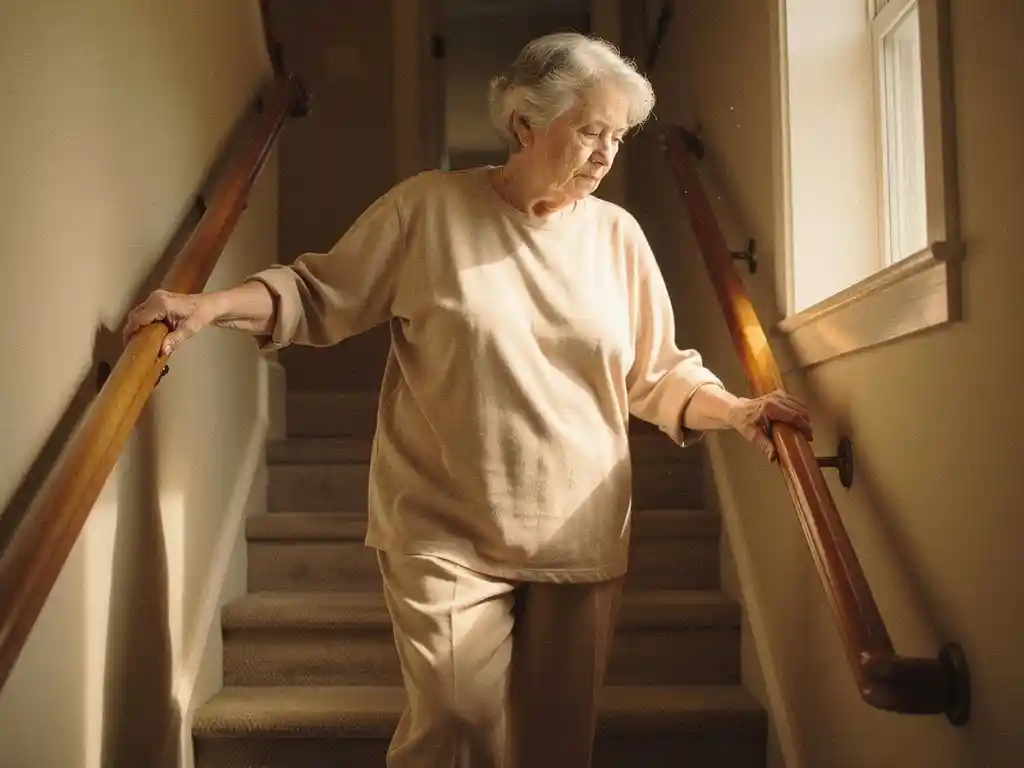
Falls are one of the biggest health risks for elderly people, with serious consequences for both their wellbeing and healthcare costs. Fall prevention for elderly people is therefore becoming increasingly important in care facilities and home situations. With the right preventive measures and modern technology, many fall incidents can be prevented, which significantly improves the quality of life for elderly people.
In this article, we examine what fall prevention exactly entails, why elderly people have an increased fall risk, and which effective strategies are available to prevent falls. We also look at the role of modern technology in creating safer care environments.
What exactly is fall prevention for elderly people?
Fall prevention for elderly people is a systematic approach aimed at reducing the risk of falls through targeted interventions, environmental modifications, and technological solutions. It encompasses both preventive measures and early detection systems that can prevent fall incidents or minimize their consequences.
This preventive care consists of various components. Physical exercise programs improve the balance and muscle strength of elderly people, while medication review helps identify drugs that can cause dizziness. Environmental modifications, such as removing trip hazards and installing handrails, make living spaces safer.
Modern fall prevention also integrates advanced technologies that enable 24/7 monitoring. These systems can recognize risk situations before a fall occurs and directly alert care staff when intervention is needed.
Why do elderly people have a higher fall risk?
Elderly people have an increased fall risk due to a combination of physiological changes, medication use, and environmental factors associated with aging. Natural aging brings a decline in muscle strength, balance, and reaction ability, causing stability to decrease.
Various factors contribute to this increased risk. Muscle weakness and reduced bone density make elderly people more vulnerable to falls and fractures. Vision problems limit the perception of obstacles, while cognitive decline can impair judgment.
Medication use also plays an important role. Many prescribed medications can have side effects such as dizziness, drowsiness, or blood pressure drops that increase fall risk. Chronic conditions like diabetes, Parkinson’s, or dementia further increase the chance of fall incidents.
How does modern fall prevention technology work?
Modern fall prevention technology uses artificial intelligence and computer vision to analyze movement patterns and recognize risk situations before a fall occurs. These systems continuously monitor the behavior of residents and can detect abnormal movements that indicate instability or fall danger.
The technology works by combining various detection methods. Camera-based systems analyze body postures and movement patterns to identify unusual situations. Machine learning algorithms learn from large datasets to become increasingly accurate in distinguishing normal activities from potentially dangerous situations.
When the system detects a risk situation, an alert is automatically sent to care staff. This enables them to intervene preventively before a fall occurs, or to quickly provide help when an incident has taken place. The most advanced systems generate very few false alarms, allowing care staff to focus on real emergency situations.
What are the main fall prevention strategies in practice?
The main fall prevention strategies in practice encompass a multidisciplinary approach that combines physical training, environmental modifications, medication management, and technological support. Effective fall prevention requires a coordinated effort from various healthcare providers and specialists.
Physical interventions
Exercise programs focused on strength and balance form the foundation of fall prevention. Physiotherapists develop individual training programs that strengthen muscles and improve coordination. Tai chi and other gentle forms of movement have proven effective in improving stability in elderly people.
Environmental modifications
Adapting the living environment is crucial for safety. This includes installing handrails in bathrooms, improving lighting, removing loose rugs, and ensuring obstacle-free walkways. Non-slip surfaces and stable furniture contribute to a safer environment.
Medication review
Regular evaluation of medication by pharmacists and doctors helps identify medications that increase fall risk. Dose adjustments or alternative medications can significantly reduce risk without compromising treatment effectiveness.
How effective is fall prevention in care facilities?
Fall prevention in care facilities is demonstrably effective when systematically implemented. Studies report reductions in fall incidents of 20-40% when using proven interventions. Effectiveness strongly depends on consistent application of multifactorial approaches and integration of modern technologies.
Care facilities that have implemented comprehensive fall prevention programs see not only fewer fall incidents, but also lower care costs and higher resident satisfaction. The combination of staff training, environmental improvements, and technological support creates a safer care environment.
The introduction of AI-driven monitoring systems has further increased effectiveness. These systems can recognize patterns that may escape human observation and provide 24/7 surveillance without privacy intrusions. Care facilities report greater peace of mind for both residents and families thanks to continuous monitoring.
How Kepler Vision Technologies helps with fall prevention for elderly people
At Kepler Vision Technologies, we offer advanced AI solutions that elevate fall prevention for elderly people to a higher level. Our technology combines fall detection, fall prevention, and continuous monitoring in one integrated system that helps care facilities optimally protect their residents.
Our solutions offer concrete benefits:
- 24/7 monitoring with only one false alarm per 92 days
- Direct alerts to care staff within seconds
- Privacy-friendly technology where images are never viewed by humans
- Easy installation thanks to our plug-and-play concept
- Compliance with ISO 27001 and NEN 7510 standards
By implementing our proven technology, care facilities can significantly improve their fall prevention strategies while helping address staffing shortages. Discover how our innovative solutions can help your care organization create a safer environment for elderly people.
Frequently Asked Questions
How long does it take before fall prevention technology is fully implemented in a care facility?
The implementation of modern fall prevention technology takes an average of 2-4 weeks, depending on the size of the facility. Thanks to plug-and-play systems like those from Kepler Vision, technical installation can be completed within a few days. Staff training and optimizing settings usually take an additional week.
What happens if the system generates a false alarm during the night?
Modern AI systems are specifically designed to minimize false alarms – for example, only one false alarm per 92 days with Kepler Vision. When a false alarm does occur, staff can quickly verify this via the dashboard and mark the incident as a false alarm, which helps the system learn further and become even more accurate.
Can residents influence the monitoring themselves or turn it off?
Residents cannot turn off monitoring themselves, but they do have input on privacy settings. Care facilities can define specific zones where monitoring is less intensive, such as certain parts of bathrooms. The system respects privacy by never having images viewed by humans and only performing AI analyses.
How is staff trained to effectively respond to fall prevention alerts?
Staff receive specific training in interpreting different types of alerts and proper response protocols. This includes distinguishing between preventive warnings (risk situations) and acute notifications (actual falls), as well as the fastest routes to residents and proper first aid procedures. Regular refresher training keeps skills up-to-date.
What are the costs of fall prevention technology compared to traditional care methods?
While the initial investment in fall prevention technology can be significant, this often results in long-term cost savings. The technology reduces fall incidents by 20-40%, leading to lower medical costs, less staff-intensive monitoring, and increased efficiency. Many care facilities see a return on investment within 12-18 months.
How does the system handle residents who have dementia and exhibit unpredictable behavior?
AI systems are particularly suitable for residents with dementia because they provide continuous, consistent monitoring without burdening the resident. The system learns the individual movement patterns of each resident, including unpredictable behavior, and can make tailored risk evaluations. This is especially valuable because residents with dementia often cannot ask for help themselves.
Can family and informal caregivers also gain access to information about fall risks?
Depending on privacy settings and resident consent, care facilities can give families access to general reports about safety and wellbeing. This usually happens via secure portals where trends and general information are shared, without specific real-time monitoring data. Transparent communication with family often increases confidence in care provision.
Related Articles
- How do you solve staff shortages as an employer?
- What are hospitals doing about staff shortages?
- What reports does fall prevention technology for elderly provide?
- How can healthcare institutions prepare for future technology?
This content was generated with the help of AI and it may contain mistakes