


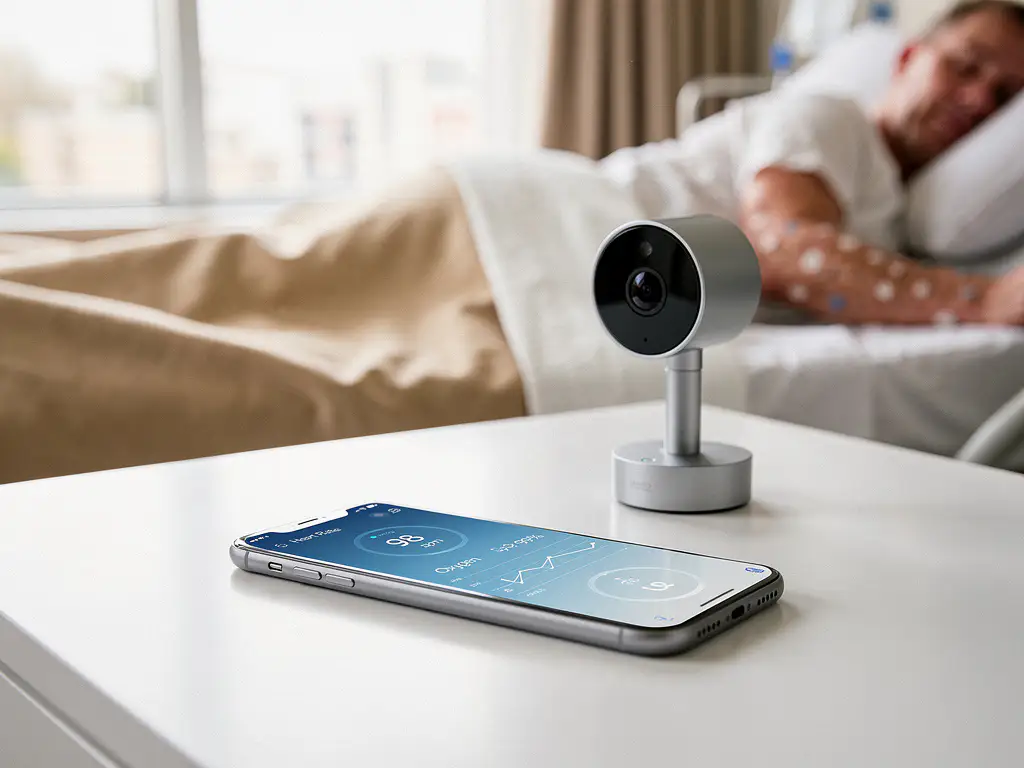
Fall prevention for elderly patients is becoming increasingly important in modern healthcare, especially as healthcare organizations face staff shortages and growing care demands. Modern fall prevention systems don’t work in isolation but can be integrated with various existing healthcare systems to increase efficiency and effectiveness. These integrations enable seamless collaboration with existing care infrastructure and workflows.
The possibilities for system integration are broad and range from electronic health records to alarm systems and staff scheduling. Through smart connections, an integrated ecosystem emerges that supports healthcare workers in their daily tasks and improves the quality of care.
Which systems can be integrated with fall prevention technology?
Fall prevention technology can be integrated with electronic health records (EHR), nurse call systems, alarm systems, staff scheduling software, and facility management systems. These connections create an integrated care environment where all systems work together.
The most common integrations are with EHR systems such as ChipSoft HiX, Epic, or Cerner. This allows fall incidents to be automatically recorded in the patient record, including time, location, and any special circumstances. Nurse call systems can be directly activated when a fall is detected, immediately alerting healthcare staff.
Additionally, connections are possible with building management systems for lighting and climate control, staff scheduling software for optimal staffing, and reporting systems for quality monitoring. Some systems also integrate with family information systems, so relatives can be kept informed of important events.
How do API integrations work with fall detection systems?
API integrations with fall detection systems work through standardized communication protocols that enable real-time data exchange between the fall detection system and other healthcare systems. These connections use secure links to directly transmit information when an incident is detected.
The technical operation begins with the fall detection system identifying a fall through computer vision algorithms. Within seconds, this information is transmitted via an API call to connected systems. The API contains structured data such as patient ID, time, location, incident type, and urgency level.
Modern APIs support various communication standards such as REST, SOAP, or HL7 FHIR for healthcare-specific applications. They can work bidirectionally, not only sending alarms but also receiving feedback about response status. This creates a closed-loop system where all stakeholders remain informed of progress.
What are the benefits of EHR integration in fall monitoring?
EHR integration in fall monitoring provides automatic documentation of fall incidents, improved patient safety through a complete medical history, and more efficient workflows since healthcare workers don’t need to manually register incidents. This saves time and significantly reduces administrative burdens.
An important benefit is the automatic linking between fall risks and patient data. The system can account for medications that increase fall risk, previous fall incidents, and underlying conditions. This information helps create personalized care plans and preventive measures.
The integration also improves continuity of care during handovers between shifts or departments. All relevant information about fall risks and incidents is immediately available to new healthcare workers. Additionally, valuable data insights emerge for quality improvement and trend analyses at the organizational level.
For reporting and compliance, EHR integration offers significant advantages. Incidents are automatically documented according to legal requirements and a complete audit trail is created. This simplifies reporting to inspection authorities and ensures better quality monitoring.
What technical requirements apply to system integration?
System integration requires technical specifications in network infrastructure, security protocols, API compatibility, and compliance with healthcare standards such as NEN 7510 and ISO 27001. A stable internet connection and adequate bandwidth are essential for real-time communication.
The network infrastructure must meet hospital standards, with redundancy and uptime guarantees of at least 99.9%. Security requirements include end-to-end encryption, secure authentication, and regular security audits. All data transmission must comply with GDPR regulations for privacy protection.
At the software level, compatible API versions are needed, preferably based on international standards such as HL7 FHIR for healthcare applications. The system must handle various data formats and support real-time synchronization. Database integration often requires specific connectors or middleware solutions.
Hardware requirements vary by organization but typically include servers with sufficient processing capacity, redundant storage, and backup systems. For camera-based systems, specific requirements for image quality, night vision capability, and privacy-friendly installation are important.
How Kepler Vision Technologies helps with fall prevention integrations
We offer complete fall prevention solutions that seamlessly integrate with existing healthcare systems. Our Kepler Night Nurse and Kepler NurseAssist software is developed with extensive integration capabilities and supports all common healthcare standards.
Our solutions provide:
- Direct connection with all major EHR systems via standardized APIs
- Real-time communication with nurse call systems for immediate alerts
- Compliance with NEN 7510 and ISO 27001 for maximum security and privacy
- Plug-and-play installation requiring minimal IT support
- 24/7 monitoring with only one false alarm per 92 days
With our robust international patent portfolio of 21 patents and a team of 25 experts in machine learning and computer vision, we ensure reliable integrations that help your healthcare organization address staff shortages. Discover how our solutions can support your healthcare organization with advanced fall prevention technology.
Frequently Asked Questions
How long does it take to integrate a fall prevention system with our existing EHR software?
Integration time varies from 2-8 weeks, depending on your EHR system and the complexity of your IT infrastructure. Common systems like ChipSoft HiX or Epic often have standard connections that are operational within 2-3 weeks. Our technical specialists guide the entire process and ensure minimal disruption to your daily workflows.
What happens if our internet connection temporarily fails during a fall incident?
Fall prevention systems have built-in redundancy and local buffering. Incidents are stored locally and automatically synchronized once the connection is restored. Critical alarms can also be sent via alternative routes such as mobile networks or backup connections to ensure continuity.
Can we estimate integration costs in advance and are there hidden costs?
Integration costs depend on the number of systems to be connected and the complexity of your infrastructure. We always provide a transparent quote after a technical analysis of your environment. There are no hidden costs – all implementation, training, and maintenance costs are clearly communicated upfront.
How do you handle privacy and GDPR compliance when connecting different systems?
All data exchange occurs via encrypted connections according to NEN 7510 and ISO 27001 standards. We apply the principle of data minimization, sharing only necessary information. Patient data is pseudonymized where possible and all connections fully comply with GDPR requirements with built-in privacy-by-design.
What if our healthcare organization wants to switch to a different EHR system in the future?
Our systems are designed with flexibility in mind and support multiple API standards. During an EHR transition, we guide the migration and ensure seamless transfer of your fall prevention integrations. The modular design of our software makes it possible to quickly switch between different systems without loss of functionality.
Can we first test the fall prevention integration in a pilot department before rolling out organization-wide?
Absolutely, we recommend a phased implementation. A pilot on one department provides insight into practical operation and possible adjustments. After successful evaluation, the rollout can be gradually expanded to other departments, incorporating experiences each time for optimization of workflows and integrations.
Related Articles
- What are the costs of staff shortages for an organization?
- How does a good employer deal with work pressure?
- What fall prevention exercises can I do at home?
- Why is innovation a strategic theme within healthcare?
- How is innovation changing the way healthcare is delivered?
This content was generated with the help of AI and it may contain mistakes