


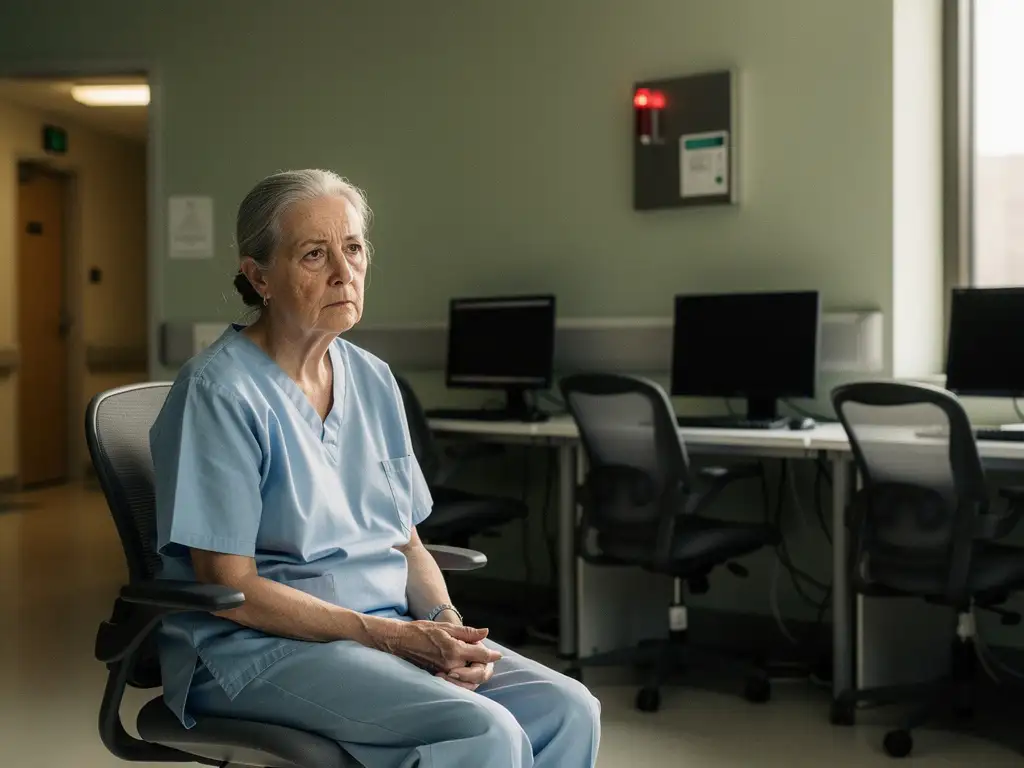
Aging increases the staffing shortage in healthcare in two ways simultaneously: the number of people who need care is rising rapidly, while a large portion of the current healthcare workforce is itself approaching retirement age. This dual effect makes the shortage structural and difficult to address through traditional recruitment strategies. In this article, we answer the most frequently asked questions about the relationship between aging and the staffing shortage in healthcare.
How many additional healthcare workers are needed due to aging?
Due to aging, the healthcare sector in the Netherlands and other European countries will need tens of thousands of additional workers in the coming years. Demand for care is growing at an average of 6% per year, while the available workforce is not keeping pace. Without additional measures, the shortage will continue to grow, putting both the quality and continuity of care under pressure.
This is not a temporary problem. The baby boom generation is rapidly reaching the age at which intensive care is required. At the same time, insufficient numbers of new workers are entering the field to keep up with demand. Industry estimates point to a structural gap of tens of thousands of full-time equivalents in elderly care alone. At the European level, hundreds of thousands of positions are difficult or impossible to fill.
Why does aging lead to fewer available healthcare workers?
Aging leads to fewer available healthcare workers because the working population itself is also aging. A large share of current healthcare workers are fifty or older and will be leaving the workforce in the coming years. The influx of younger workers is insufficient to offset this loss, causing the net number of available caregivers to decline at precisely the moment when demand is rising.
Beyond retirement-driven attrition, other factors also play a role. Healthcare workers leave the sector more frequently due to high workloads, irregular hours, and emotional strain. When there are fewer colleagues to share the work, the pressure on those who remain increases, further fueling burnout and early departure. This creates a negative spiral that accelerates the staffing shortage.
Which healthcare sectors are hit hardest by the staffing shortage?
Elderly care is hit hardest by the staffing shortage resulting from aging. Nursing homes, residential care facilities, and home care organizations face the largest gap between supply and demand. Hospitals and psychiatric clinics are also feeling the effects, particularly during night shifts and on wards where continuous monitoring is essential.
In elderly care, the combination is most acute: the target population is growing fastest, the care intensity per client is high, and the labor market offers little room to maneuver. Night shifts are especially difficult to staff, as workers are responsible for large groups of clients simultaneously. In hospitals, the shortage is most pronounced in specialized departments such as intensive care and geriatrics, where experience and training are critical and cannot be quickly replaced.
What are the consequences of the staffing shortage for the quality of care?
The staffing shortage has direct consequences for the quality of care: workers have less time per client, signs of deterioration are noticed later, and the risk of incidents such as falls increases. At the same time, workload rises for the staff who are present, leading to more errors, more absenteeism, and higher turnover.
Specific consequences reported by care facilities include:
- Longer response times in emergency situations, as workers are attending to multiple clients at once
- Less time for preventive care and personal interaction
- A higher likelihood of undetected fall incidents, particularly at night
- Increased reliance on overtime and agency staff, which undermines continuity of care
- Greater emotional burden on permanent staff, which accelerates turnover
The quality of care is under pressure not only because of what goes wrong, but also because of what no longer gets done. Preventive conversations, mobility support, and social interaction are often the first things to fall away when staffing is tight.
How can care facilities address the staffing shortage caused by aging?
Care facilities can tackle the aging-related staffing shortage by organizing more efficiently, deploying technology, and relieving staff of tasks that can be automated. A combination of improved working conditions, targeted recruitment, and AI-supported monitoring offers the most sustainable approach.
Practical steps care facilities can take include:
- Deploying technology for continuous monitoring, so that staff only need to intervene when truly necessary
- Improving shift schedules and night shift workloads to reduce turnover
- Investing in training and career development to retain staff for longer
- Partnering with educational institutions to encourage the inflow of new personnel
- Restructuring care tasks so that highly trained staff are deployed where they are needed most
Technology is playing an increasingly important role in this — not as a replacement for human care, but as a support that enables staff to work more effectively and reduces the need for unnecessary actions.
How Kepler Vision Technologies helps address the healthcare staffing shortage
At Kepler Vision Technologies, we develop AI solutions that help care facilities deliver safe, high-quality care even with reduced staffing. Our software, Kepler Night Nurse, monitors clients in elderly care facilities and patients in hospitals around the clock, alerting healthcare workers only when action is genuinely required.
What our solution offers in concrete terms:
- Automatic fall detection: staff receive an alert within seconds of a fall, including during the night
- Fall prevention and lying position recognition: risks are identified before an incident occurs
- Only one false alarm every 92 days: a thousand times more accurate than outdated technologies
- Privacy by design: footage is never viewed by humans — staff only enter the room when the software requests it
- Plug-and-play installation: easy to plan, configure, and put into use
By handing routine monitoring over to our AI, healthcare workers can focus their attention on what truly matters: personal connection and quality care. Want to find out how our solution fits your organization? Get in touch and discover what Kepler Night Nurse can do for your facility.
Frequently Asked Questions
Can technology like AI fully solve the staffing shortage in healthcare?
Technology cannot fully solve the staffing shortage, but it can significantly ease it. AI solutions such as automated monitoring and fall detection take over routine tasks, allowing existing staff to be deployed more efficiently and reducing the need for unnecessary actions. The combination of smart technology, better working conditions, and targeted recruitment offers the most realistic long-term approach.
How long does it take for an AI monitoring system to become operational in a care facility?
Modern AI monitoring systems like Kepler Night Nurse are designed for plug-and-play installation, meaning implementation can proceed relatively quickly and without major technical modifications. After installation and configuration, the system is typically fully operational within a short period of time. It is important, however, to inform and guide staff in advance so they can become familiar with the new way of working and make the most of the system.
How should a care facility handle clients' privacy concerns when using AI monitoring?
Privacy is a legitimate concern when it comes to AI monitoring in healthcare. Systems built according to the privacy by design principle process footage in a fully automated way, without staff or third parties ever viewing it. Healthcare workers are only alerted when the AI determines that action is genuinely required. It is advisable to inform clients and their families transparently about how the system works, what data is processed, and how that data is protected.
What steps should a care facility take first to address the staffing shortage?
A good first step is a thorough analysis of where the staffing shortage has the greatest impact within the organization — such as night shifts or specific departments. From there, it is worth examining which tasks can be automated or organized more efficiently to relieve existing staff. In parallel, investing in employee satisfaction and career development opportunities is essential to prevent further turnover.
How does the staffing shortage affect the workload of healthcare workers who remain?
When fewer colleagues are available, the workload for remaining staff increases directly: they must care for more clients, work overtime more frequently, and face greater emotional strain. This raises the risk of burnout and early departure, which worsens the shortage further. It is therefore essential not only to recruit new staff, but also to actively invest in the well-being and job satisfaction of the existing team.
Is the healthcare staffing shortage in the Netherlands worse than in other European countries?
The Netherlands is not alone: virtually all European countries are dealing with a comparable structural staffing shortage in healthcare as a result of aging. At the European level, hundreds of thousands of positions are difficult to fill. The Netherlands does, however, face specific challenges, such as a tight labor market and a high cost of living that make attracting international staff more difficult. This makes domestic solutions — including technological innovation and smarter workforce organization — all the more urgent.
What can healthcare workers themselves do to remain sustainably employable in a sector with increasing workloads?
Healthcare workers can strengthen their long-term employability by actively investing in continuing education and retraining, enabling them to grow alongside new technologies and ways of working. Consciously maintaining a healthy work-life balance and raising workload concerns with managers in a timely manner are equally important. Care facilities that support staff in this through flexible scheduling, coaching, and career development opportunities generally see lower turnover and higher employee satisfaction.
Related Articles
- What exercises for fall prevention?
- What exactly is fall prevention for the elderly?
- How does AI help improve continuity of care?
- How does technology change the relationship between healthcare provider and client?
This content was generated with the help of AI and it may contain mistakes