


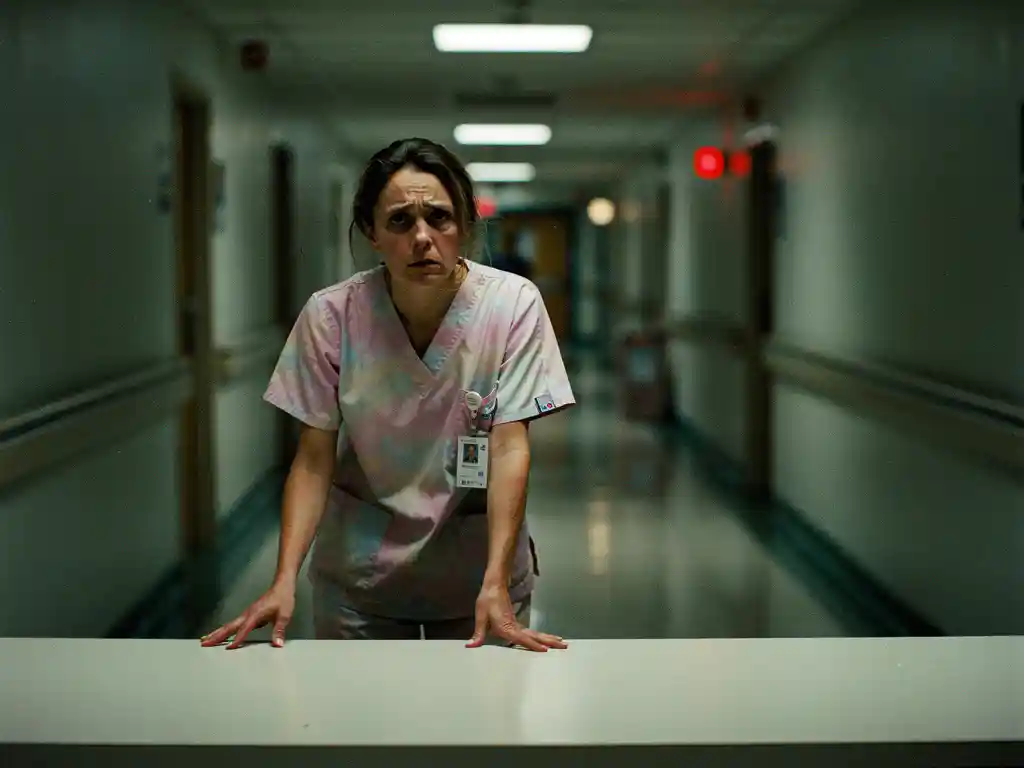
A staffing shortage in healthcare has direct and serious consequences for patients and clients: longer waiting times, less personal attention, a higher risk of accidents, and an overall decline in the quality of care. This affects vulnerable groups in particular, such as elderly residents in care facilities and patients in hospitals. In this article, we answer the most frequently asked questions about the causes, consequences, and possible solutions for the staffing shortage in healthcare.
What risks do patients face when there is a shortage of healthcare staff?
A shortage of healthcare staff exposes patients to significant safety risks. When there are too few staff members to provide supervision, the likelihood of fall incidents, missed medication, delayed recognition of deterioration, and unnoticed emergencies increases sharply. For vulnerable elderly individuals and seriously ill patients in particular, these risks can have life-threatening consequences.
Fall incidents are among the most common and dangerous outcomes. A fall that is not noticed quickly can lead to serious injury, prolonged pain, or even death. Beyond physical risks, inadequate supervision also has psychological consequences: patients feel unsafe, anxious, and lonely when they do not receive sufficient attention. This affects not only their well-being but also their recovery.
How does staff shortage affect the quality of care in elderly care facilities?
A staffing shortage in elderly care facilities directly leads to a lower quality of care. Staff members must attend to more clients with less time per person, putting pressure on basic tasks such as personal care, support, and social interaction. Care shifts from person-centered to task-oriented, which significantly worsens the experience for clients.
Specific consequences in elderly care include:
- Less time for personal contact and emotional support
- Delays in responding to emergencies or alarm signals
- A higher risk of pressure sores (bedsores) due to insufficient monitoring of lying positions
- Less attention to nutrition, hygiene, and mobility
- A greater risk of medication errors due to work pressure
The quality of life for clients is therefore under constant pressure, while the demand for care continues to grow.
Why does the staffing shortage in healthcare keep getting worse?
The staffing shortage in healthcare is growing due to a combination of structural factors. An aging population is driving a sharp increase in demand for care services, while the supply of qualified healthcare workers is not keeping pace. At the same time, many experienced staff members are leaving the sector due to high workloads, emotional strain, and relatively low salaries.
Demand for care is increasing by approximately 6% per year, while training institutions cannot produce enough new professionals to keep up. In addition, absenteeism in the healthcare sector is structurally high, which further increases the pressure on staff who are present. Without a structural approach, the gap between supply and demand will only widen in the years ahead.
What are the consequences of staff shortages for healthcare workers themselves?
Staffing shortages in healthcare do not only affect patients and clients — they also have serious consequences for the workers who are present. These staff members face a structurally higher workload, more overtime, and less opportunity to deliver quality care. This leads to exhaustion, stress, and ultimately a higher rate of people leaving the sector.
The consequences for healthcare workers include:
- Burnout and chronic fatigue due to sustained overload
- A diminished sense of professional pride because there is no time to provide good care
- A higher risk of errors due to time pressure and reduced concentration
- Rising absenteeism, which further worsens the shortage
This creates a vicious cycle: the more staff members drop out, the heavier the burden becomes for those who remain, which accelerates the exodus even further.
How can technology help address the staffing shortage in healthcare?
Technology can take over a significant portion of routine monitoring and supervision tasks, freeing healthcare workers to focus on tasks where human contact and expertise are indispensable. Smart monitoring systems, AI-driven fall detection, and automated nighttime surveillance reduce the pressure on staff without compromising client safety.
In practice, this means technology does not replace healthcare workers — it supports them. A system that automatically detects when a client falls or assumes a dangerous position enables staff to intervene purposefully rather than having to constantly walk rounds for manual checks. This makes it possible to maintain a high level of safety and care quality even with fewer staff members.
Which care facilities benefit most from AI monitoring?
The care facilities that benefit most from AI monitoring are elderly care centers, hospitals, and psychiatric clinics where continuous monitoring is essential but where there are structurally too few staff available for manual supervision. During nighttime hours in particular, when staffing levels are at their lowest, automated monitoring offers the greatest added value.
Elderly care centers benefit greatly from fall detection and lying position recognition, as fall incidents occur most frequently at night and go unnoticed for the longest periods. Hospitals and psychiatric clinics benefit from continuous monitoring of high-risk patients without requiring staff to be physically present at all times.
How Kepler Vision Technologies helps address the staffing shortage in healthcare
At Kepler Vision Technologies, we have developed AI software that watches over clients and patients 24/7, so that healthcare workers only need to take action when it is truly necessary. Our solutions are specifically designed for the challenges that the staffing shortage in healthcare presents.
What our software does for your organization:
- Instant fall detection: staff receive an alert within seconds of a fall incident, even in the middle of the night
- Fall prevention and lying position recognition: risk situations are flagged before anything goes wrong
- Extremely low error rate: only one false alarm every 92 days, making it 1,000 times more accurate than older technologies
- Privacy by design: footage is never viewed by humans; staff only enter the room when the software requests it
- Plug-and-play installation: easy to plan, configure, and install in existing care facilities
- ISO 27001 and NEN 7510 certified: full compliance with the highest standards for data security in healthcare
Would you like to know how our AI monitoring can support your care facility in tackling the staffing shortage? Contact us and discover what Kepler Night Nurse or Kepler NurseAssist can do for your organization.
Frequently Asked Questions
How quickly can a care facility implement AI monitoring technology without disrupting daily care delivery?
Modern AI monitoring systems such as those from Kepler Vision Technologies are designed as plug-and-play solutions, meaning installation causes minimal disruption to daily care delivery. In most cases, the system can be up and running within a few days. It is important, however, to inform and train staff in advance so they become familiar with the alerts and workflows the technology introduces.
What are the first steps a care facility can take to address the staffing shortage?
A good first step is to identify where the biggest bottlenecks are: which shifts or departments are under the most pressure, and where do most incidents occur? Care facilities can then look at a combination of measures, such as improving working conditions to reduce staff turnover, deploying technology for routine monitoring tasks, and working with staffing agencies or interns for temporary support. Technology is not a replacement in this context, but a strategic complement to the existing team.
How do clients and their family members feel about AI camera monitoring in care facilities?
Privacy is understandably a common concern among clients and family members. It is essential that care facilities communicate transparently about how the technology works and what privacy safeguards are in place. With systems that apply privacy by design, such as that of Kepler Vision Technologies, footage is never viewed by humans and an alert is only triggered when a risk situation is detected. When this is clearly explained, most clients and family members actually experience the monitoring as a reassuring extra layer of safety.
Can AI monitoring be used during the day as well, or is it only useful during the night shift?
Although AI monitoring offers the greatest direct benefit at night — when staffing levels are at their lowest and incidents can go unnoticed for the longest time — the system is also valuable during the day. During daytime hours, it helps staff distribute their attention more efficiently across multiple clients, as they are only alerted when something actually requires attention. This structurally reduces workload, regardless of the time of day.
What are common mistakes made by care facilities trying to address the staffing shortage?
A common mistake is continuing to rely on temporary fixes such as routinely scheduling overtime or bringing in agency workers, without addressing the underlying causes. This eases the pressure in the short term but accelerates the departure of permanent staff in the long run. Another common mistake is underestimating the role of technology: many facilities wait too long to implement supporting systems, even though these can immediately contribute to a lower workload and better quality of care.
How do I know if AI monitoring software complies with privacy legislation and healthcare standards?
Check whether the provider holds relevant certifications such as ISO 27001 and NEN 7510, which apply specifically to information security in the healthcare sector. In addition, the software must comply with the GDPR (General Data Protection Regulation) and a data processing agreement must be in place. Always ask the vendor explicitly about their privacy policy, how image data is processed and stored, and whether a Data Protection Impact Assessment (DPIA) is available.
Is AI monitoring financially viable for smaller care facilities with a limited budget?
Yes, AI monitoring does not have to be exclusive to large care facilities. Many providers offer scalable solutions that can be rolled out per department or even per room, keeping the initial investment manageable. Furthermore, the cost of the technology is often offset by the savings achieved through fewer incidents, lower agency staffing costs, and reduced absenteeism among permanent staff. It is advisable to have a cost-benefit analysis carried out based on the specific situation of your facility.
Related Articles
- How do you use data and labor market analysis to predict staff shortages?
- How do you optimize fall prevention for seniors in different spaces?
- What are the benefits of intelligent care systems?
- What are the opportunities of artificial intelligence for healthcare institutions?
- How does data-driven care change the daily work of healthcare professionals?
This content was generated with the help of AI and it may contain mistakes