


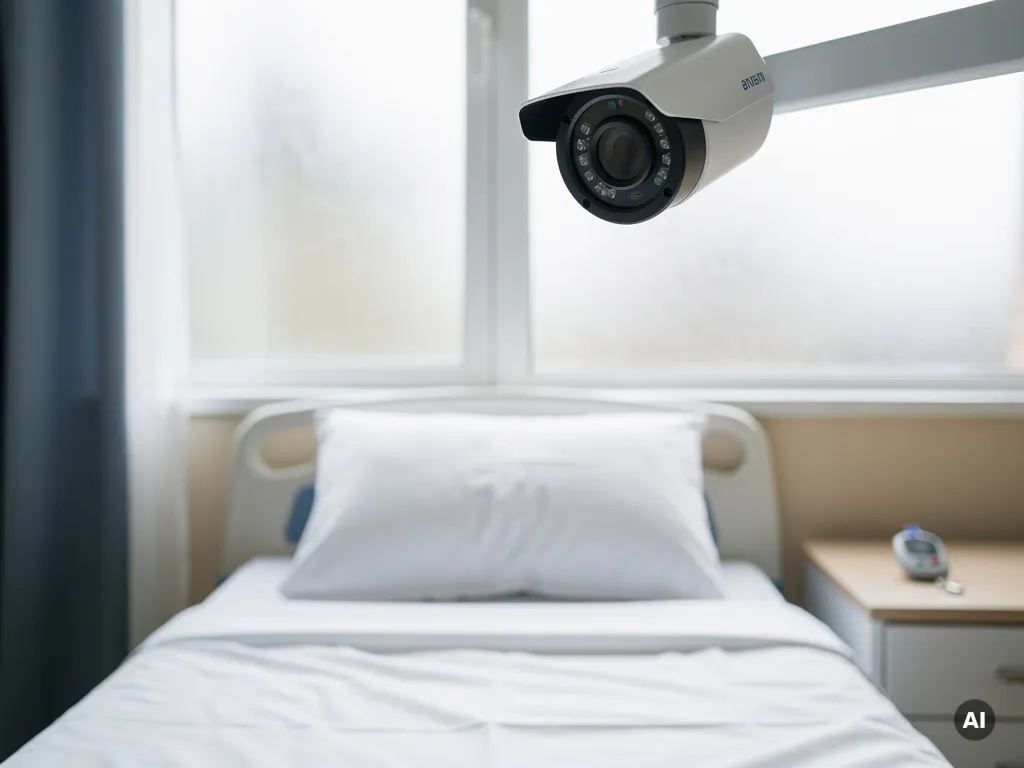
When choosing an AI fall detection vendor for elderly care, you should look for accuracy, privacy protection, compliance certifications, and ease of implementation. A reliable vendor combines demonstrable technical performance with transparency about how the software works and how patient data is protected. In this article, we answer the key questions you need to ask as a care organization before making a decision.
What makes AI fall detection more reliable than traditional systems?
AI fall detection is more reliable than traditional systems because it uses computer vision and machine learning to continuously and automatically analyze movements, without relying on physical sensors or manual observation. Traditional systems such as bed sensors or pressure mats only respond to a specific trigger and miss the context that AI can recognize.
Traditional fall detection technology works reactively: an alarm only sounds after a fall has occurred, or not at all if the sensor is not correctly positioned. AI systems continuously analyze movement patterns and can both detect a fall and recognize signals that precede a fall, such as unstable walking or leaving the bed in a risky manner.
Another key difference is the number of false alarms. Older systems generate many false positives, leading to alarm fatigue among care staff. They increasingly ignore alerts, precisely because there are so many. A good AI system drastically minimizes false alarms, ensuring that every alert is taken seriously and care teams can act more effectively.
What accuracy requirements must a fall detection system meet?
A fall detection system for elderly care must demonstrably generate few false alarms while detecting virtually all real falls. As a rule of thumb: the lower the number of false positives per day or per month, the more practical the system is in real-world use. Always ask vendors for concrete performance figures, not general promises.
Alarm fatigue is a real problem in healthcare. If a system generates multiple false alerts daily, staff stop responding to them. A system that produces only one false alarm per month or per quarter maintains the trust of the care team and ensures that genuine emergencies are always addressed quickly.
In addition to the number of false alarms, detection speed matters. How quickly after a fall does the care worker receive a notification? Every second counts when an elderly person has fallen. Ask the vendor about the average response time between the fall and the alarm, and how this was measured in a realistic care environment.
How does AI fall detection software protect client privacy?
AI fall detection software protects client privacy by processing images exclusively through algorithms, without any person viewing the camera footage. The software analyzes movement and position, but raw footage is neither stored nor shared with care staff. A care worker only enters the room when the software generates an alarm.
This is a fundamental difference from traditional camera surveillance, where footage is viewed live or stored on a server. With AI fall detection, the client remains invisible to people, while the software sees everything relevant to safety. This is a major step forward for the dignity and privacy of elderly people in care.
Ask every vendor explicitly: who has access to the footage? Is footage stored, and if so, for how long and where? Is data processed on-site or in the cloud? How is data encrypted? Transparent answers to these questions are a sign of a serious vendor.
What compliance and certification requirements must a vendor meet?
A vendor of AI fall detection for elderly care must at minimum comply with the GDPR (General Data Protection Regulation) and preferably be certified for ISO 27001 and NEN 7510. ISO 27001 demonstrates that information security is systematically organized; NEN 7510 is specifically focused on information security in Dutch healthcare.
Compliance is not a formality. Care organizations are legally responsible for protecting patient data, even when that processing is outsourced to a software vendor. If a vendor does not meet the required standards, your organization faces legal and reputational risk.
In addition to certifications, it is wise to ask about the vendor’s patent portfolio. Patents are an indication that the technology is genuinely unique and further developed, not merely a generic solution rushed to market. A robust patent portfolio also provides assurance about the vendor’s long-term continuity and capacity for innovation.
How easy should fall detection software be to implement?
Fall detection software should work plug-and-play: easy to install, configure, and integrate into existing care processes without lengthy IT projects. The fewer technical barriers, the faster care organizations can benefit from the technology and the lower the implementation costs remain.
In practice, this means hardware requirements should be minimal, the software should be quickly configured per room or ward, and staff should be able to use the system without extensive training. A system that requires weeks of installation or constant technical maintenance is not a realistic solution for busy care organizations.
Also ask the vendor about post-installation support. Is there a helpdesk? How quickly are issues resolved? Are software updates applied automatically? Good implementation is not just a one-time installation, but an ongoing partnership.
What questions should you ask an AI fall detection vendor during a demo?
During a demo of AI fall detection software, ask questions that reveal the system’s actual performance and reliability, not just the marketing claims. Ask for concrete figures, real-world references, and how the system handles edge cases such as low light, multiple people in a room, or unusual fall scenarios.
A good checklist for a demo:
- How many false alarms does the system generate on average per room per month?
- What is the average detection time between fall and alarm?
- How does the system perform in poor lighting or at night?
- Who has access to the footage and how is it processed?
- What certifications does the vendor hold (ISO 27001, NEN 7510)?
- How does installation proceed and how long does it take on average?
- What support does the vendor offer after implementation?
- Are there references from comparable care organizations you can speak with?
- How are software updates rolled out and who is responsible for maintenance?
A vendor that answers all these questions clearly and concretely, without beating around the bush, deserves your trust. Vague answers or evasion of specific performance figures are a warning sign.
How Kepler Vision Technologies helps with fall detection for the elderly
We at Kepler Vision Technologies have developed AI fall detection software specifically designed for the challenges of elderly care facilities and hospitals. Our solutions offer:
- Exceptional accuracy: only one false alarm every 92 days, which is 1,000 times better than traditional technologies
- Complete privacy protection: footage is never viewed by people; care staff only enter the room when the software requests it
- Strong compliance: we comply with ISO 27001 and NEN 7510 and hold an international patent portfolio of 21 patents
- Easy implementation: plug-and-play installation that can be realized quickly and without extensive IT knowledge
- 24/7 monitoring: our software detects falls immediately and alerts care staff within seconds
Want to see how our AI fall detection works in practice? Contact us and schedule a demo to experience firsthand what our software can mean for your care organization.
Frequently Asked Questions
How do I know if AI fall detection is suitable for my specific care environment?
AI fall detection is suitable for virtually all care environments where elderly people require 24/7 supervision, such as nursing homes, rehabilitation centers, and hospital wards. First determine what risk profiles your clients have and in which spaces most fall incidents occur. A good vendor conducts a location scan in advance and advises which rooms or wards should be prioritized during rollout.
What do I need to arrange regarding consent and communication with clients and their families?
Before implementing AI fall detection, you must inform clients and their legal representatives about the use of camera technology and ask for their consent, in accordance with the GDPR. Clearly explain that footage is not viewed by people and is used solely for safety purposes. Transparent communication in advance significantly increases support among clients, families, and staff.
How do I integrate AI fall detection with the existing systems in my care organization, such as the EHR or the call system?
Ask the vendor explicitly whether the software can integrate with your electronic health record (EHR) or existing call systems via standard protocols such as HL7 or API connections. A good integration ensures that alerts automatically reach the right care worker via the channel already in use, without a separate system needing to be monitored. The fewer additional actions required from staff, the higher the adoption rate in practice.
What are the most common mistakes care organizations make when choosing a fall detection system?
A common mistake is primarily comparing purchase prices without considering total costs, such as installation, maintenance, and the hidden costs of alarm fatigue in a system with many false alerts. In addition, organizations sometimes choose a system without checking whether the vendor holds the required compliance certifications for healthcare. Finally, ease of use for staff is often underestimated: a technically advanced system that is difficult to operate will not be used in practice.
How do I train my care staff to work effectively with AI fall detection?
A good AI fall detection system requires minimal training, but it is important that staff understand how alerts are generated and what the correct follow-up procedure is when an alarm sounds. Schedule a short, practice-oriented introductory session during implementation and ensure there is a clear protocol describing who handles which alert and how it is documented. Ask the vendor whether training materials or e-learning modules are available for new staff.
Can AI fall detection also help analyze fall patterns to prevent future falls?
Yes, advanced AI fall detection systems collect data on incidents that can be used for reports and trend analyses, such as which times of day or locations carry the highest fall risk. These insights help care managers take preventive measures, such as adjusting night rounds or rearranging hazardous furniture. Ask the vendor what reporting functionalities the system offers and how the data is presented for use in quality meetings.
What happens if the system temporarily goes offline or loses its connection?
Ask the vendor explicitly about fail-safe procedures in the event of a network or system outage, as this is a critical point in a care environment. Reliable vendors have offline fallback mechanisms or automatic error notifications that immediately alert care teams if a camera or module stops functioning. Also ensure that the care protocol includes a clear agreement about which alternative supervision measure is activated while the system is offline.
Related Articles
- How Does AI Fall Detection Work Without Residents Having to Wear a Device?
- What is the future of the labor market amid persistent staff shortages?
- What is the impact of staff shortages on productivity?
- What is the accuracy of modern fall prevention systems for the elderly?
This content was generated with the help of AI and it may contain mistakes