


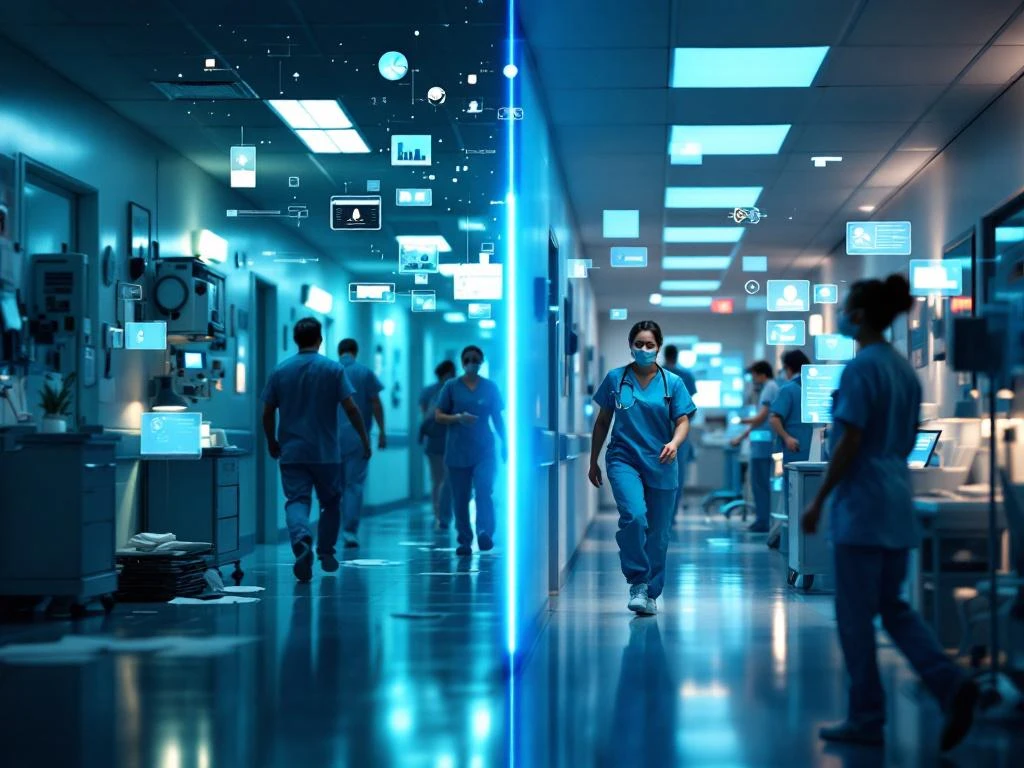
AI in healthcare helps with continuous monitoring by automatically recognizing risky situations, without healthcare workers needing to be constantly present. Modern AI systems analyze visual material in real-time and only alert during genuine emergency situations, allowing staff to be deployed more efficiently. This reduces workload, as staff perform fewer unnecessary checks and can focus on direct patient care when needed.
What is AI monitoring and how does it work in practice?
AI monitoring uses smart cameras and sensors to automatically monitor patients without human intervention. The system analyzes movement patterns, body postures and behavior to detect unsafe situations. This differs from traditional surveillance systems, because no continuous human observation is needed: the AI takes over this task.
The technology works by combining image recognition with machine learning algorithms. Cameras register what happens in the room, while the AI processes this information directly. The system learns to recognize normal patterns and can immediately signal deviations.
The major difference with older systems is the intelligence. Where traditional surveillance often gives false alarms at every movement, modern AI in healthcare can distinguish between normal activities and actual risks. This means that healthcare workers are only alerted when help is actually needed.
Why does AI monitoring reduce workload instead of increasing it?
AI monitoring reduces workload because it only alerts during genuine emergency situations and not at every small movement. Healthcare workers no longer need to perform routine checks and can spend their time on direct patient care. The system functions as an intelligent assistant that monitors the environment.
The advantage lies in the accuracy. Traditional systems often generate dozens of false alarms per day, causing stress and frustration. Modern AI systems are developed to minimize these false alarms.
Additionally, AI systems optimize staff deployment. Through continuous monitoring, staff can keep an eye on multiple patients simultaneously without being physically present. They can work more efficiently, because the system indicates where and when their attention is needed.
The result is less stress, better work planning and more time for quality care. Staff feel supported rather than burdened by the technology.
Which situations can AI monitoring automatically recognize?
AI monitoring automatically recognizes falls, unusual movement patterns, leaving safe zones and changes in lying position. The system also detects when patients remain in the same position too long or unexpectedly stop moving. This recognition takes place within seconds after the situation arises.
Practical examples from daily care practice show the versatility of modern systems:
- Fall detection: the system recognizes when someone suddenly goes to the ground
- Bed exit: automatic warning when patients get up at night
- Motionlessness: detection of periods without movement that are too long
- Restless behavior: recognition of agitation or confusion
- Breathing patterns: monitoring of irregular breathing during sleep
The system also learns individual patterns. For each patient, a normal movement profile is built up, making deviations better recognized. This makes detection more personal and accurate.
Important situations, such as epileptic seizures or sudden unconsciousness, are also detected by analyzing abnormal movement patterns.
How do you ensure privacy with continuous AI monitoring?
Privacy is ensured because AI systems process images directly without human intervention. Staff do not see live images or recordings, but only notifications when the system detects a risk situation. All processing happens locally and complies with GDPR guidelines and care standards such as ISO 27001.
Modern AI in healthcare works with edge computing, which means that image processing takes place directly in the camera. No images are stored or sent to external servers. The system only analyzes movements and patterns, not the person themselves.
Important privacy measures include:
- No storage of visual material after processing
- Local processing without internet connection for image analysis
- Automatic deletion of temporary data
- Encryption of all communication between system and healthcare workers
- Access control for who can receive notifications
Patients and family can be transparently informed about how the system works. The technology respects dignity by only alerting when necessary, not during normal daily activities.
How Kepler Vision helps with continuous monitoring without extra workload
We have developed AI solutions that watch over patients 24/7 without extra burden for healthcare workers. Our systems generate on average only one false alarm per 92 days and detect within seconds when help is needed. This means that your team is only alerted during actual emergency situations.
Our advantages for healthcare institutions:
- Kepler Night Nurse: automatic fall detection with direct warning to healthcare workers
- Kepler NurseAssist: extensive monitoring for hospitals and psychiatric clinics
- Plug-and-play installation without complex configuration
- Complete privacy through local image processing
- ISO 27001 and NEN 7510 compliance for patient data security
- Support in multiple languages for international implementation
The practical implementation is simple: cameras are installed, the system learns the environment and within a few days you are operational. Healthcare workers receive notifications via their existing communication systems.
Would you like to know how our AI solutions can support your healthcare institution with staff shortages? Contact us for a non-binding demonstration of our technology.
Frequently Asked Questions
How long does it take for AI monitoring to be fully operational?
Most AI monitoring systems are operational within 3-5 days after installation. The system needs 24-48 hours to learn normal patterns and distinguish between regular activities and emergency situations.
What happens if the AI system fails to detect an emergency?
Modern AI systems have a 95-99% detection rate for critical situations. Traditional alarm systems remain active as backup, ensuring the AI serves as an additional safety layer rather than a complete replacement.
Can AI monitoring systems handle multiple people in one room?
Yes, advanced AI systems can track and analyze multiple people simultaneously. They distinguish between patients, visitors, and healthcare workers based on movement patterns and location within the room.
Related Articles
- How do you solve understaffing without hiring new people right away?
- How do you deploy flexible workers during staff shortages?
- What is workplace happiness and how does it relate to workload?
- Why is fall prevention for older adults so important?
- How does AI change the way healthcare is organized?
This content was generated with the help of AI and it may contain mistakes