


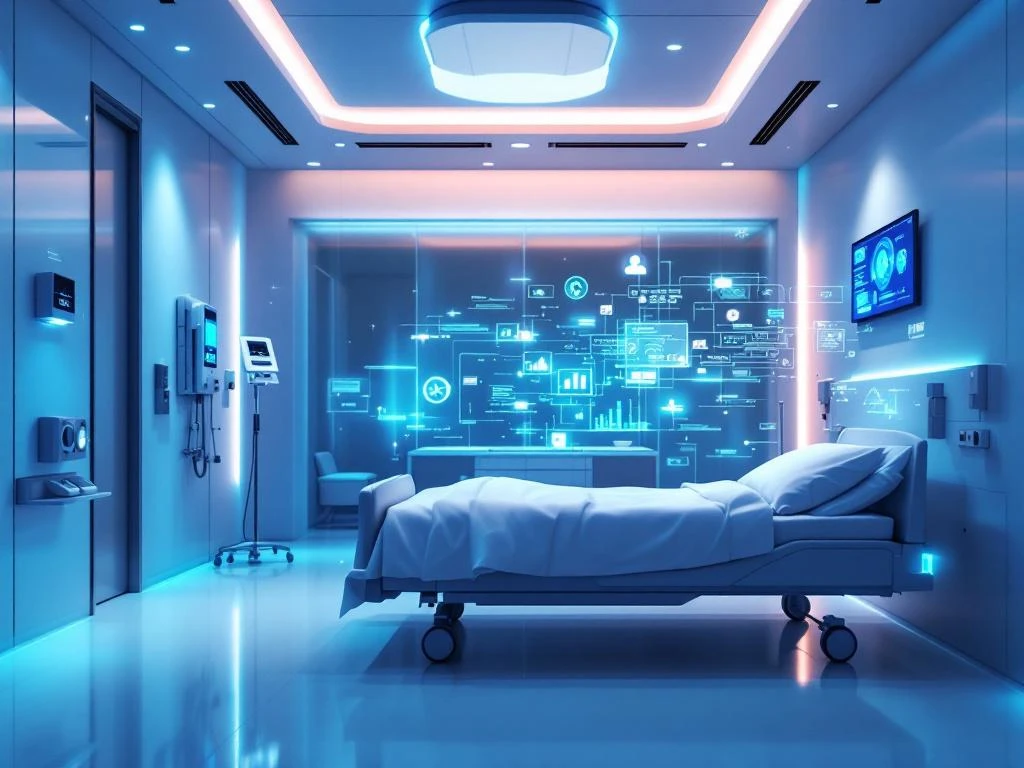
AI supports continuous care by deploying advanced technologies such as computer vision and machine learning for 24/7 monitoring without the physical presence of healthcare staff. These systems analyze visual material in real-time, detect emergency situations immediately and alert healthcare workers only when intervention is needed. This provides patients with constant monitoring while their privacy is guaranteed and staff shortages are addressed.
What is AI-supported continuous care and how does it work?
AI-supported continuous care uses computer vision and machine learning to monitor patients 24/7 without healthcare staff needing to be physically present. Cameras record movements and behavior, while AI algorithms analyze these images and only alert in case of actual emergency situations.
The system works through continuous image analysis, where artificial intelligence recognizes patterns that indicate dangerous situations. The technology learns from billions of image frames to distinguish between normal movements and situations that require care intervention. This happens completely automatically, making human monitoring largely unnecessary.
The key technologies that make this possible are:
- Computer vision for image recognition and movement analysis
- Machine learning algorithms that learn from behavioral patterns
- Real-time data processing for immediate alerts
- Advanced sensors that function day and night
What benefits does AI monitoring offer for healthcare organizations?
AI monitoring helps address staff shortages through automatic monitoring that increases human capacity, enhances patient safety through rapid detection of emergency situations and saves costs through more efficient deployment of healthcare staff. Healthcare workers can focus on direct patient care instead of constant monitoring.
The benefits for healthcare organizations are measurable and immediately noticeable. Staff no longer need to continuously make rounds or constantly monitor, freeing up time for other important care tasks. At the same time, response time in emergency situations decreases drastically, as the system alerts immediately.
Concrete benefits include:
- Support during staff shortages through automated monitoring
- Increased patient safety through rapid detection within seconds
- Cost savings through more efficient staff deployment
- Improved care quality through continuous, reliable monitoring
- Less stress for healthcare staff thanks to supportive technology
How does AI care ensure patient privacy?
AI care systems protect privacy because images are never viewed by humans. Only the AI analyzes the visual material, and healthcare workers exclusively receive notifications when intervention is needed. Systems comply with strict standards such as ISO 27001 and NEN 7510 for maximum data protection.
Privacy protection goes further than with traditional monitoring methods. Where previously healthcare staff had to continuously watch or regularly enter rooms, now only the AI analyzes the images. This means patients have more privacy while being better monitored at the same time.
Privacy is ensured through:
- Automatic image analysis without human intervention
- Compliance with ISO 27001 and NEN 7510 security standards
- Local data processing without external storage
- Minimal data storage with automatic deletion
- Transparent procedures for data management
What situations can AI detect in healthcare environments?
AI in healthcare detects fall incidents, unsafe lying positions and abnormal movement patterns that require immediate care intervention. The system recognizes when patients need help by analyzing behavioral changes and physical situations that are potentially dangerous.
The detection capabilities are specifically developed for care situations where rapid response can be life-saving. Through continuous analysis of movements, positions and behavioral patterns, the system can distinguish between normal activities and situations that require attention.
Specific detection capabilities are:
- Fall detection with immediate alert within seconds
- Recognition of unsafe lying and sitting positions
- Monitoring of movement patterns and deviations
- Detection of prolonged inactivity or unconsciousness
- Recognition of emergency situations such as epileptic seizures
- Monitoring of leaving safe zones
How Kepler Vision helps with continuous AI care
Kepler Vision offers specialized AI solutions for continuous care monitoring with our Night Nurse and NurseAssist systems. This software generates on average only one false alarm per 92 days, which is 1,000 times more accurate than traditional technologies, and is deployed internationally by healthcare organizations.
Our solutions are specifically developed to address the challenges in healthcare. With 25 specialists in machine learning, computer vision and healthcare, we have created systems that are directly implementable and deliver measurable results.
Practical benefits of our systems:
- Plug-and-play installation without complex configuration
- Exceptional accuracy with minimal false alarms
- 24/7 monitoring with immediate alerts within seconds
- Full compliance with privacy and security requirements
- International implementation with proven results
Want to know how our AI technology can support your healthcare organization with staff shortages and improving patient safety? Contact us for a personal demonstration of our solutions for continuous care.
Frequently Asked Questions
How does AI monitoring work 24/7?
AI systems use computer vision and machine learning to continuously analyze camera footage, detecting emergencies and alerting staff only when intervention is needed.
Are AI care systems accurate?
Yes, our systems generate only one false alarm per 92 days, making them 1,000 times more accurate than traditional monitoring technologies.
How is patient privacy protected?
Images are never viewed by humans - only AI analyzes the footage. Systems comply with ISO 27001 and NEN 7510 security standards for maximum data protection.