


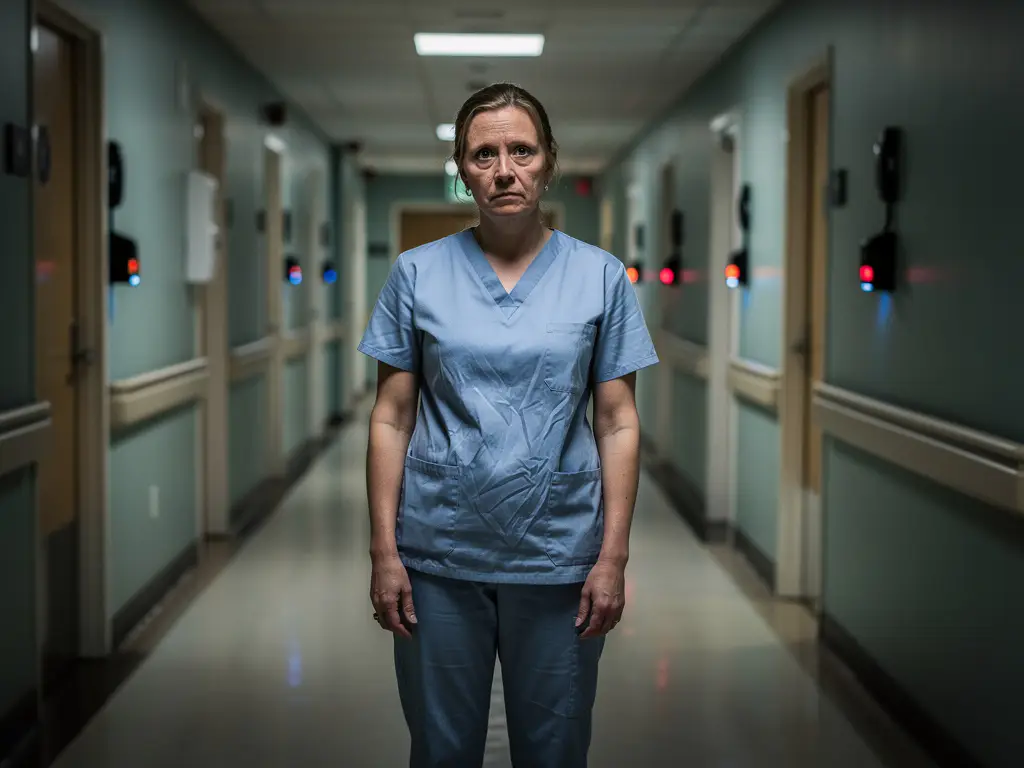
Staff shortages in healthcare directly lead to a lower quality of care. When there are too few employees, clients receive less attention, supervision, and personal care. This hits elderly care facilities and hospitals hardest, where demand for care continues to grow while the supply of qualified staff falls behind. In this article, we answer the most frequently asked questions on this topic, from safety risks to practical solutions.
How does staff shortage affect client safety?
Staff shortages significantly increase the risk of unsafe situations for clients. When one employee is responsible for too many residents or patients at once, it becomes impossible to continuously monitor everyone. Falls, medical deterioration, or emergencies may therefore go unnoticed for too long, with serious consequences.
In practice, understaffing means care workers must more frequently choose between competing tasks. A resident who falls out of bed at night may sometimes not be found for tens of minutes. That loss of time can mean the difference between prompt treatment and lasting injury. Safety is therefore the first and most immediate casualty of a structural staff shortage.
Which aspects of care quality suffer most from understaffing?
Understaffing has the greatest impact on personal attention, preventive care, and the emotional safety of clients. When care workers must divide their time among too many people, the focus inevitably shifts from delivering good care to handling urgent situations.
The following aspects of care quality are most at risk during staff shortages:
- Personal attention: Conversations, guidance, and emotional support are cut short or skipped altogether.
- Preventive care: Early detection of health problems takes time that simply isn’t available.
- Nighttime supervision: Fewer staff are on duty at night, precisely when falls and confusion occur more frequently.
- Documentation and handovers: Time pressure leads to less accurate record-keeping, which increases the risk of errors throughout the care chain.
The result is that care becomes increasingly reactive rather than proactive. Staff solve problems instead of preventing them, which in turn drives workload even higher over time.
Why is the staff shortage in elderly care so difficult to solve?
The staff shortage in elderly care is so persistent because supply and demand are structurally out of balance. Demand for care grows by approximately 6 percent annually due to an aging population, while the influx of new staff lags behind due to a combination of high workloads, relatively low pay, and a negative image of the profession.
Moreover, a large proportion of those who do enter the sector leave again within a few years. The combination of physically and emotionally demanding work, irregular hours, and limited career advancement makes the sector less attractive in the long term. Recruitment alone is therefore not a solution. As long as the underlying working conditions do not improve, the staff shortage will remain a structural problem.
What are the consequences of staff shortages for care workers themselves?
Staff shortages have a direct and heavy impact on the employees who are present. They face higher workloads, greater responsibility, and less room to do their jobs well. Over time, this leads to absenteeism, burnout, and further turnover, causing the shortage to reinforce itself.
Care workers experiencing understaffing regularly feel that they are falling short, even when doing their very best. That sense of helplessness is a well-known cause of work-related stress and emotional exhaustion. Anyone who consistently works in a situation where quality care is unachievable will eventually burn out. Staff shortage is therefore not only an organizational problem, but also a wellbeing problem for the people who work in healthcare.
How can technology help address staff shortages in healthcare?
Technology can take over some of the tasks performed by care workers, particularly in the area of supervision and monitoring. By deploying smart systems for observation, staff can focus their attention on tasks that require human contact, rather than needing to be physically present with every client at all times.
Examples of technological support currently used in practice:
- Automated fall detection: Systems that immediately alert staff when someone falls, without requiring an employee to monitor the room in person.
- Lying position recognition: AI that detects whether a client is lying in a high-risk position, helping to prevent pressure sores.
- Nighttime monitoring: Systems that watch over residents throughout the night, enabling night shifts to be deployed more efficiently.
- Smart alerting: Notifications sent only when a real situation occurs, reducing unnecessary trips across the facility.
Technology does not replace care workers, but it makes it possible to safely support more clients with the same number of staff. That is a meaningful difference in a sector where expanding the workforce in the short term is not realistic.
When is AI monitoring a responsible choice for care organizations?
AI monitoring is a responsible choice when a care organization structurally faces understaffing — particularly during night shifts — and when client safety is under pressure. It is most effective in situations where continuous physical presence is not feasible, but supervision remains essential.
Key considerations when choosing AI monitoring include privacy, accuracy, and integration into existing workflows. A system that generates too many false alarms increases workload rather than reducing it. Footage must never be accessible to unauthorized individuals, and the system must comply with applicable data protection laws and regulations.
AI monitoring is not a replacement for human care, but a supplement that relieves pressure on staff and improves client safety. Care organizations that are uncertain are best advised to start with a pilot on a single unit to evaluate the system’s impact within their own context before rolling it out organization-wide.
How Kepler Vision Technologies helps address staff shortages in healthcare
At Kepler Vision Technologies, we develop AI solutions that help care organizations manage staff shortages safely and responsibly. Our software, Kepler Night Nurse, monitors clients in elderly care facilities around the clock and immediately detects when someone falls or ends up in a high-risk situation.
What our solution offers in concrete terms:
- Immediate fall detection: Staff receive an alert within seconds, ensuring emergencies never go unnoticed.
- Minimal false alarms: Just one false alarm every 92 days, reducing workload rather than adding to it.
- Privacy protection: Footage is never viewed by humans. Staff only enter the room when the software requests it.
- Easy implementation: Plug-and-play installation that can be up and running quickly without major IT projects.
- Compliance: Certified to ISO 27001 and NEN7510 for maximum data protection.
Want to find out whether our AI monitoring is the right fit for your care organization? Get in touch with us and we’ll be happy to work with you on a tailored approach.
Frequently Asked Questions
How do I know if my care organization is ready for AI monitoring systems?
A good starting point is to identify when client safety is most at risk — such as during night shifts or peak periods. If staff consistently lack sufficient time to adequately monitor all clients, AI monitoring is a serious option to consider. Start with a pilot on one unit to assess how well the system fits your workflows before rolling it out organization-wide.
How do clients and their families respond to AI monitoring in the room?
Most clients and family members respond positively once they understand that their privacy is protected and that the system is designed to improve their safety. Transparent communication is essential: explain how the system works, what is and is not stored, and who has access to alerts. Obtaining consent and providing clear explanations in advance significantly reduces resistance and builds trust.
What legal and privacy regulations apply to the use of AI monitoring in care facilities?
Care facilities using AI monitoring must comply with the GDPR (General Data Protection Regulation) and sector-specific standards such as NEN7510. This means, among other things, that a data processing agreement must be in place with the vendor, that clients must be informed and, where possible, have given their consent, and that image data may not be retained longer than necessary. Always verify that the chosen solution holds the relevant certifications.
What are common mistakes when implementing technological care solutions?
A common mistake is introducing technology without sufficient buy-in from care staff, causing systems to be ignored or used incorrectly. Organizations also frequently underestimate the need for training and a clear protocol for how staff should respond to an alert. Involve staff early in the process, establish clear working agreements, and regularly evaluate whether the system is actually delivering the intended reduction in workload.
Can technology also help reduce burnout among care workers?
Yes, indirectly it can. By relieving staff of constant vigilance tasks — such as regularly checking on sleeping residents — technology reduces a portion of the mental burden. This gives staff more room for meaningful human interaction, which is one of the key motivating factors in care work. Fewer unnecessary trips and fewer false alarms also contribute to a calmer working environment, which can help reduce burnout symptoms.
Is AI monitoring also suitable for smaller care facilities or home care organizations?
AI monitoring systems are becoming increasingly accessible and are no longer limited to large institutions. For smaller organizations, it is important to choose scalable, plug-and-play solutions that do not require extensive IT infrastructure. Home care presents different challenges than residential care, but monitoring technologies are also being developed in that space to help clients live more safely at home with less physical staff presence.
Besides technology, what other measures can care organizations take to address staff shortages?
Technology is one part of a broader approach. Care organizations can also invest in better working conditions, flexible scheduling, and career development to retain staff for longer. Partnering with regional educational institutions for internships and career-change programs helps increase the influx of new staff. A combination of staff retention, smart use of technology, and restructuring job roles offers the best chance of achieving lasting improvement.
Related Articles
- How does staff shortage affect the workload of healthcare workers?
- How do you prevent staff shortages in your organization?
- How do you measure the success of fall prevention programs for older adults?
- Which mobile apps support fall prevention for seniors?
- How do you evaluate different fall prevention for elderly suppliers?
This content was generated with the help of AI and it may contain mistakes