


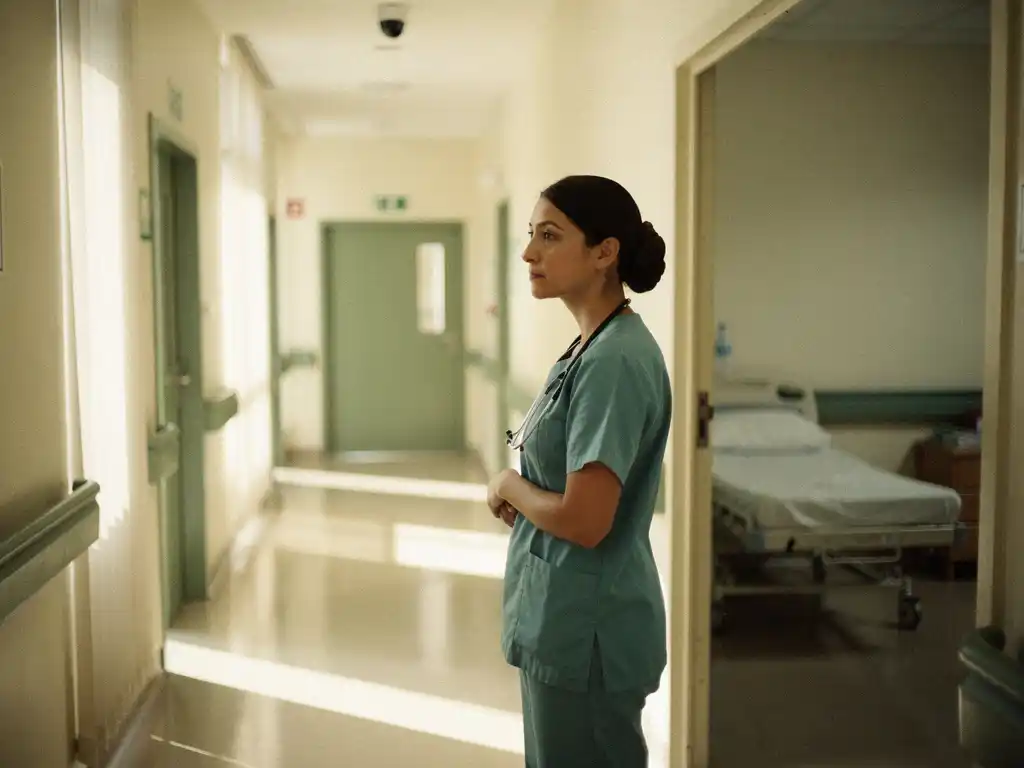
Staff shortages in healthcare will not resolve themselves through traditional recruitment campaigns alone. The combination of an aging population, rising demand for care, and a shrinking workforce calls for structural solutions — including the smart use of technology and AI. At Kepler Vision Technologies, we see every day how care organizations struggle with this challenge and how innovative tools can make a real difference. In this article, we answer the most frequently asked questions about staff shortages in healthcare and which solutions actually work.
How severe is the staff shortage in the healthcare sector?
The staff shortage in healthcare is one of the most pressing challenges of our time. Demand for care services grows by approximately 6% annually, while the supply of healthcare workers consistently falls short. Across Europe, nursing homes, hospitals, and psychiatric clinics are dealing with open vacancies that remain unfilled for months or even years.
The causes are multiple. The population is aging rapidly, meaning more people require care. At the same time, many experienced healthcare professionals are leaving the sector due to high workloads, emotional strain, and relatively low salaries. New graduates entering the field are not enough to close the gap. The result is a structural shortage that will only grow larger without significant intervention.
What are the consequences of staff shortages for the quality of care?
Staff shortages in healthcare have a direct impact on the quality and safety of the care provided. When teams are understaffed, caregivers have less time to spend with individual clients, the likelihood of missed warning signs increases, and the risk of incidents such as falls or undetected deterioration in health rises.
The consequences are felt at multiple levels:
- Increased risk of incidents: Less supervision means dangerous situations go unnoticed for longer.
- Higher workload for existing staff: Current employees must take on more tasks, leading to burnout and higher turnover.
- Reduced client satisfaction: Clients and their families experience less personal attention and engagement.
- Reputational damage for care facilities: Organizations that are chronically understaffed risk negative reviews and inspection reports.
The pressure on existing staff creates a vicious cycle: high workloads lead to greater turnover, which drives workloads even higher. Breaking that cycle requires more than just extra hands — it demands smarter ways of working.
What solutions exist for the staff shortage in healthcare?
Several strategies exist to address the staff shortage in healthcare. The most effective approach combines better working conditions, targeted recruitment, more efficient workflows, and the use of technology. No single measure solves the problem entirely, but together they can significantly ease the pressure.
The most commonly cited solutions are:
- Better working conditions and retention: Investing in job satisfaction, flexible scheduling, and career development helps retain experienced staff.
- International recruitment: Care organizations are increasingly recruiting from abroad to fill vacancies, though this comes with its own challenges around language and credential recognition.
- Returners and career changers: Targeted programs attract people back to healthcare who previously left the sector or want to transition from other professions.
- Task reallocation: Redistributing responsibilities across different role levels allows highly qualified staff to focus on work that truly requires their expertise.
- Technology and automation: AI and digital tools take over routine tasks, freeing up caregivers to spend more time on direct client care.
How can AI reduce the staff shortage in healthcare?
AI can reduce the staff shortage in healthcare by taking over tasks that would otherwise require constant human presence. Think of continuous client monitoring, detecting dangerous situations, and automatically alerting care staff. This allows a single caregiver to effectively supervise multiple clients at once, without compromising on safety.
AI systems never sleep, never get distracted, and process information continuously. In practice, this means nights, weekends, and busy daytime periods can be better covered without deploying additional staff. AI handles the monitoring, while caregivers can focus on tasks that genuinely require human involvement: conversations, personal care, and emotional support.
It is important to note that AI is not intended as a replacement for healthcare professionals, but as an extension of them. The technology detects; the caregiver acts. That distinction is crucial for building trust among both staff and clients.
How does AI monitoring work in practice in care facilities?
AI monitoring in care facilities works through camera systems that analyze footage using computer vision and machine learning. The software automatically recognizes situations such as a fall, an unsafe lying position, or unusual movement patterns, and immediately sends an alert to the on-duty caregiver. All of this happens in real time, without any footage being viewed by a person.
That last point is essential for client privacy. The AI processes footage locally and only triggers an alert when action is genuinely required. Caregivers enter the room only when the software indicates it is necessary, which benefits both the client’s privacy and their peace of mind.
During night shifts — traditionally a vulnerable period due to limited staffing — AI monitoring provides an added layer of security. Falls at night are detected and reported immediately, drastically reducing response times after an incident. That is not only better for the client; it also gives on-duty staff greater peace of mind and a clearer overview of the situation.
Which care facilities benefit most from AI monitoring?
The care facilities that benefit most from AI monitoring are nursing homes, hospitals, and psychiatric clinics where continuous client supervision is essential but staffing levels do not always allow for it. Facilities with a high fall risk among clients or with many night shifts in particular stand to gain significantly from automated monitoring systems.
Nursing homes top the list. Clients are vulnerable, nights are long, and staffing is limited. AI monitoring offers a direct improvement in safety without requiring additional personnel. Hospitals benefit especially on wards where patients face an elevated risk of falls or sudden deterioration. Psychiatric clinics benefit from systems that detect unusual behavioral patterns early.
Smaller care facilities with tight budgets can also benefit, provided the technology works on a plug-and-play basis and is easy to configure. Complex implementations are a barrier; user-friendly systems are not.
How Kepler Vision Technologies helps address the staff shortage in healthcare
At Kepler Vision Technologies, we develop AI software that helps care facilities operate safely and responsibly — even with fewer staff. Our products Kepler Night Nurse and Kepler NurseAssist monitor clients and patients around the clock, detect fall incidents immediately, and alert caregivers within seconds.
What our solution offers in concrete terms:
- Fall detection and fall prevention: The software recognizes dangerous situations before or immediately after they occur.
- Lying position recognition: Unsafe lying positions are automatically flagged, helping to prevent pressure sores and other complications.
- Privacy by design: Footage is never viewed by a person. Caregivers only take action when the AI indicates it is necessary.
- Extremely low error rate: Just one false alarm every 92 days — a thousand times better than older technologies.
- Simple installation: Plug-and-play concept, quick to configure and ready to use immediately.
- Secure data processing: Fully compliant with ISO 27001 and NEN 7510 standards.
Want to find out how we can support your care facility in tackling the staff shortage? Get in touch with us and discover what our AI solutions can do for you.
Frequently Asked Questions
How do I get started with implementing AI monitoring in my care facility?
The best first step is a needs assessment: identify which departments have the highest workload, where the most incidents occur, and where staffing is thinnest. Then request a demo from a provider such as Kepler Vision Technologies to see how the technology works in practice. Many modern systems are plug-and-play and require no major IT infrastructure, which keeps the barrier to implementation low.
How do care staff typically respond to the introduction of AI monitoring?
Resistance is a common initial reaction, often driven by fear that AI will take over their jobs or that they are being constantly observed. Transparent communication is therefore essential: clearly explain to staff that AI is a supportive tool, not a replacement. In practice, most healthcare professionals find that after an adjustment period they actually experience less stress, because they need to make fewer routine check rounds and can better prioritize where their attention is truly needed.
What are the privacy regulations surrounding AI camera monitoring of care clients?
Across the EU, AI camera monitoring in care facilities falls under the GDPR (General Data Protection Regulation). This means that clients or their legal representatives must give consent, and that image processing must be as minimal and purpose-specific as possible. Systems that apply privacy by design, such as those from Kepler Vision Technologies, process footage locally and do not store any video recordings, which significantly reduces both legal and ethical risks.
What does AI monitoring cost on average, and is it financially viable for smaller care facilities?
Costs vary depending on the number of rooms, the system chosen, and the contract model (purchase or subscription). Smaller care facilities can benefit from scalable subscription models where you only pay for what you use. When you weigh the costs against the savings on agency staff, the reduction in incident-related expenses, and the lower staff turnover resulting from reduced workload, AI monitoring proves financially attractive for most facilities over the medium term.
Can AI monitoring also help improve night shifts without hiring additional staff?
Yes, the night shift is precisely when AI monitoring has the greatest direct impact. With fewer staff present, the risk of missed incidents is highest, while AI continues to monitor continuously and without fatigue. Fall detection at night, flagging of unsafe lying positions, and early alerts mean that one caregiver can effectively supervise multiple clients without compromising on safety or response time.
What common mistakes do care facilities make when addressing the staff shortage?
A common mistake is focusing one-sidedly on recruitment without addressing the underlying causes of staff turnover. If the workload remains high, new employees leave just as quickly as they arrive. Another pitfall is implementing technology without involving staff in the process early enough, which leads to resistance and underuse of the tools. The most successful approach combines retention policy, task reallocation, and technology as a coherent, integrated strategy.
How do I measure whether AI monitoring is actually helping to reduce the workload?
Establish clear benchmarks in advance, such as the number of fall incidents per month, the average response time after an incident, staff sick leave rates, and employee satisfaction scores. Compare these figures after three to six months of using the AI system against your baseline measurement. Many care facilities see a noticeable reduction in unnecessary room checks within just a few months, along with an improvement in perceived workload — which translates into better retention figures.
Related Articles
- What is the impact of staff shortages on productivity?
- What are the causes of the staff shortage in the healthcare sector?
- What role does environmental modification play in fall prevention for older adults?
- How do you prevent privacy violations in fall prevention for seniors?
This content was generated with the help of AI and it may contain mistakes