


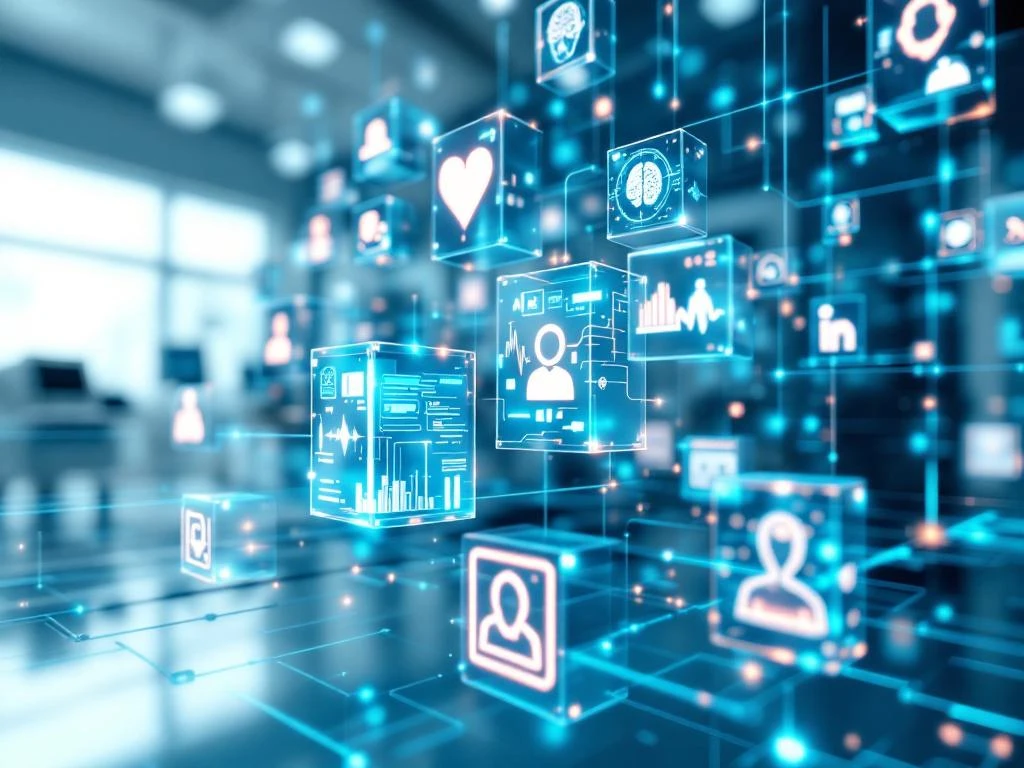
Innovative care monitoring builds on four key components: artificial intelligence for automatic detection, computer vision for image recognition, privacy-by-design principles, and reliable alarm systems. These technologies work together to support healthcare providers in monitoring patients while ensuring privacy is maintained and false alarms are kept to a minimum.
What actually makes care monitoring ‘innovative’ in 2024?
Innovative care monitoring distinguishes itself through AI integration, real-time detection, and complete automation. Instead of manual checks or simple sensors, modern monitoring uses smart algorithms that understand and interpret situations just as an experienced healthcare provider would.
The biggest change lies in the transition from reactive to proactive working. Traditional systems wait until something happens, while AI in healthcare continuously analyzes and recognizes patterns. This means dangerous situations can often be prevented before they escalate.
For healthcare providers, this means less stress and more time for direct patient care. You no longer need to be constantly physically present to guarantee safety. For patients, this provides more privacy and comfort, as they are not constantly observed by people.
Automation also plays an important role in addressing staffing shortages. Where previously multiple staff members were needed for continuous monitoring, now one system can monitor dozens of patients simultaneously without loss of quality.
What technology forms the foundation of smart care monitoring?
Computer vision, machine learning algorithms, and cloud solutions form the technical foundation of modern care monitoring. These technologies analyze visual material in real-time and recognize movement patterns, body posture, and potentially dangerous situations.
Computer vision works as the eyes of the system: it analyzes video images and recognizes objects, people, and movements. Machine learning algorithms function as the brain: they learn from millions of examples to become increasingly better at recognizing normal and abnormal situations.
Cloud solutions provide the processing power and storage needed for these complex analyses. They also make it possible to monitor systems remotely and perform updates without physical presence.
The smart aspect of this combination is that all components strengthen each other. The more data the system processes, the more accurate it becomes. The cloud ensures that improvements are automatically sent to all connected locations.
How does modern monitoring ensure privacy and security of patient data?
Modern care monitoring uses privacy-by-design principles, where images are never viewed by humans and all processing happens automatically. The system only analyzes movements and patterns, not the person themselves.
Compliance standards such as ISO 27001 and NEN 7510 ensure strict security protocols. These standards determine how data must be stored, processed, and secured in the healthcare environment.
A practical example: when the system detects a fall, the healthcare worker only receives a notification with location and time. No images are shown or stored that could violate privacy. The healthcare provider knows that help is needed, but the patient’s dignity remains intact.
Image processing happens locally on secured servers, so sensitive information doesn’t need to travel over the internet. This minimizes the risk of data breaches and complies with strict privacy legislation in healthcare.
Why is reliability so important in care monitoring systems?
Low percentages of false alarms and high detection accuracy determine whether healthcare staff trust and use the system. Too many false alarms lead to alarm fatigue, where important notifications are ignored.
Comparing this with older technologies like motion sensors or pressure mats, we see an enormous difference. Traditional systems can generate hundreds of false alarms per day, while modern AI systems reduce this to just a few per month.
For healthcare workers, reliability means fewer interruptions and stress. You can trust that an alarm is truly important, making your work more efficient. This also reduces workload in a sector already struggling with staff shortages.
The impact on patient care is directly noticeable. When systems are reliable, healthcare providers can respond faster and more targeted to real emergency situations. This can literally make the difference between life and death in situations like falls or medical emergencies.
How we help with innovative care monitoring
We develop AI solutions that watch over patients 24/7, with an accuracy of only one false alarm per 92 days. Our software detects falls, prevents accidents, and recognizes lying positions without images being viewed by humans.
Our key advantages:
- Plug-and-play implementation without complex installation
- Real-time fall detection within seconds
- Complete privacy protection through automated analysis
- Drastic reduction of false alarms
- Support in addressing staff shortages
The system is specifically developed for healthcare organizations struggling with staff shortages and increasing care demand. Through our AI technology, healthcare workers can focus on direct patient care while the software takes over monitoring.
Want to know how our innovative care monitoring solutions can help your organization? Contact our team for a no-obligation demonstration of our AI solutions.
Frequently Asked Questions
How long does implementation take?
Technical implementation takes 1-2 days per location. Staff need only 2-3 hours of training for the intuitive system.
What are the costs for implementing AI care monitoring?
Costs vary per institution and number of rooms. Due to plug-and-play installation, there are no complex implementation costs.
How accurate is the fall detection?
Our AI system achieves only one false alarm per 92 days while maintaining 99% accuracy in detecting real emergencies.
Related Articles
- Why is innovation a strategic theme within healthcare?
- What is the impact of smart monitoring on care processes?
- How can healthcare institutions prepare for future technology?
- How does technology change the relationship between healthcare provider and client?
- How do you secure fall prevention for seniors against cyberattacks?