


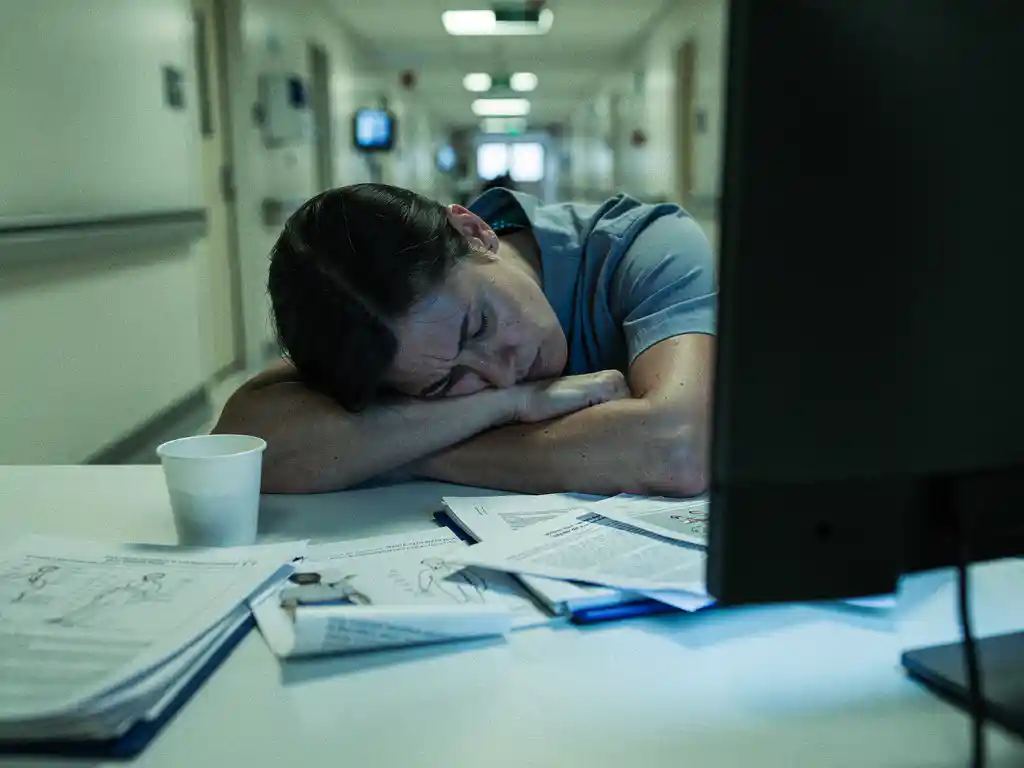
Chronic workload has serious consequences for both the health of healthcare workers and the quality of care they provide. When high workload becomes structural and recovery is no longer possible, physical complaints, mental fatigue, and professional errors accumulate. In healthcare, this is especially urgent: staff shortages increase workload, while that workload in turn leads to more absenteeism. In this article, we answer the most frequently asked questions about the effects of workload in healthcare.
What are the physical symptoms of chronic workload?
Chronic workload causes physical complaints because the body remains in a prolonged state of heightened stress. The most common symptoms are persistent fatigue, sleep problems, headaches, muscle tension, and digestive issues. With long-term exposure, cardiovascular problems can also develop as a result of the continuous production of stress hormones such as cortisol.
Healthcare workers are particularly vulnerable to these complaints. Irregular shifts, night shifts, and physically demanding work increase the physical burden. The body does not get enough time to recover, causing symptoms to accumulate rather than disappear. What starts as a stiff neck or a poor night’s sleep can, after months, develop into chronic pain or a completely disrupted sleep pattern.
Warning signs that should not be ignored include:
- Persistent fatigue that does not go away after rest
- Frequent illness due to a weakened immune system
- Heart palpitations or elevated blood pressure
- Tension in the neck, shoulders, and back
- Disrupted appetite or digestive complaints
What are the psychological effects of prolonged workload?
Prolonged workload leads to psychological complaints such as irritability, difficulty concentrating, feelings of anxiety, and ultimately burnout. The sense of control disappears, while the sense of responsibility remains. This tension is particularly damaging in healthcare, where workers consistently place the well-being of others above their own health.
One of the first psychological warning signs is emotional exhaustion: the employee feels empty and struggles to stay engaged with their work. This can progress into depersonalization, where an emotional distance develops toward colleagues and clients. In psychology, this is recognized as a core characteristic of burnout.
Other common psychological effects include:
- Reduced sense of self-worth and confidence
- Cynicism or negativity toward work
- Difficulty making decisions, even simple ones
- Social withdrawal and isolation
- Increased risk of anxiety disorders or depression
How does workload affect the quality of care?
High workload directly reduces the quality of care because fatigue impairs healthcare workers’ concentration, reaction time, and judgment. Medication errors, missed cues from clients, and less individual attention per resident are concrete consequences that put the safety of care recipients at risk.
When an employee is structurally overloaded with tasks, priorities are inevitably shifted. Things that genuinely require attention — such as recognizing a deteriorating health condition or responding promptly to a fall — are addressed later or sometimes missed entirely. This is not the result of carelessness, but of a system that demands too much from too few people.
The consequences for clients and patients include:
- Longer wait times when help is needed or in emergency situations
- Less personal attention and human contact
- Increased risk of incidents such as falls or choking
- Less continuity in the care relationship due to changing staff
When does workload become a risk for absenteeism and burnout?
Workload becomes a risk for absenteeism and burnout when employees are structurally unable to recover and their physical or psychological complaints increase rather than diminish. This is the point at which workload shifts from a temporary problem to a chronic situation with direct consequences for availability.
Short-term absenteeism can be an early warning sign. When employees call in sick more frequently, experience minor complaints more often, or struggle to get to work in the morning, it indicates that the demands placed on them exceed their capacity. Without intervention, this leads to long-term absence or permanent departure from the sector.
In healthcare, this is especially problematic because every absent staff member increases the workload for the rest of the team. This creates a negative spiral: more workload leads to more absenteeism, which leads to even higher workload for those who remain. Organizations that fail to break this pattern risk chronic understaffing.
Risk factors that accelerate burnout include:
- Regularly working overtime or covering shifts on days off
- Little autonomy or influence over one’s own schedule
- Lack of recognition and support from managers
- Insufficient recovery time between shifts
How can healthcare organizations reduce chronic workload?
Healthcare organizations can reduce chronic workload through a combination of structural changes to work organization, better support for employees, and smart use of technology. The key is that employees should spend less time on tasks that can be handled by other means, so they can focus their attention on what truly requires human care.
Concrete steps organizations can take:
- Hold regular conversations about how employees experience their work and identify issues early
- Ensure sufficient recovery time and respect scheduling preferences
- Invest in training and career development to retain staff
- Reduce administrative tasks through smarter work processes
- Use technology for monitoring and supervision so that employees do not need to be constantly present
Culture also plays a major role. Employees must feel safe setting boundaries without feeling like they are letting their colleagues down. Managers who take workload seriously and intervene proactively make the difference between a team that pushes on until it collapses and one that remains sustainably effective.
How Kepler Night Nurse helps reduce workload
At Kepler Vision Technologies, we understand that workload in healthcare is not just an HR problem — it is a systemic one. That is why we developed Kepler Night Nurse: AI software that monitors clients around the clock, so healthcare workers do not need to be physically present at all times.
Kepler Night Nurse reduces workload in several concrete ways:
- Automatic fall detection: The software instantly detects when someone falls and sends an alert to the healthcare worker within seconds. No more constant check rounds needed.
- Only one false alarm every 92 days: Our technology is a thousand times more accurate than traditional systems, significantly reducing unnecessary disruptions and stress for staff.
- Privacy guaranteed: Footage is never viewed by humans. Staff only enter a room when the software requests it, providing peace of mind and trust.
- Fall prevention and lying position recognition: In addition to responding to incidents, the software also helps prevent them, making work more proactive and less reactive.
- Plug-and-play installation: Easy to configure and deploy, with no lengthy implementation process.
By using smart technology for monitoring tasks, healthcare workers can focus on what truly requires human attention. This structurally reduces workload and helps prevent absenteeism. Want to know what Kepler Night Nurse can do for your organization? Get in touch with us and discover how we can work together to ease the workload in your healthcare organization.
Frequently Asked Questions
How can I tell as a manager whether workload has already become chronic for my team?
Chronic workload is often already present before employees name it themselves. Watch for signs such as increasing short-term absenteeism, a decline in team morale, employees who are structurally working overtime or struggling to take days off, and a rise in incident reports. A low-threshold conversation about how employees experience their work — ideally through a regular check-in structure — helps identify issues early before complaints escalate into long-term absence.
What is the difference between workload and work-related stress, and why does it matter?
Workload refers to the objective amount of work relative to available time and capacity. Work-related stress is the subjective experience that arises when someone feels they can no longer cope with the workload. The distinction matters because the approach differs: workload calls for organizational measures such as better task distribution or technological support, while work-related stress also requires personal guidance and space for recovery. Both must be addressed for a lasting result.
Can night shifts specifically contribute to faster burnout in healthcare workers?
Yes, night shifts are an additional risk factor because they disrupt the natural sleep-wake cycle (the circadian rhythm), which impairs the body and mind’s ability to recover. Healthcare workers on night shifts more frequently experience fatigue, difficulty concentrating, and a weakened immune system. When night shifts are combined with high workload and insufficient recovery time during the day, the risk of burnout increases considerably. Limiting consecutive night shifts and using technology for supervision can help ease this burden.
What can I do as an individual healthcare worker if I notice my workload is becoming too high?
The first step is to raise the situation with a manager or a trusted contact person, however difficult that may feel. Document specific situations in which the workload was unsafe or unsustainable, so you can support the conversation with concrete facts. In addition, prioritize active recovery outside of working hours: adequate sleep, physical activity, and social contact are not luxuries but necessities. Do not wait until complaints become serious — early action prevents long-term absence.
How long does it typically take for chronic workload to lead to burnout?
There is no fixed timeline, but research indicates that burnout typically develops after months to years of sustained overload without sufficient recovery. The duration depends on personal resilience, the level of social support, the severity of the workload, and whether intervention occurs early. Precisely because the process is gradual, warning signs are often only recognized once someone has already pushed well beyond their limits. Early intervention — both at the organizational and personal level — is therefore crucial.
What role does technology play in structurally reducing workload in healthcare?
Technology can play an important role by taking over tasks that do not necessarily require human presence, such as continuous monitoring and supervision. AI-driven systems such as fall detection software enable healthcare workers to work in a more focused and calmer manner, rather than being constantly reactive. It is important, however, that technology is deployed as a complement to human care, not a replacement for it. The benefit lies in reducing unnecessary disruptions, fewer check rounds, and more space for tasks that truly require human attention.
What are the first concrete steps for a healthcare organization that wants to address workload?
Start with an honest assessment of the current situation through employee satisfaction surveys, absenteeism figures, and conversations on the work floor. Then map out which tasks consume the most time and whether they can be optimized or automated. Next, set priorities: which changes will have the greatest impact in the short term? Consider revising schedules, reducing administrative burdens, and introducing technological support. A structural approach requires the involvement of both management and employees, and ideally an external partner who can help think through sustainable solutions.
Related Articles
- What are the signs of excessive workload in the workplace?
- How do you integrate fall prevention for elderly people with existing care processes?
- What quality standards apply to fall prevention for the elderly?
- How does AI-based care monitoring differ from traditional systems?
This content was generated with the help of AI and it may contain mistakes