


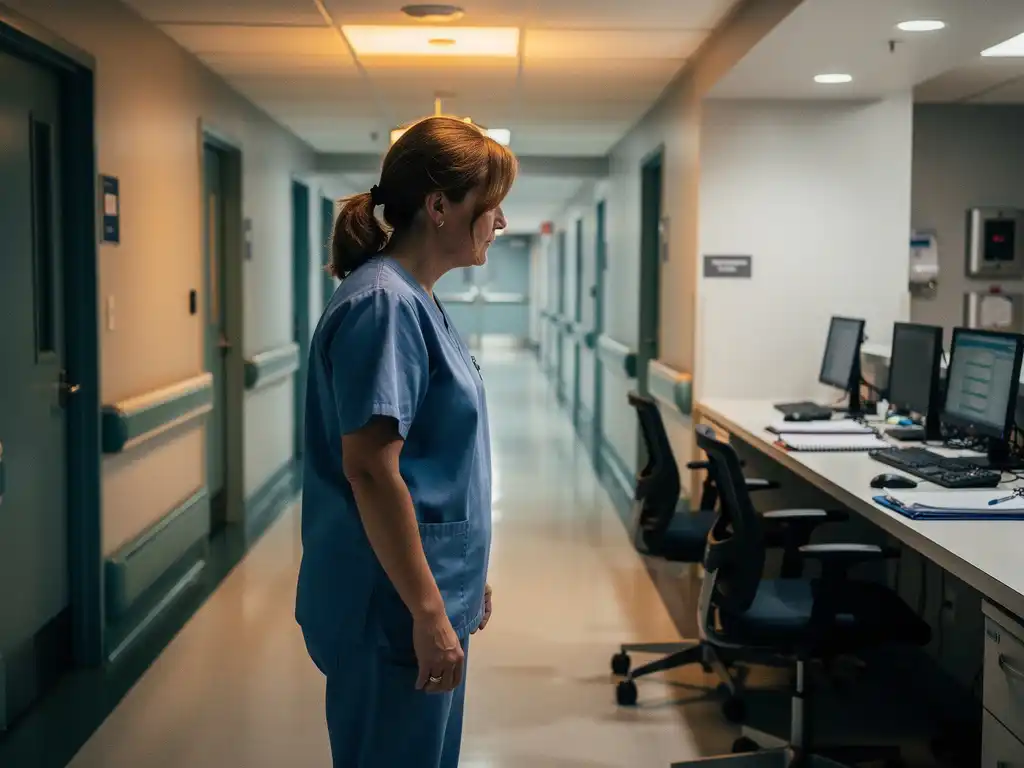
Hospitals address staff shortages through a combination of improved working conditions, smarter scheduling, and technological support. There is no single solution: the most effective approach combines retaining existing staff with relieving the burden on employees through innovations such as AI monitoring. In this article, we answer the most frequently asked questions about staff shortages in healthcare and what hospitals are actively doing about them.
How severe is the staff shortage in hospitals?
The staff shortage in hospitals is significant and continues to grow every year. Demand for care is increasing by approximately 6% per year, while the supply of qualified healthcare workers is not keeping pace. This means hospitals are structurally understaffed and unable to handle the growing patient volume.
This shortage is not unique to any one country. Across Europe, hospitals and care facilities are grappling with the same problem: an aging population is driving up demand for care, while the labor market for nurses and caregivers remains tight. Staff are leaving the sector due to high workloads, irregular shifts, and emotionally demanding work. The result is a vicious cycle: fewer staff leads to higher workloads, which in turn leads to more burnout and turnover.
For hospitals, this is felt most acutely in departments where continuous monitoring is essential, such as intensive care, geriatrics, and psychiatry — where the pressure on available staff is greatest.
What measures are hospitals taking to retain staff?
Hospitals are taking a range of measures to retain staff, including better employment conditions, flexible scheduling, career development opportunities, and healthier workloads. The focus is shifting from recruitment alone to also retaining existing employees, since training new staff takes both time and money.
Concrete steps hospitals are taking include:
- Flexible working hours and greater control over personal schedules, allowing staff to better balance work and personal life.
- Mentorship programs and support for new employees to reduce early turnover.
- Clear career pathways that show staff how they can grow within the organization.
- Reduced administrative burdens, so healthcare professionals can spend more time with patients rather than on paperwork.
- A focus on job satisfaction and safety, including programs supporting employee mental health.
These measures help, but they do not fully resolve the structural shortage. That is why a growing number of hospitals are also looking to technological solutions that reduce workload without requiring additional staff.
How does technology help address staff shortages in healthcare?
Technology helps address staff shortages in healthcare by automating tasks that would otherwise require constant human presence — such as patient monitoring, fall detection, and tracking movement patterns. This allows healthcare workers to focus their attention on moments when hands-on care is truly needed.
Intelligent monitoring systems powered by artificial intelligence are a prime example. These systems continuously monitor patients and only send an alert when something actually requires attention. This is fundamentally different from traditional camera systems, where staff must actively watch and assess footage themselves.
Other technologies hospitals are deploying include digital scheduling systems, AI-driven triage, and automated documentation. All of these tools share the same goal: making better use of healthcare professionals’ available time and eliminating unnecessary tasks.
What are the benefits of AI monitoring for hospital staff?
AI monitoring offers hospital staff three concrete benefits: fewer unnecessary trips across the ward, faster response times in emergencies, and reduced mental strain through reliable automated surveillance. Staff no longer need to continuously check on patients themselves.
The practical benefits are clearly felt on the floor:
- Immediate alerts for fall incidents, so a staff member can be on the scene within seconds rather than minutes.
- Fewer false alarms, preventing staff from repeatedly responding unnecessarily and becoming exhausted by false alerts.
- A calmer ward environment, because staff know the AI is monitoring and they only need to intervene when it is truly necessary.
- Better night shifts, where a single staff member can safely monitor multiple patients with technological support.
This makes AI monitoring not only a solution to staff shortages, but also a way to reduce the burden on existing staff — helping to keep them in healthcare for longer.
What challenges exist when introducing AI in hospitals?
The biggest challenges when introducing AI in hospitals are resistance from staff, privacy legislation, integration with existing systems, and the need for reliable technology. Each of these factors can delay or complicate implementation if not properly addressed.
Acceptance by staff and patients
Healthcare professionals are rightfully critical of new technology. They want to know whether the system is reliable, whether it complements rather than replaces their work, and whether patients are comfortable with it. Transparent communication and involving staff in the rollout process are essential for successful adoption.
Privacy and data protection
In healthcare, privacy and data protection are non-negotiable. AI systems that process images or data must comply with strict requirements, including GDPR and sector-specific standards. A system in which images are never viewed by humans and data is stored in encrypted form addresses a large part of these concerns. Compliance with standards such as ISO 27001 and NEN 7510 provides a concrete guarantee that hospitals can verify before implementing a system.
When is AI monitoring the right choice for a hospital?
AI monitoring is the right choice for a hospital when there is a combination of staff shortages, a high risk of fall incidents, and a need for continuous monitoring. Departments such as geriatrics, neurology, and psychiatry are typically the first settings where AI monitoring delivers immediate value.
A hospital is ready for AI monitoring if it meets the following criteria:
- There are departments where continuous monitoring is essential but cannot always be guaranteed with available staff.
- Fall incidents or undetected emergencies occur regularly and pose a risk to patient safety.
- The organization is willing to invest in technology as a structural solution, not a temporary fix.
- There is support from both management and frontline staff to integrate a new system into daily workflows.
The sooner a hospital takes this step, the sooner it can ease the pressure on its staff and improve patient safety.
How Kepler Vision Technologies helps address staff shortages in healthcare
At Kepler Vision Technologies, we develop AI solutions specifically designed for the challenges hospitals and care facilities face every day. Our software monitors patients 24/7 and immediately detects when someone falls or finds themselves in an unsafe situation — without any footage ever being viewed by a human.
What sets our approach apart:
- Exceptionally low error rate: just one false alarm every 92 days, making it 1,000 times more accurate than outdated technologies.
- Privacy by design: footage is processed by AI and never viewed by humans, fully compliant with GDPR, ISO 27001, and NEN 7510.
- Plug-and-play installation: easy to plan, configure, and deploy without lengthy implementation processes.
- Proven in practice: our solutions are used by international healthcare organizations across Europe.
- 21 patents: a robust patent portfolio that protects our technological edge.
Want to find out whether our AI monitoring is the right fit for your hospital or care facility? Visit our website for more information, or contact us directly to discuss the possibilities.
Frequently Asked Questions
How quickly will AI monitoring show visible results on the ward?
Most hospitals notice a difference in workload on wards where AI monitoring is active within just a few weeks of implementation. Staff receive fewer false alarms, need to make fewer preventive check rounds, and can direct their attention more purposefully. Structural effects on staff turnover and absenteeism typically become visible after three to six months of use.
Will AI monitoring eventually replace healthcare staff entirely?
No, AI monitoring is designed to complement healthcare staff, not replace them. The technology takes over the continuous surveillance task, but human care remains indispensable for actually helping patients, making medical decisions, and providing emotional support. The goal is precisely to relieve the burden on healthcare professionals so they have more time and energy for the tasks that truly require human involvement.
What do AI monitoring systems cost, and do the benefits outweigh the investment?
The investment in AI monitoring varies depending on the size of the department and the system chosen, but hospitals typically report a positive business case within one to two years. The benefits are both financial (lower costs from fall incidents, fewer overtime hours, and reduced reliance on expensive agency staff) and non-financial (higher staff satisfaction, improved patient safety, and less work-related burnout). It is advisable to request a concrete cost-benefit analysis from the vendor tailored to your facility’s specific situation.
How do you handle patients who object to camera surveillance in their room?
This is a frequently asked and entirely valid question. Modern AI monitoring systems like those from Kepler Vision process footage exclusively through algorithms and never display it to staff, which significantly improves the privacy experience for many patients compared to traditional camera surveillance. In practice, it is important to inform patients and their families clearly and transparently in advance about how the system works. Facilities can also offer an opt-out procedure for patients who continue to object, with care needs and safety risks serving as the guiding factors in that decision.
Which department in a hospital is the best starting point for an AI monitoring pilot?
Geriatrics and neurology are generally the most logical starting points for a pilot, as these departments present the strongest combination of high fall risk, the need for continuous monitoring, and staff shortages. A successful pilot in one department also provides concrete data and insights that build support for rolling out the system to other departments. It is advisable to actively involve frontline staff in setting up the pilot, so they become co-owners of the process.
How do you ensure staff actually embrace the new technology?
Successful adoption starts with early involvement: bring nurses and caregivers into the selection and implementation phase so they have a say in how the system is used. Provide practical training that fits into daily work routines and designate internal champions who can guide their colleagues. Communicate clearly about what the technology does and does not do, as uncertainty about job security or surveillance is a common but very addressable concern.
What should a hospital check before choosing an AI monitoring vendor?
Check at minimum the following points: does the system comply with GDPR, ISO 27001, and NEN 7510? What is the demonstrated accuracy of the system, and how many false alarms does it generate on average? Are references available from comparable healthcare organizations in Europe? And how does the technical integration with existing hospital systems work? A vendor that is transparent about these points and willing to offer a trial period or pilot provides the greatest assurance of a reliable and sustainable partnership.
Related Articles
- How does HR structurally address workload pressure?
- What is a staff shortage and how does it occur?
- What causes high work pressure in the healthcare sector?
- What is the difference between fall detection and fall prevention for elderly people?
- What role does innovation play in improving patient safety?
This content was generated with the help of AI and it may contain mistakes