


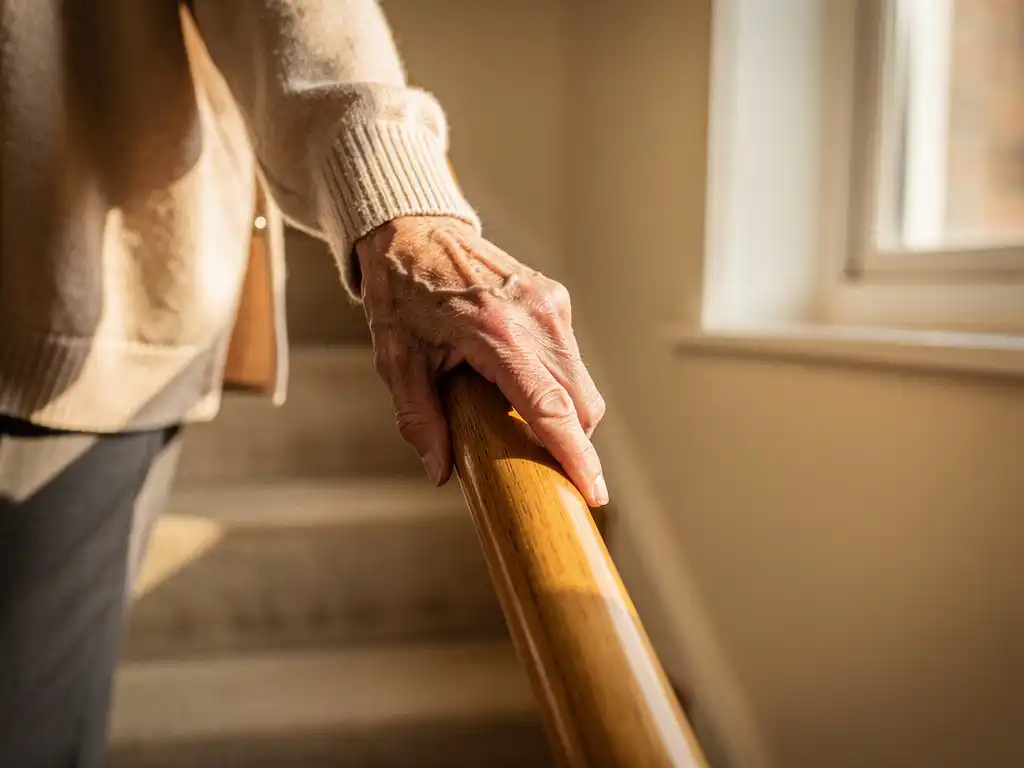
Fall prevention for elderly people is a crucial component of quality care in healthcare institutions. With the aging population and increasing complexity of care needs, healthcare facilities are faced with increasingly strict requirements to prevent fall incidents. These quality standards not only ensure better patient safety but also help comply with legal obligations and achieve certifications. Modern technological solutions play an increasingly important role in meeting these standards.
For healthcare institutions, it is essential to understand which specific requirements and standards apply to their fall prevention policy. From technical specifications to documentation requirements: every aspect of fall prevention is regulated to ensure the highest possible quality of care.
What are quality standards for fall prevention and why are they important?
Quality standards for fall prevention are structured guidelines that help healthcare institutions systematically prevent, detect, and treat fall incidents among elderly people. These standards include risk assessments, preventive measures, monitoring procedures, and incident reporting.
The main Dutch quality standards for fall prevention are established by the Health and Youth Care Inspectorate (IGJ) and are based on evidence-based guidelines. These standards require healthcare institutions to implement a structured fall prevention policy consisting of four main components: risk identification, preventive interventions, monitoring, and evaluation.
The importance of these standards extends across multiple areas. First and foremost, they protect the safety and well-being of residents by significantly reducing the risk of fall incidents. Additionally, they help healthcare institutions limit legal liability and comply with insurance requirements. For families and residents, these standards create confidence in the quality of care provided.
What technical requirements apply to fall detection systems in healthcare institutions?
Fall detection systems in healthcare institutions must meet strict technical requirements regarding accuracy, response time, privacy protection, and integration with existing care systems. The systems must achieve a detection accuracy of at least 95% and limit the number of false positive alarms to less than one per week per resident.
The technical specifications include various critical parameters. Response times may not exceed 30 seconds, measured from the moment of detection to alerting care staff. For privacy compliance, all systems must comply with the General Data Protection Regulation (GDPR) and Dutch privacy legislation, whereby visual material may not be stored or viewed by unauthorized personnel.
Additionally, fall detection systems must integrate seamlessly with existing care information systems and electronic patient records. This requires compatibility with standard care protocols and the ability to automatically document incident data for quality monitoring and reporting purposes.
How are fall prevention systems tested and certified?
Fall prevention systems undergo an extensive certification process consisting of laboratory tests, clinical validation, and independent audits by recognized certification institutions. This process takes an average of 6 to 12 months and includes both technical and clinical evaluations.
The testing process begins with laboratory validation, where technical performance is measured under controlled conditions. Various fall scenarios are simulated to determine detection accuracy. This is followed by clinical pilots in real care environments, where the system is tested under realistic conditions with residents and care staff.
Certification is performed by independent organizations such as TNO or other recognized testing laboratories. These organizations assess not only technical performance but also compliance with privacy legislation, cybersecurity requirements, and medical device regulations. Successful certification results in CE marking and possible ISO certificates that confirm the quality and safety of the system.
What is the difference between various compliance standards for fall prevention?
The main compliance standards for fall prevention differ in scope, area of application, and specific requirements. ISO 27001 focuses on information security, NEN 7510 on privacy in healthcare, and IGJ guidelines on clinical quality and patient safety.
ISO 27001 is an international standard for information security management that ensures the protection of sensitive patient data. This standard requires the implementation of security controls, risk assessments, and continuous monitoring of IT systems. For fall prevention systems, this means that all data exchange and storage must comply with strict security requirements.
NEN 7510 is specifically developed for Dutch healthcare and focuses on privacy protection of patient information. This standard sets additional requirements for the use of cameras and sensors in healthcare institutions, where explicit consent from residents is often required. IGJ guidelines, on the other hand, focus on the clinical effectiveness and safety of fall prevention interventions, with emphasis on evidence-based practices and measurable outcomes.
What documentation must healthcare institutions maintain for fall prevention compliance?
Healthcare institutions must maintain extensive documentation consisting of fall risk assessments per resident, incident reports, system validation reports, staff training records, and periodic evaluations of fall prevention policy. This documentation must be retained for at least 7 years.
The core documents include individual care plans with fall risk assessments that are regularly updated based on changing circumstances of residents. Each fall incident must be documented with details about the cause, circumstances, measures taken, and follow-up actions. For technical systems, maintenance logs, calibration certificates, and performance reports must be maintained.
Additionally, compliance standards require documentation of staff training and competency evaluations. This includes training records for the use of fall detection systems, knowledge of fall prevention protocols, and regular continuing education. Quality audits and management reviews must also be documented to demonstrate continuous improvement of fall prevention policy to supervisors and certification bodies.
How we help with fall prevention compliance
We offer healthcare institutions a complete solution for fall prevention compliance with our advanced AI technology, which meets all relevant quality standards and certifications. Our systems help healthcare institutions not only meet compliance requirements but exceed them.
Our fall prevention solutions offer:
- ISO 27001 and NEN 7510 certified technology for optimal privacy and security
- Exceptional accuracy, with only one false alarm per 92 days
- Automatic documentation and reporting for compliance purposes
- 24/7 monitoring without invading residents’ privacy
- Seamless integration with existing care systems
By choosing our fall prevention technology, healthcare institutions can focus on delivering quality care while we ensure all compliance requirements are met. Contact us to discover how we can help your healthcare institution implement a compliant and effective fall prevention system.
Frequently Asked Questions
How long does it take to fully implement a fall prevention system in our healthcare institution?
The full implementation of a fall prevention system takes an average of 4-8 weeks, depending on the size of your institution and the complexity of the integration. This includes hardware installation, connection with existing systems, staff training, and a testing period to determine optimal settings.
What happens if our fall detection system is temporarily offline – do we remain compliant?
During planned maintenance moments or technical failures, you must fall back on manual procedures and increased supervision. Document all offline periods and alternative measures taken in your incident log. For compliance, it is essential that you have demonstrable backup procedures and activate them immediately during system failure.
Do we need to ask permission from residents or family for the use of fall detection systems?
Yes, under GDPR and NEN 7510, explicit consent is required for camera-based systems. For contactless sensor technology, information provision and opt-out options may suffice. Document all consents carefully and respect residents’ right to withdraw consent.
What costs are associated with achieving and maintaining fall prevention compliance?
In addition to the initial investment in technology (€15,000-50,000 depending on the institution), you must account for annual costs for certification (€2,000-5,000), staff training (€1,000-3,000), and system maintenance (10-15% of purchase value). These investments are often offset by lower insurance premiums and reduced liability risks.
How often must fall risk assessments be updated for each resident?
Fall risk assessments must be reviewed at least every 3 months, but also after any significant change in the resident’s health condition, after a fall incident, or when medication changes. Use standardized assessment tools and document all changes with date and reason for adjustment.
What are the most common mistakes healthcare institutions make with fall prevention compliance?
The three most common mistakes are: incomplete documentation of incidents and follow-up actions, insufficient training of staff in the use of detection systems, and failing to adjust individual care plans promptly after risk changes. Ensure regular internal audits to avoid these pitfalls.
Can we achieve fall prevention compliance with only traditional measures without technology?
While traditional measures such as adapted environments and increased supervision remain important, modern compliance requirements make the use of technological support virtually inevitable. The required detection accuracy and response times are difficult to achieve without automated systems, especially with 24/7 monitoring.
Related Articles
- How do you keep healthcare workers in the workforce longer?
- How does smart scheduling reduce the pressure of staff shortages in healthcare?
- What are the signs of excessive workload in the workplace?
- How does a good employer deal with work pressure?
- How do you solve staff shortages as an employer?
This content was generated with the help of AI and it may contain mistakes