


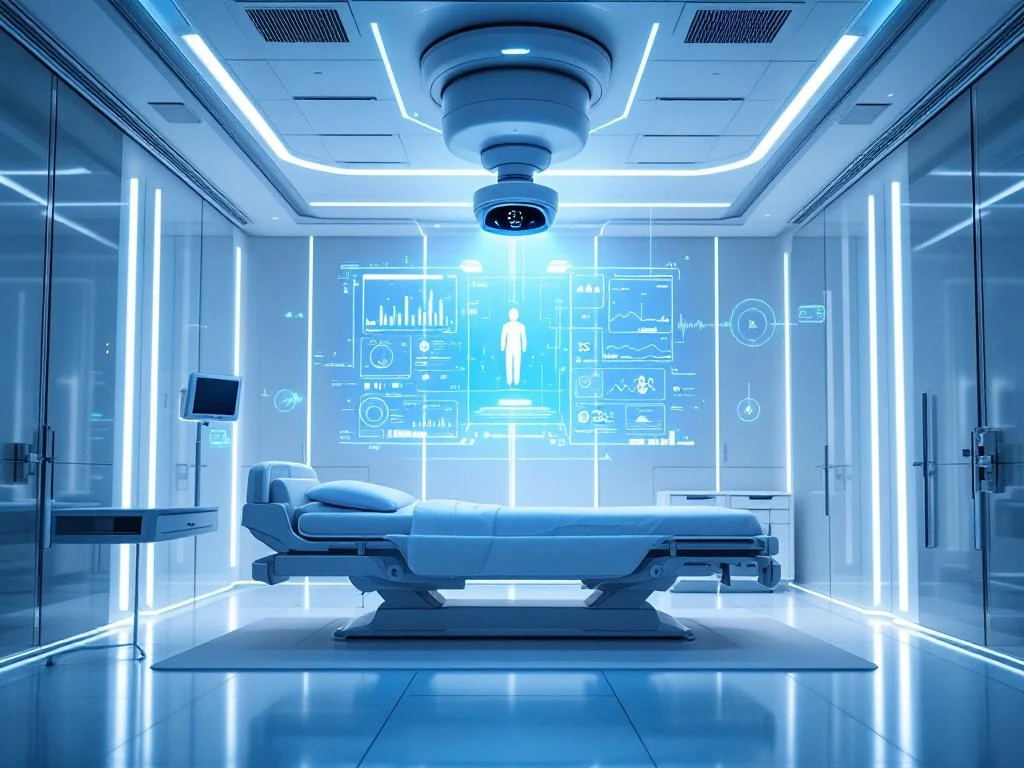
Tomorrow’s healthcare is being shaped by AI in healthcare, digitalization, and automated monitoring systems. These technologies help solve staffing shortages, improve patient safety, and enable 24/7 care delivery. From fall detection to predictive analytics: technology is transforming how you provide and receive care. Here we answer the key questions about these developments.
Which AI technologies are changing healthcare delivery the most?
AI in healthcare is transforming care delivery primarily through automated patient monitoring, fall detection, diagnostic support, and predictive analytics. These technologies work 24/7 without breaks and often detect problems faster than human observation allows.
Automated patient monitoring continuously supervises vital functions and behavioral patterns. The system only alerts healthcare staff when something is actually wrong. This means your team can focus on direct patient care instead of constant observation.
Fall detection systems use computer vision to recognize unsafe situations. They analyze movement patterns and can detect a fall within seconds. This prevents long waiting times where patients lie helplessly on the ground.
Diagnostic support helps doctors interpret medical images and laboratory results. The AI can recognize patterns that the human eye might miss. Predictive analytics use patient data to assess risks and suggest preventive measures.
How does digitalization help solve staffing shortages in healthcare?
Digital tools and automation relieve healthcare staff by taking over routine tasks and increasing efficiency. They enable 24/7 monitoring without additional staff and ensure your team focuses on tasks that require human attention.
Automatic medication dispensers ensure the right dosage at the right time. Electronic patient records make information directly accessible to all involved parties. This saves time during handovers and prevents communication errors.
Smart sensors monitor patients continuously and only sound alarms in real emergency situations. This reduces unnecessary checks and false alarms. Digital planning tools optimize schedules and ensure better distribution of available staff.
Telemedicine enables remote consultations. Patients don’t always need to come to the hospital for routine checkups. This saves travel time for patients and consultation time for healthcare providers.
Practical time-saving examples
- Automatic vital measurements that are directly stored in the patient record
- Speech recognition for dictating reports
- Mobile apps that allow patients to submit measurements themselves
- Automatic scheduling of medication and treatments
What are the main challenges in implementing new healthcare technology?
Privacy concerns, compliance requirements, user acceptance, and implementation costs pose the greatest challenges. Healthcare organizations must comply with strict regulations while innovating, and staff must gain confidence in new systems.
Privacy and compliance are top priority in healthcare. New technology must comply with GDPR, NEN7510, and ISO27001 standards. This means patient data must always remain protected and you must be able to demonstrate how data is processed and stored.
User acceptance requires good training and clear benefits. Healthcare staff must understand how technology improves their work rather than complicating it. Involve your team from the beginning in choosing and implementing new systems.
Implementation costs go beyond just the purchase. You must account for training, system integration, and possible temporary productivity loss during the transition phase. Choose solutions that can be introduced step by step.
Best practices for successful implementation
- Start with a pilot project in a limited area
- Ensure extensive training before going live
- Choose suppliers with proven experience in healthcare
- Plan sufficient time for adjustment and modifications
What technological developments are coming to healthcare in the next five years?
Internet of Things in hospitals, wearable health monitoring, robotics, expanded telemedicine, and personalized treatment plans will become mainstream. These developments make care more accessible, more accurate, and more tailored to individual patients.
Internet of Things (IoT) connects all devices in hospitals with each other. Beds, infusion pumps, monitors, and other equipment automatically share information. This provides real-time insight into the status of patients and equipment.
Wearable devices like smartwatches and sensors monitor patients at home. They measure heart rate, blood pressure, activity, and sleep patterns. This data helps doctors adjust treatments without patients having to come to the hospital.
Robotics supports both surgery and daily care. Surgical robots enable more precise procedures. Service robots help with medication, transport, and cleaning. This relieves staff for more complex tasks.
Telemedicine is expanding from simple video calls to complete virtual care programs. Patients receive the same quality of care at home as in the hospital for many conditions.
Personalized treatment plans use genetic information, lifestyle data, and medical history to tailor treatments. This increases effectiveness and reduces side effects.
How we help with technological innovation in healthcare
We develop AI in healthcare solutions that directly contribute to solving staffing shortages. Our software watches over patients 24/7 and detects unsafe situations with unprecedented accuracy, allowing your team to focus on direct patient care.
Our key advantages for your healthcare organization:
- Fall detection within seconds – No more long waiting times for patients needing help
- Minimal false alarms – Only one false alarm per 92 days, 1,000 times better than traditional systems
- Complete privacy protection – Images are never viewed by humans and the solution meets all compliance requirements
- Plug-and-play implementation – Easy to install without complex system integration
- 24/7 monitoring – Continuous supervision without additional staff
Our AI solutions for fall detection and patient monitoring are already actively used by international healthcare organizations. They help solve staffing shortages through intelligent supervision that only alerts when actual help is needed.
Want to know how our technology can help your healthcare organization? Contact us for a no-obligation demonstration and discover how our AI healthcare monitoring solutions can solve your daily challenges.
Frequently Asked Questions
How long does it take for staff to adapt to AI systems?
Most healthcare staff adapt to AI systems within 2-4 weeks with proper training and support.
What happens if the AI system fails?
Professional AI healthcare systems have automatic backup procedures and failover systems to ensure continuous monitoring.
Can AI detect different types of falls?
Yes, modern AI systems recognize various fall types and learn individual patient movement patterns to adjust sensitivity.
Related Articles
- How does intelligent software change the healthcare infrastructure?
- How is AI changing the future of healthcare?
- Why are healthcare institutions increasingly investing in smart monitoring?
- Welke privacy aspecten zijn belangrijk bij valpreventie voor ouderen?
- What are the most important innovations in healthcare technology today?