


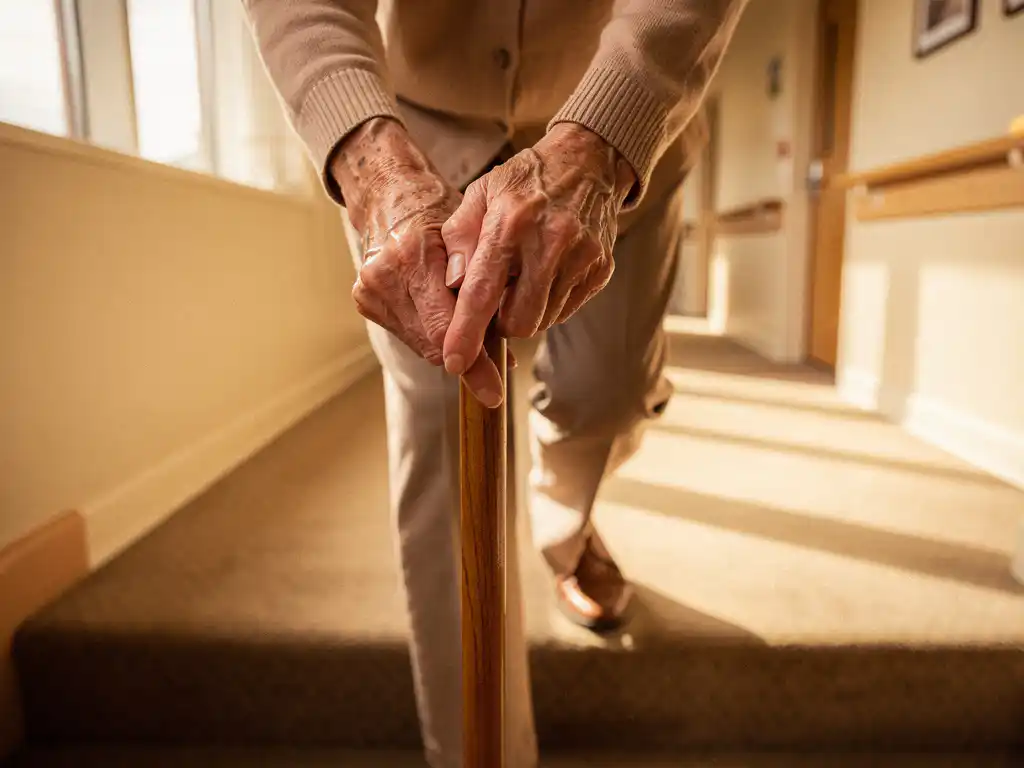
Fall prevention for seniors is a crucial aspect of modern healthcare that is receiving increasing attention. With an aging population and growing care demands, innovative solutions are becoming increasingly important to ensure the safety and quality of life for older adults. Falls in seniors can have serious consequences, from bone fractures to prolonged hospital stays.
In this article, we discuss why fall prevention is so essential, which risk factors play a role, and how modern technology can contribute to preventing fall incidents. By taking preventive measures, we can not only improve the safety of seniors but also reduce the burden on the healthcare system.
What is fall prevention and why is it so important for seniors?
Fall prevention for seniors encompasses all measures and strategies aimed at reducing the risk of falling and minimizing the consequences of fall incidents. It involves a combination of environmental modifications, physical training, medication management, and technological support.
The importance of fall prevention is underscored by the fact that falls are the leading cause of injury in adults over 65 years old. As people age, factors such as decreased muscle strength, balance problems, and medication use increase, causing fall risk to rise significantly. Effective fall prevention can substantially improve the quality of life for seniors and help maintain their independence longer.
Moreover, fall prevention has a direct effect on healthcare costs. By preventing fall incidents, expensive hospital admissions, rehabilitation programs, and long-term care needs can be avoided. This makes fall prevention not only a medical priority but also an economic necessity for healthcare institutions.
How many seniors fall annually and what are the consequences?
Approximately one in three adults over 65 years old falls at least once per year, with this percentage rising to nearly half for seniors over 80 years old. These figures show the scope of the problem and the urgency of effective fall prevention.
The consequences of falls in seniors are often serious and long-lasting. Physical consequences include bone fractures, especially of the hip, wrist, and spine, which often require lengthy rehabilitation. Hip fractures are particularly problematic because they often lead to reduced mobility and self-sufficiency.
Besides physical consequences, fall incidents also have psychological impact. Many seniors develop fear of falling after an incident, causing them to limit their activities and become socially isolated. This fear can paradoxically increase fall risk further through reduced physical activity and muscle strength loss.
The societal costs are considerable. Fall incidents lead to increased healthcare costs through hospital admissions, surgeries, and long-term care. Additionally, it often means that seniors become dependent on professional care earlier or must give up their independent living situation.
What are the biggest risk factors for falls in seniors?
The biggest risk factors for falls in seniors are a combination of intrinsic factors, such as age-related physical changes, and extrinsic factors, such as environmental hazards. Decreased muscle strength, balance problems, and visual limitations are among the most important intrinsic risk factors.
Medication use plays a significant role as a risk factor. Certain medications, such as sleep aids, blood pressure-lowering drugs, and antidepressants, can cause dizziness, confusion, or reduced alertness. Polypharmacy, the use of multiple medications simultaneously, further increases this risk.
Chronic conditions such as diabetes, arthritis, Parkinson’s, and dementia significantly increase fall risk. These conditions affect mobility, balance, and cognitive function, making seniors more vulnerable to fall incidents.
Environmental factors are equally crucial. Slippery floors, poor lighting, loose rugs, missing handrails, and obstacles in walkways create dangerous situations. Inadequate footwear or assistive devices in poor condition can also lead to falls. Identifying and addressing these risk factors is essential for effective fall prevention.
How can modern technology prevent fall incidents in seniors?
Modern technology offers innovative solutions for fall prevention through continuous monitoring, early detection of risk situations, and immediate alerting during incidents. AI-powered camera systems can analyze movement patterns and recognize unsafe situations before a fall occurs.
Smart sensors and wearables can detect changes in gait patterns, balance, and activity levels that indicate increased fall risk. These technologies can alert caregivers when intervention is needed, allowing preventive measures to be taken in time.
Fall detection systems use advanced algorithms to recognize fall incidents within seconds and automatically summon help. This drastically shortens the time between a fall and assistance, which is crucial for preventing serious complications.
Environmental monitoring through smart systems can identify dangerous situations, such as spilled liquids or obstacles in walkways. Automated lighting and navigation assistance can also contribute to a safer environment for seniors, especially during nighttime hours when fall risk is highest.
What benefits does AI monitoring offer for caregivers and seniors?
AI monitoring provides caregivers with continuous insight into the safety and well-being of seniors without invasive surveillance, allowing them to respond more efficiently to risk situations and reduce their workload. The system only generates alerts when actual intervention is needed.
For caregivers, AI monitoring means a significant improvement in work efficiency. They don’t need to be constantly physically present with every client but can rely on reliable technology that alerts them to real emergency situations. This allows them to focus their attention on direct care delivery and preventive activities.
Seniors benefit from increased safety without loss of privacy or autonomy. Modern AI systems analyze movement patterns without images being viewed by humans, protecting privacy. At the same time, it provides seniors and their families peace of mind, knowing that help is quickly available in emergency situations.
The accuracy of modern AI monitoring is remarkably high, with some systems generating only one false alarm per 92 days. This reliability prevents unnecessary disruptions and ensures that caregivers can have confidence in the technology. Additionally, AI systems can identify trends and patterns that help in developing personalized fall prevention strategies.
How Kepler Vision Technologies helps with fall prevention for seniors
We at Kepler Vision Technologies offer advanced AI solutions specifically developed to prevent and detect fall incidents in seniors. Our technology combines fall prevention, fall detection, and lying position recognition in one integrated system that watches over clients 24/7.
Our benefits for care organizations include:
- Exceptional accuracy, with only one false alarm per 92 days
- Direct alerting within seconds during fall incidents
- Complete privacy protection, as images are never viewed by humans
- Simple plug-and-play installation without complex configuration
- Compliance with ISO 27001 and NEN 7510 standards for data security
With our AI technology, care organizations can better manage staff shortages while improving the safety of their clients. Our solutions are internationally proven and used by care organizations throughout Europe. Would you like to learn more about how our technology can help your organization with fall prevention? Contact us for a personal demonstration and customized advice.
Frequently Asked Questions
How long does it take to install and make an AI fall detection system operational?
The installation of an AI fall detection system is usually completed within a few hours thanks to plug-and-play technology. After installation, the system needs several days to learn the specific environment and adapt to the movement patterns of residents. Within a week, the system is fully operational and optimized for your specific situation.
What happens if the AI system generates a false alarm?
While modern AI systems are very accurate (only one false alarm per 92 days), false alarms can occur. The system continuously learns and adapts to improve accuracy. Caregivers can easily provide feedback about false alarms, allowing the system to refine itself and reduce future false alarms.
Can residents disable the AI monitoring system when they want privacy?
Residents usually have the option to temporarily pause the system for specific moments of privacy, depending on the care organization’s settings. However, it’s important to know that modern AI systems don’t store images or have them viewed by humans – they only analyze movement patterns for safety. A conversation with caregivers can help find a balance between safety and privacy.
What are the costs of implementing AI fall detection and is this reimbursed by insurers?
Costs vary depending on the size of the care facility and the number of spaces to be monitored. Many health insurers are beginning to reimburse fall prevention technology due to the significant cost savings from prevented fall incidents. It’s advisable to contact your insurer and suppliers for specific information about costs and reimbursement possibilities.
How accurate is AI technology at distinguishing between normal activities and actual fall incidents?
Modern AI fall detection systems achieve an accuracy of more than 95% through advanced algorithms that analyze movement patterns, speed of movement, and body posture. The system learns the difference between normal sitting, lying, bending, and actual falls. Continuous machine learning ensures that accuracy improves further over time.
What additional measures can care organizations take besides AI monitoring for fall prevention?
Besides AI monitoring, physical environmental modifications are crucial: good lighting, anti-slip mats, handrails, and removing tripping hazards. Regular medication reviews, balance training, adequate nutrition, and the use of proper footwear are also essential. A multidisciplinary approach where physiotherapists, pharmacists, and caregivers work together gives the best results.
What should happen immediately after a fall incident detected by the AI system?
Immediately after detection, first check if the person is conscious and can communicate, without moving them. Call medical help immediately if there are signs of serious injury. Document the incident thoroughly and analyze the cause to prevent recurrence. The AI system can provide valuable data about the circumstances of the fall for this analysis.
Related Articles
- How large is the staff shortage in the Netherlands in 2025?
- How large is the staffing shortage in healthcare in 2025?
- What does staff shortage do to the quality of service?
- How can I claim fall prevention physiotherapy?
This content was generated with the help of AI and it may contain mistakes