


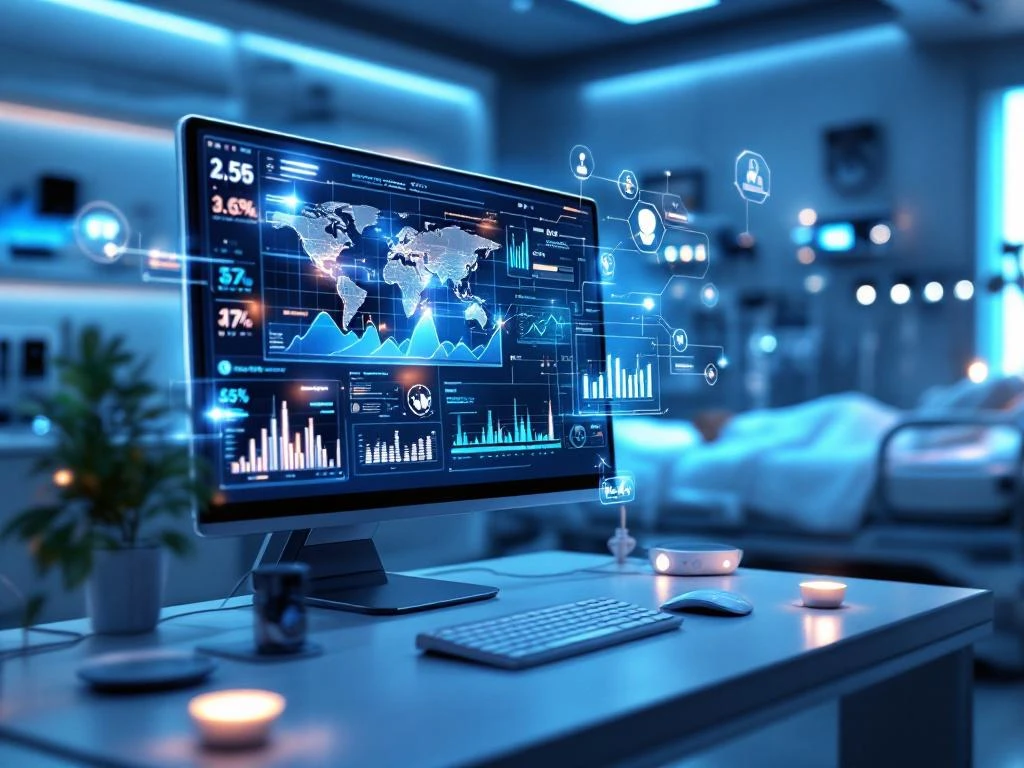
Technology helps predict care needs by using AI in healthcare and advanced algorithms that recognize patterns in patient data. These systems analyze behavior, vital signs, and risk factors to predict problems before they occur. This enables better care planning, more efficient staff deployment, and preventive interventions that can prevent emergency situations.
What is predictive technology in healthcare and how does it work?
Predictive technology in healthcare uses AI in healthcare, sensors, and machine learning algorithms to predict care needs before problems arise. These systems analyze continuous patient data streams and recognize patterns that indicate potential health risks or deterioration.
The technology works by combining various data sources. Sensors measure vital signs, movement patterns, and behavioral changes. AI algorithms compare this data with historical patterns and medical knowledge to identify risks. Computer vision systems can, for example, analyze movements to determine fall risks.
The major advantage is that healthcare providers can act proactively. Instead of reacting to problems, they can take preventive measures. This improves patient outcomes and reduces the workload on healthcare staff by preventing emergency situations.
Which care needs can technology already predict?
Modern technology can accurately predict various concrete care needs. Fall risks top the list: AI systems analyze walking patterns, balance, and movement behavior to determine which patients have an increased chance of falling.
Other predictable care needs include:
- Health deterioration – By monitoring vital signs and behavioral changes
- Medication needs – Algorithms predict when dose adjustment is necessary
- Behavioral changes – Especially relevant for dementia and psychiatric conditions
- Acute medical episodes – Early warning signals for heart problems or infections
- Mobility decline – Changes in movement patterns that require assistance
These predictions help care teams plan interventions before situations become critical. Preventive care is not only better for patients but also more cost-effective for healthcare organizations.
How does predictive technology help with staff shortages in healthcare?
Predictive technology helps healthcare organizations deploy their limited staff much more efficiently by better prioritizing. AI systems predict which patients need more attention, allowing healthcare providers to optimally distribute their time.
The practical benefits for staff planning are clear:
- Preventive care – Fewer emergencies means less stress and overtime
- Better workload distribution – Staff can plan tasks based on predicted needs
- Fewer false alarms – Accurate systems reduce unnecessary interruptions
- Night care optimization – AI can monitor at night when there is less staff
Through predictive technology, healthcare organizations can deliver the same quality of care with fewer staff. This is important because finding qualified healthcare personnel is becoming increasingly difficult, while demand for care continues to grow.
What are the biggest benefits of AI monitoring for healthcare providers?
24/7 monitoring without human intervention is the biggest benefit of AI monitoring for healthcare providers. The system keeps continuous watch, even when staff are performing other tasks or at night when fewer people are available.
The concrete benefits for daily work are:
- Faster response times – Direct alerts when problems arise
- Fewer false alarms – Intelligent systems distinguish real emergencies from normal activity
- Better prioritization – AI helps determine which patients need attention first
- More time for personal care – Less time spent on routine checks
- Reduced work stress – Certainty that critical situations won’t be missed
Healthcare providers can focus on what they do best: providing personal care and making medical decisions. The AI takes over continuous monitoring, making work less stressful and more satisfying.
How Kepler Vision helps predict care needs
Kepler Vision’s AI healthcare solutions have developed specialized AI in healthcare solutions that help healthcare organizations solve staff shortages through intelligent monitoring. Our systems predict care needs with unprecedented accuracy while fully respecting patient privacy.
Our solutions offer concrete benefits:
- Kepler Night Nurse – Detects falls within seconds and predicts fall risks
- Kepler NurseAssist – Monitors behavioral changes and health risks
- Minimal false alarms – Only one per 92 days, 1,000 times better than other systems
- Privacy-friendly – Images are never viewed by humans
- Plug-and-play installation – Easy to implement without major IT projects
Our AI technology helps your organization deliver better care with fewer staff. Healthcare workers only receive alerts when action is truly needed, allowing them to focus on personal care and medical tasks.
Want to know how our AI solutions can help your healthcare organization? Contact us for a personal demonstration and discover how predictive technology can solve your staffing shortages.
Frequently Asked Questions
How does AI predict patient care needs?
AI analyzes patterns in patient data like vital signs and movement to identify risks before problems occur.
Is AI monitoring accurate?
Yes, AI systems achieve high accuracy with minimal false alarms – only one per 92 days in advanced systems.
How quickly can AI monitoring be implemented?
Implementation typically takes 1-2 weeks with plug-and-play technology requiring no major IT changes.
Related Articles
- Why is employer branding crucial during a staff shortage?
- What is the implementation time for fall prevention systems for elderly people?
- What are the challenges in implementing fall prevention for older adults?
- How can smart technologies support care teams?
- How can AI contribute to continuous monitoring without additional workload?
This content was generated with the help of AI and it may contain mistakes