


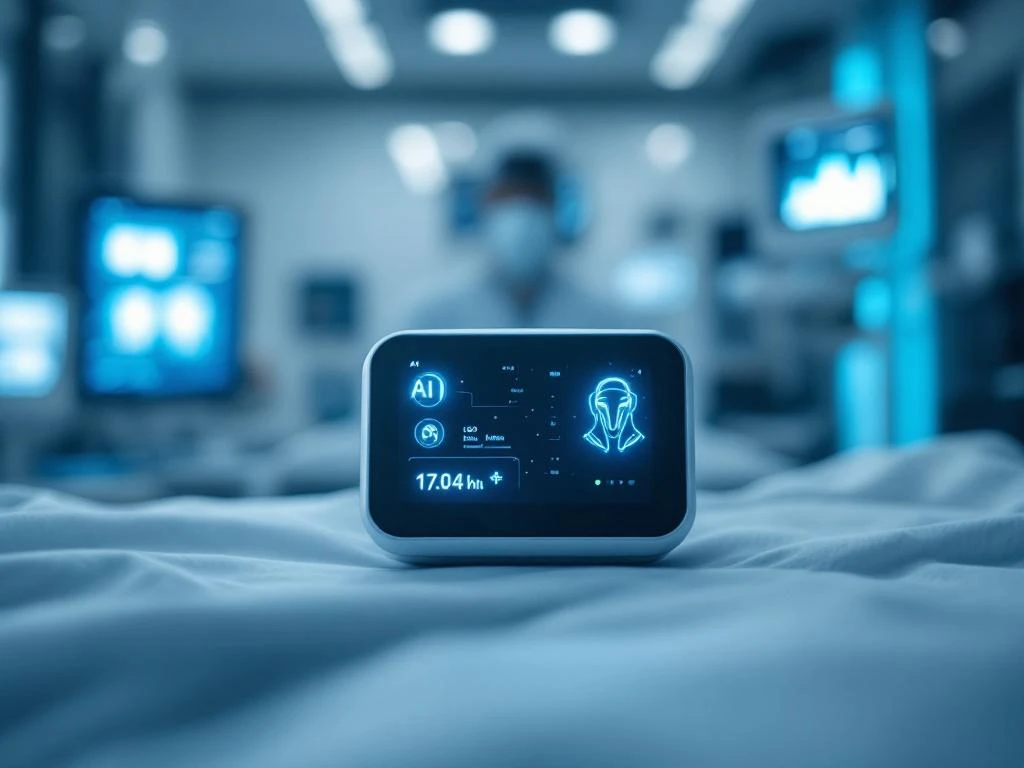
Technological developments accelerate healthcare innovation through AI, IoT, robotics and digital platforms that support healthcare workers and help address staff shortages. These technologies automate monitoring, administration and diagnostics, enabling healthcare organizations to work more efficiently. The main drivers are an aging population, staff shortages and rising healthcare demand, which require smart solutions.
Which technologies are currently transforming healthcare delivery?
Artificial intelligence, Internet of Things (IoT), robotics and digital healthcare platforms form the foundation of current healthcare transformation. These technologies help healthcare organizations address staff shortages and improve quality of care.
AI in healthcare plays an increasingly important role in supporting healthcare workers. Machine learning algorithms analyze patient data, predict risks and detect abnormalities that humans might miss. This helps with early diagnosis and preventive care.
IoT devices continuously collect health information from patients. Smart sensors monitor vital functions, movements and sleep patterns. This data gives healthcare providers real-time insight into their patients’ condition, even remotely.
Robotics supports physical tasks in healthcare facilities. From medication dispensing to moving patients: robots take over repetitive and physically demanding tasks. This gives healthcare workers more time for personal patient care.
Digital healthcare platforms connect patients, healthcare providers and systems with each other. Telehealth, electronic health records and communication tools make healthcare delivery more accessible and efficient.
How does artificial intelligence help with staff shortages in healthcare?
AI takes over time-consuming tasks from healthcare workers, such as monitoring, administration and data analysis. This allows healthcare providers to focus on direct patient care and complex medical decisions that require human expertise.
Automated monitoring is one of the most practical applications. AI systems monitor patients 24/7 and detect changes in their condition. In emergency situations, healthcare workers receive immediate notification without having to be constantly physically present.
Administrative support through AI saves a lot of time. Systems can automatically enter patient data, generate reports and schedule appointments. This reduces the administrative burden that many healthcare providers find burdensome.
Diagnostic support helps interpret medical images and test results. AI can recognize patterns that indicate certain conditions and alert healthcare providers to potential problems that require further investigation.
Predictive analytics identify patients with elevated risks. By recognizing early signals, care teams can intervene preventively before problems escalate. This prevents acute situations that require a lot of staff and resources.
Why is automation so important for the future of healthcare?
Automation is necessary to keep up with growing healthcare demand while the number of available healthcare workers decreases. The aging population creates more patients who need more intensive care, while staff shortages increase.
Demographic developments create an unsustainable situation without technological support. The number of elderly people is rising rapidly, while fewer young people choose a career in healthcare. This gap grows larger every year.
Automation enables more efficient healthcare delivery by taking over routine tasks. Healthcare workers can concentrate on work that requires human skills, such as empathy, complex decision-making and personal guidance.
Cost control is another important aspect. Automated systems work 24/7 without breaks or days off. This makes healthcare more affordable and accessible, especially in areas with staff shortages.
Quality improvement occurs because automated systems work consistently and don’t make human errors due to fatigue or stress. This leads to more reliable healthcare delivery and better patient outcomes.
Which healthcare tasks can technology best take over?
Monitoring, administration, planning and preventive care are most suitable for technological support. These tasks require accuracy and consistency, qualities in which technology excels.
Continuous patient monitoring is perfectly suited for automation. Advanced AI monitoring solutions track vital functions, movements and behavior 24/7 without fatigue. When abnormalities occur, they send immediate alerts to healthcare workers.
Administrative processes lend themselves excellently to automation. Data entry, report generation and appointment scheduling can be fully automated. This saves a lot of time that can be better spent on patient care.
Medication management and dispensing can be safely automated. Smart systems check dosage, timing and possible interactions. This reduces medication errors and ensures consistent administration.
What technology cannot take over are tasks that require empathy, creativity and complex human interaction. Having difficult conversations, providing emotional support and making ethical decisions remain human work.
How Kepler Vision helps with healthcare innovation
We develop AI solutions specifically designed to address staff shortages in healthcare through reliable monitoring and automation. Our technology watches over patients 24/7 and alerts healthcare workers only when it’s truly necessary.
Our key advantages for healthcare organizations:
- Fall detection within seconds – Immediate alerts during accidents prevent long waiting times.
- Minimal false alarms – Only one false alarm per 92 days ensures confidence in the system.
- Privacy protection – Images are never viewed by humans, but only analyzed by AI.
- 24/7 monitoring – Continuous surveillance without healthcare workers needing to be constantly present.
- Simple implementation – Plug-and-play installation without complex technical modifications.
We help international healthcare organizations, elderly care facilities and hospitals solve their staff shortages while improving quality of care. Our AI technology gives healthcare workers the space to focus on personal patient care.
Want to know how our AI solutions can help your healthcare organization? Contact Kepler Vision for a no-obligation demonstration of our technology and discover how we can achieve healthcare innovation together.
Frequently Asked Questions
How does AI technology help with healthcare staff shortages?
AI automates routine monitoring and administrative tasks, allowing healthcare workers to focus on direct patient care and complex medical decisions.
What healthcare tasks can technology best replace?
Technology excels at continuous monitoring, data entry, medication management and preventive care – tasks requiring accuracy and consistency.
Is healthcare automation safe for patient care?
Yes, when properly implemented. Automated systems work consistently without fatigue, reducing human errors while healthcare workers handle tasks requiring empathy and complex decision-making.
Related Articles
- What is the impact of fall prevention for elderly people on staff planning?
- What fall prevention exercises can I do at home?
- How does technology help with early detection of health risks?
- How can technology help with the shortage of healthcare personnel?
This content was generated with the help of AI and it may contain mistakes