


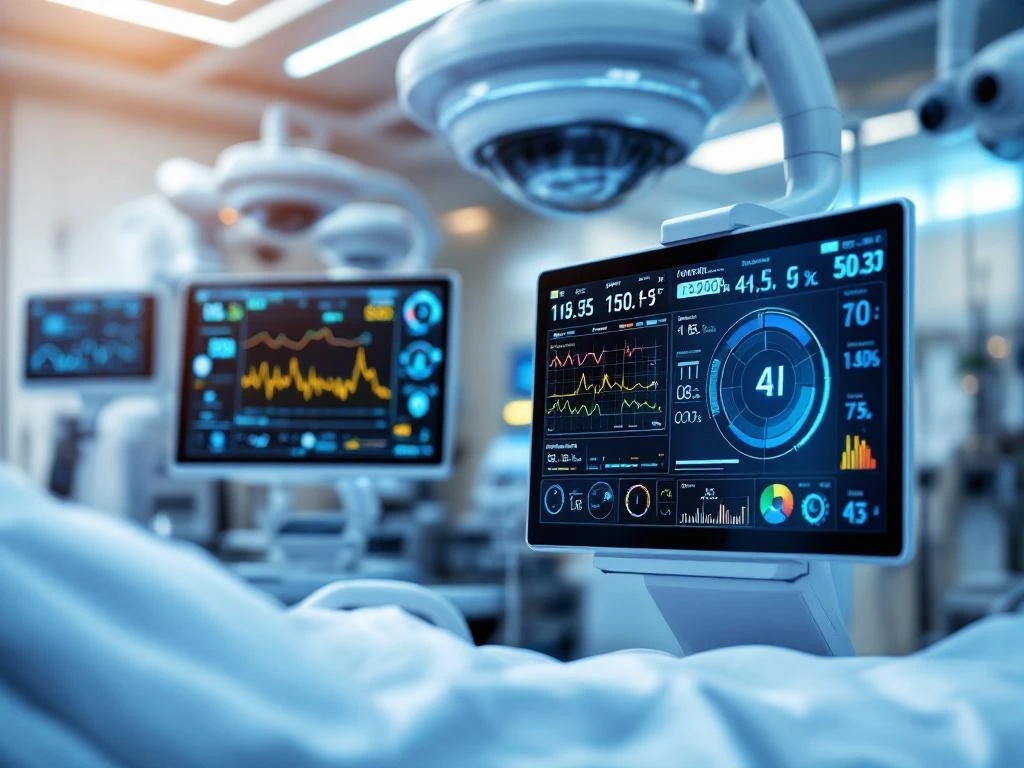
Technology transforms healthcare by improving patient safety, reducing workload, and supporting healthcare workers. AI systems automatically detect emergency situations, digital monitoring provides continuous supervision, and automated processes give staff more time for direct patient care. These developments make quality care more accessible while preserving privacy.
What is the role of technology in modern healthcare?
Technology forms the backbone of modern healthcare organizations by automating processes, digitizing data, and improving patient safety. From electronic patient records to AI in healthcare systems: technology makes quality care more efficient and accessible for everyone.
The digital transformation in healthcare began with replacing paper files with electronic systems. This made information immediately available to all healthcare providers and improved coordination between different departments. Today, technology goes far beyond just administration.
Modern healthcare technology includes monitoring equipment that continuously tracks vital functions, communication systems that connect teams, and AI applications that recognize patterns in patient data. These tools help healthcare providers make better decisions and respond faster to changing situations.
For healthcare organizations, technology also means cost savings and more efficient planning. Systems predict when extra staff is needed, optimize medication inventories, and reduce administrative tasks that take time away from direct patient care.
How does AI technology improve patient safety?
AI systems improve patient safety through continuous monitoring, early detection of problems, and automatic alerts for healthcare workers. This technology works 24/7 without fatigue and recognizes patterns that humans might miss, allowing emergency situations to be noticed faster.
Fall detection is a practical example of how AI in healthcare saves lives. Smart cameras recognize when someone falls and immediately send a notification to healthcare staff. This prevents patients from lying helplessly on the ground for long periods, which can prevent serious injuries.
Early warning systems analyze vital functions and behavioral patterns to predict health deterioration. When heart rate, breathing, or movement patterns deviate from normal values, healthcare providers automatically receive a signal to take action.
AI monitoring systems are also useful for medication safety. They check whether patients take their medications on time and warn of possible interactions between different drugs. This reduces errors that can arise from human mistakes or busy department schedules.
What benefits does automation offer healthcare workers?
Automation supports healthcare workers by taking over routine tasks, reducing workload, and freeing up more time for personal patient care. Automated systems handle administration, schedule appointments, and monitor patients, allowing staff to focus on human contact.
Administrative automation saves hours of work daily. Systems automatically fill in reports, schedule medication rounds, and track what care each patient has received. This means less time behind the computer and more time with patients.
Smart planning tools help with staff schedules and task distribution. They take into account employee skills, patient needs, and workload to create optimal schedules. This reduces stress and ensures a better work-life balance.
Monitoring automation gives healthcare workers better overview of all patients simultaneously. Instead of manually checking each room, they only receive notifications when help is actually needed. This makes work more efficient and less hectic.
Why is privacy important in healthcare technology?
Privacy protection in healthcare technology builds trust between patients and healthcare providers, meets legal requirements, and prevents misuse of sensitive health information. Modern systems use encryption and anonymization to protect data without limiting functionality.
Patients share their most personal information with healthcare providers, from medical history to daily habits. If this data is not properly protected, patients may become reluctant to be open about their health, which reduces the quality of care.
Legislation such as GDPR sets strict requirements for handling personal data in healthcare. Organizations that violate these rules risk fines and reputational damage. Therefore, healthcare technology systems must be designed from the beginning with privacy as a priority.
Modern privacy-protecting technology often works without patients noticing anything. AI systems can, for example, recognize patterns in movement data without storing images or having them viewed by humans. The technology protects privacy while improving care.
How Kepler Vision helps with care quality and safety
We develop AI solutions that help healthcare organizations solve staff shortages while improving patient safety. Our software watches over patients 24/7 and automatically detects emergency situations, so healthcare workers have more time for direct patient care and spend less time on continuous monitoring.
Our technology offers concrete benefits for healthcare organizations:
- Direct fall detection – Within seconds, healthcare workers receive a warning when someone falls.
- Privacy-protecting monitoring – Images are never viewed by humans; only the AI analyzes situations.
- Minimal false alarms – Only one false alarm per 92 days thanks to advanced AI algorithms.
- 24/7 surveillance – Continuous monitoring without staff needing to be constantly present.
- Easy installation – Plug-and-play system that is quickly operational.
Our AI technology helps healthcare organizations deliver better care with fewer staff. Through automatic monitoring and intelligent alerts, healthcare workers can work more efficiently and respond faster to emergency situations. Want to know how our solutions can help your organization? Contact AI healthcare monitoring solutions for a personal conversation about the possibilities.
Frequently Asked Questions
How long does AI implementation take?
Most AI monitoring systems are operational within 2-4 weeks after installation.
Do healthcare technologies pay for themselves?
Yes, typically within 12-24 months through reduced staff costs and fewer incidents.
Can AI replace healthcare workers?
No, AI supports staff but cannot replace human empathy and complex decision-making.
Related Articles
- How often should a fall risk assessment be performed?
- What fall prevention exercises can I do at home?
- What is the impact of smart monitoring on care processes?
- What innovations are shaping the future of elderly care?
This content was generated with the help of AI and it may contain mistakes