

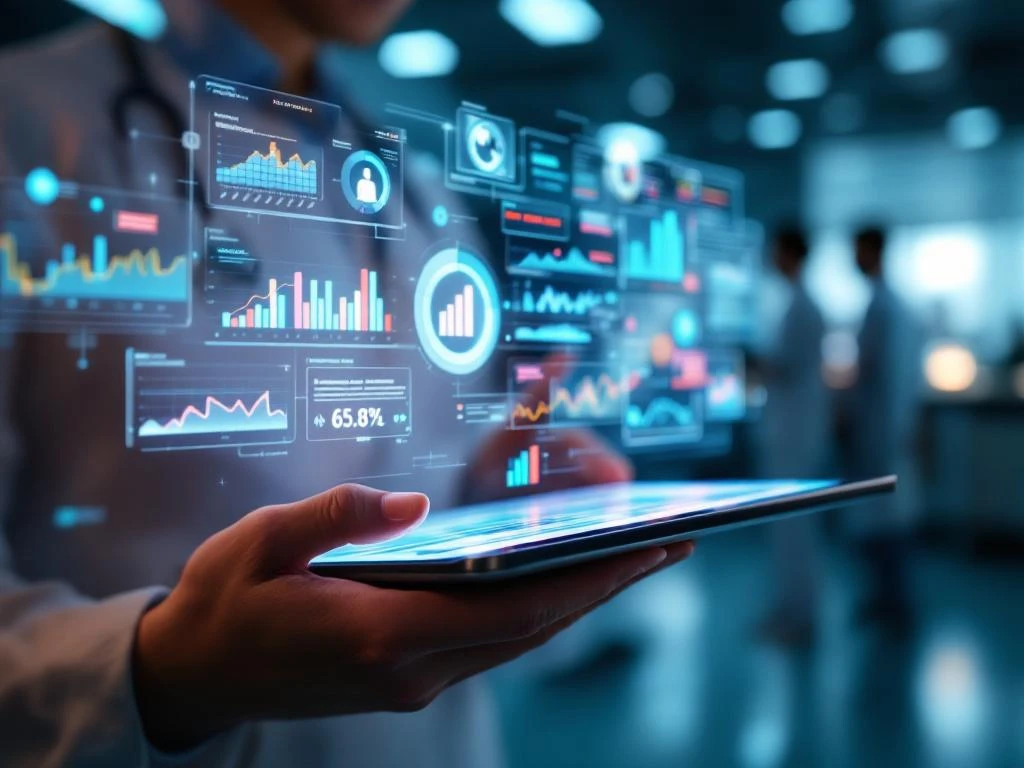
Healthcare technology contributes to better decision-making by providing healthcare workers with real-time data and automatic alerts. AI in healthcare helps in faster recognition of risk situations and reduces the chance of human errors. This enables healthcare professionals to respond more quickly and make more informed choices about patient care.
What is healthcare technology and how is it changing daily healthcare delivery?
Healthcare technology encompasses digital tools that support healthcare workers in monitoring, analyzing, and treating patients. This technology continuously collects data about patients and automatically alerts healthcare staff to important changes in their condition.
In daily practice, this means that healthcare workers no longer need to be constantly physically present with every patient. Sensors and cameras monitor patients, while software recognizes patterns that may indicate problems. For example, a system that detects when an elderly resident falls out of bed, or software that notices changes in heart rhythm.
AI in healthcare plays an important role by analyzing large amounts of data and recognizing patterns that are difficult for humans to perceive. This helps healthcare workers anticipate problems before they become serious and allocate their time more efficiently.
The technology does not replace human contact, but gives healthcare staff better information on which to base decisions. This allows them to focus more on personal care and complex medical decisions.
What benefits does technology offer in making healthcare decisions?
Technology in healthcare provides faster response times, more accurate monitoring, and fewer errors in important decisions. Healthcare workers receive immediate alerts in emergency situations and have access to complete patient data at all times.
The biggest advantage is that healthcare staff now have objective data instead of only visual observations. Cameras and sensors miss nothing and are active 24 hours a day. This means problems are noticed earlier, especially at night when fewer staff are present.
Additionally, technology helps prioritize tasks. When multiple alerts come in, the system can indicate which situations are most urgent. This prevents healthcare workers from wasting time on less important matters while acute help is needed elsewhere.
Another important advantage is documentation. All events are automatically recorded, giving healthcare workers a complete picture of what happened during their absence. This improves continuity of care between different shifts.
The technology also supports treatment planning by identifying trends and patterns in patient behavior. This allows healthcare professionals to take preventive measures instead of only acting reactively.
How does technology enable healthcare staff to work more efficiently?
Healthcare technology automates routine tasks and helps healthcare workers better allocate their time by only alerting when action is actually needed. This reduces unnecessary checks and provides more room for personal patient care.
A practical example is automatic monitoring during the night. Instead of checking all rooms every hour, healthcare workers are only alerted when something is wrong. This saves enormous amounts of time and significantly reduces workload.
The technology also helps with work planning. By analyzing data on patient behavior, systems can predict when certain care is needed. For example, if a patient usually goes to the bathroom around a certain time, staff can anticipate this.
Administrative tasks are also reduced because much data is automatically recorded. Healthcare workers no longer need to manually note when a patient has fallen or when medication has been administered, as this is automatically registered.
Through this efficiency gain, healthcare organizations can maintain the same quality level with fewer staff, or spend more time on personal attention for patients without extra costs.
What are the main concerns about privacy and security with healthcare technology?
The biggest concerns about healthcare technology involve protecting sensitive patient data and the question of who has access to recorded images. Modern healthcare technology solves this by analyzing images directly without people seeing them.
Many people think that cameras in healthcare environments mean someone is constantly watching. However, this is not the case with advanced systems. The AI in healthcare analyzes images in real-time and deletes them immediately after analysis. Only when there is an alert is action taken, without images being viewed.
Security standards such as ISO 27001 and NEN 7510 ensure that all data is stored encrypted and is only accessible to authorized personnel. These standards require regular audits and strict procedures for data processing.
Another important aspect is transparency toward patients and family. Modern healthcare technology only works with consent and patients can always ask for explanation about how their data is used. This builds trust and ensures acceptance of the technology.
The technology is also designed to strengthen privacy rather than violate it. By only alerting when necessary, healthcare workers need to enter rooms less often, which actually benefits patient privacy.
How Kepler Vision helps with better decision-making in healthcare
We develop AI solutions that help healthcare organizations make faster and more accurate decisions about patient care. Our software continuously analyzes patient behavior and only alerts in actual emergency situations.
Our key advantages for better decision-making:
- Fall detection within seconds – Immediate alert for fall incidents ensures rapid assistance.
- 24/7 monitoring with minimal false alarms – Only one false alarm per 92 days, allowing staff to trust the alerts.
- Fall prevention through behavior analysis – Recognition of risky situations before something happens.
- Privacy-first approach – Images are never viewed by humans, only analyzed by AI.
- Easy implementation – Plug-and-play system that is immediately deployable.
Through our accurate technology, healthcare workers can focus on real emergencies instead of wasting time on false alarms. This improves not only efficiency, but also quality of care.
Want to know how our AI solutions can help your healthcare organization with better decision-making? Learn more about our healthcare AI solutions for a non-binding demonstration of our technology.
Frequently Asked Questions
How long does implementation of healthcare technology take?
Modern healthcare technology can usually be implemented within 2-4 weeks. Plug-and-play systems are often operational within a few days.
What happens during technical failures?
During failures, the system automatically switches to safety mode and alerts staff immediately. Traditional care procedures remain available as backup.
How do patients accept cameras and sensors?
Acceptance is high when it is clearly explained that AI analyzes the images without human viewers, and that privacy is respected.
Related Articles
- How do you attract more people to the care sector?
- How do you measure whether measures to reduce workload are working?
- How does staff shortage affect the workload of employees?
- How do you evaluate different fall prevention for elderly suppliers?
- How does AI-based care monitoring differ from traditional systems?
This content was generated with the help of AI and it may contain mistakes