


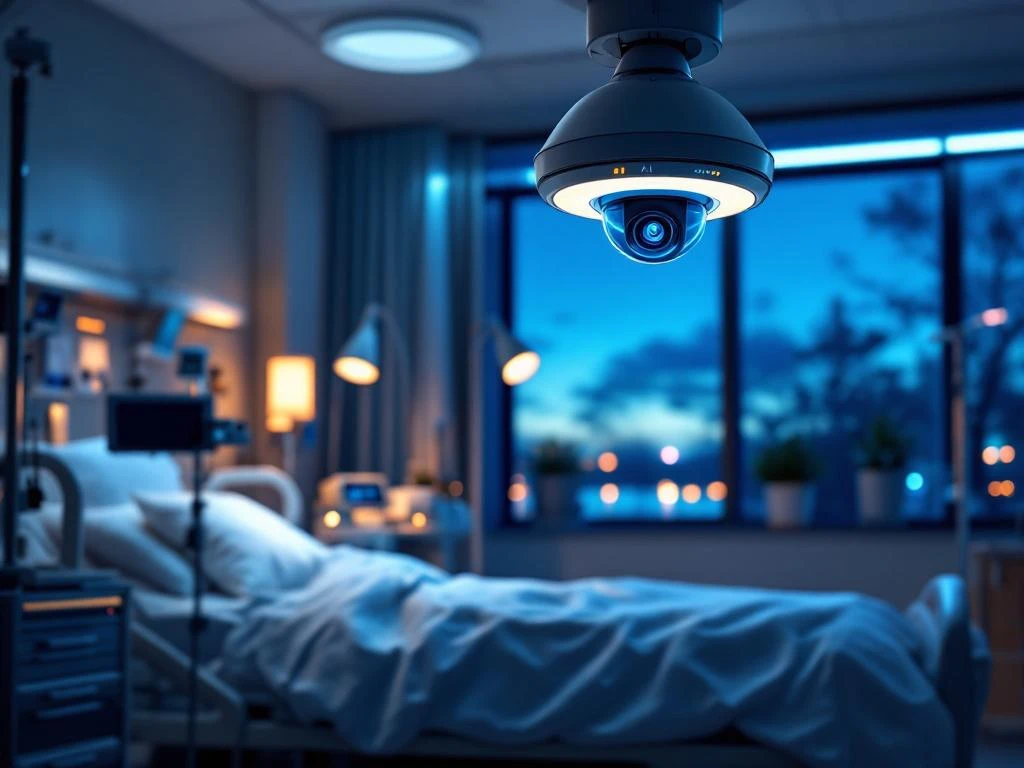
AI contributes to more efficient nighttime care through continuous patient monitoring and immediate alerts during unsafe situations. This technology helps address staffing shortages by providing 24/7 surveillance without human intervention, allowing healthcare workers to focus on direct patient care. AI in healthcare significantly improves response times and reduces false alarms to a minimum.
What is AI-driven nighttime care and how does it work?
AI-driven nighttime care uses computer vision and machine learning to continuously monitor patients without human intervention. Cameras record movements and behavior, while intelligent software analyzes these images to recognize unsafe situations. The system operates fully automated and only alerts when immediate action is needed.
The technology behind AI in healthcare is based on advanced algorithms that recognize patterns in patient behavior. Computer vision analyzes visual material in real time, while machine learning ensures the system becomes increasingly accurate through experience. This fundamentally differs from traditional nighttime care, where staff must perform manual checks.
Privacy remains protected because images are never viewed by humans. The AI system processes all information automatically and only shows alerts to healthcare workers when intervention is needed. Your staff receives specific notifications about particular situations, without access to privacy-sensitive images.
What problems does AI solve in nighttime care?
AI solves three major problems in nighttime care: staffing shortages, increased workload, and missed emergency situations. Through continuous monitoring, a limited number of healthcare workers can safely supervise more patients. The system detects fall incidents within seconds, preventing long waiting times.
Staffing shortages represent a growing problem in healthcare delivery. Traditional nighttime care requires regular rounds through hallways and rooms, which consumes significant time. AI monitoring makes these physical checks unnecessary, as the system automatically warns of problems. Your team can concentrate on direct patient care instead of preventive checks.
The increased workload during night shifts is significantly reduced. Healthcare workers no longer need to be constantly alert for possible incidents, as the AI system takes over this task. This leads to less stress and better working conditions for your staff.
Fall incidents and other emergency situations are often discovered too late during traditional nighttime care. AI in healthcare detects these situations immediately and sends direct warnings to the appropriate staff. This prevents complications and ensures patients receive the help they need more quickly.
How reliable is AI monitoring compared to traditional methods?
AI monitoring is significantly more reliable than traditional nighttime care methods through continuous surveillance and faster response times. Where traditional methods depend on periodic checks, AI works 24/7 without interruptions. The system generates far fewer false alarms than older technologies like motion sensors.
Traditional nighttime care relies on manual checks that occur only a few minutes per hour. Between these checks, important events can go unnoticed. AI systems, in contrast, continuously analyze all movements and behaviors, ensuring no incident is missed.
Response time with AI monitoring is measured in seconds, while traditional methods often take minutes or even hours before a problem is discovered. This speed can make the difference between a minor fall and serious injuries from prolonged lying on the floor.
Older technologies like pressure mats or motion sensors often generate false alarms from normal movements. Modern AI in healthcare uses advanced algorithms that distinguish between normal activities and genuine emergency situations. This results in more accurate warnings and fewer unnecessary disruptions.
What are the benefits of AI nighttime care for healthcare organizations?
AI nighttime care offers healthcare organizations cost savings, improved patient safety, and more efficient staff deployment. Through 24/7 monitoring, fewer staff members can safely supervise more patients. This leads to lower personnel costs, while care quality improves through faster response times and fewer missed incidents.
Cost savings result from needing less nighttime care staff for the same level of surveillance. The AI system takes over continuous monitoring, allowing staff to focus on direct patient care when truly necessary. This efficiency translates directly into lower operational costs.
Patient safety improves significantly through immediate detection of unsafe situations. Fall incidents are identified within seconds, preventing complications from prolonged lying on the floor. Your patients receive help more quickly, resulting in better health outcomes.
More efficient staff deployment creates better working conditions. Your team no longer needs to constantly make rounds or worry about missed incidents. AI in healthcare removes this stress and enables staff to concentrate on human care where it is most valuable.
Improved care quality emerges from the combination of technology and human expertise. The AI system provides continuous surveillance, while your staff focuses on personal care, comfort, and medical treatment. This division of tasks leads to a better overall experience for patients.
How Kepler Vision helps with more efficient nighttime care
We provide complete AI solutions that integrate directly into your existing nighttime care. Our Kepler Night Nurse and NurseAssist software detect fall incidents, monitor lying positions, and alert within seconds during unsafe situations. The system is plug-and-play and requires minimal training for your staff.
Our solutions offer concrete benefits for your healthcare organization:
- Fall detection within seconds: immediate warnings for fall incidents prevent long waiting times
- Minimal false alarms: only one false alarm per 92 days through advanced AI algorithms
- Complete privacy: images are never viewed by humans, only AI warnings are shown
- 24/7 monitoring: continuous surveillance without interruptions or human intervention
- Simple implementation: plug-and-play installation without complex technical modifications
Our software complies with all privacy and security requirements (ISO 27001 and NEN 7510) and is specifically developed for the challenges in Dutch healthcare. The system integrates seamlessly with existing care processes and supports your team in delivering better nighttime care.
Would you like to know how our AI solutions can improve your nighttime care? Contact Kepler Vision for a non-binding demonstration and discover how you can address staffing shortages while improving care quality.
Frequently Asked Questions
How does AI nighttime care work?
AI uses cameras and computer vision to continuously monitor patients. The system detects unsafe situations automatically and alerts staff within seconds.
Does AI monitoring generate false alarms?
Modern AI systems generate minimal false alarms – only one per 92 days through advanced algorithms that distinguish between normal activities and emergencies.
Is patient privacy protected with AI monitoring?
Yes, images are never viewed by humans. The AI processes everything automatically and only shows warnings to healthcare workers when intervention is needed.
Related Articles
- What are the consequences of chronic work pressure?
- What makes healthcare monitoring future-proof?
- How does technology support risk-based care?
- Why is innovation necessary to keep healthcare affordable?
This content was generated with the help of AI and it may contain mistakes