


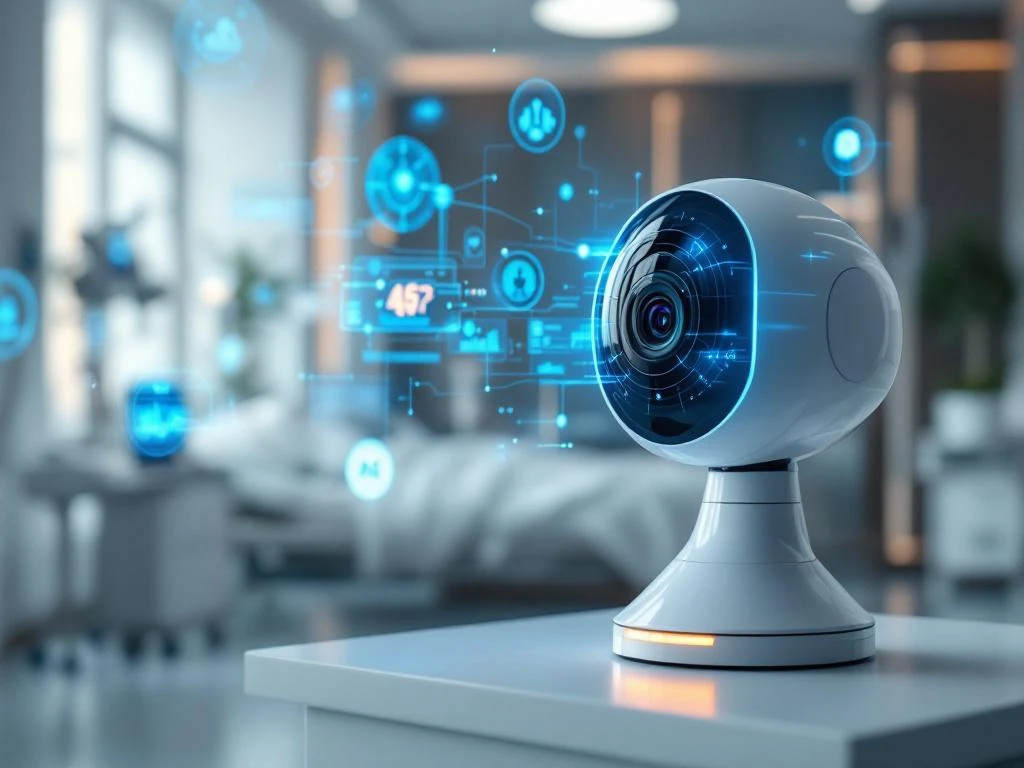
Healthcare technology is rapidly evolving with AI solutions that address staffing shortages and improve patient care. Key innovations include automated monitoring, fall detection, diagnostic support, and predictive analytics. These technologies help healthcare organizations work more efficiently while enhancing care quality and ensuring privacy protection.
Which AI technologies are transforming healthcare the most?
Automated monitoring, diagnostic AI, and predictive analytics are transforming healthcare delivery by enabling continuous surveillance, faster diagnoses, and proactive interventions. These AI applications in healthcare support care staff with daily tasks and improve patient outcomes.
Automated monitoring systems form the backbone of modern healthcare technology. They provide 24/7 patient surveillance without human intervention, detect abnormalities, and send immediate alerts to care staff. This means that problems such as falls or medical emergencies are noticed within seconds.
Diagnostic AI supports physicians in interpreting medical images, laboratory results, and symptoms. These systems analyze large amounts of data to recognize patterns that the human eye might miss. They don’t replace doctors but make their work more accurate and faster.
Predictive analytics use historical data to forecast future health risks. This helps care teams take preventive measures before problems arise, which both saves costs and delivers better outcomes for patients.
How does smart monitoring help with healthcare staffing shortages?
Automated surveillance systems reduce workload by taking over continuous monitoring from care staff. They detect emergencies such as falls or irregularities and only alert when human intervention is needed, allowing personnel to focus on direct patient care.
Fall detection systems perfectly illustrate how smart monitoring works. Traditionally, care workers had to make regular rounds or provide patients with push-button alarms. Modern AI systems monitor movement patterns and automatically detect when someone falls, even if the person is unable to call for help.
Real-time alerts ensure rapid response without an overload of false alarms. Advanced systems distinguish genuine emergencies from normal movements, so care staff are only interrupted when truly necessary. This prevents alarm fatigue and keeps personnel alert to real emergencies.
The technology also works at night when fewer staff are present. This is particularly valuable since many accidents happen during nighttime hours when patients try to go to the bathroom independently or get out of bed.
Why is privacy so important in healthcare technology?
Privacy protection builds trust between patients and care providers while complying with strict regulations. Modern healthcare technology must secure patient data without compromising functionality, requiring careful technical implementation and compliance with standards.
Patient data belongs to the most sensitive information that exists. People share intimate details about their health, habits, and vulnerabilities with care providers. If this information leaks or is misused, it can permanently damage trust in healthcare delivery.
Compliance standards such as GDPR, ISO 27001, and NEN 7510 impose strict requirements on how healthcare organizations handle patient data. This regulation doesn’t exist to limit technology but to ensure that innovation happens responsibly while respecting patients’ rights.
Modern AI in healthcare can safeguard privacy by processing data locally instead of sending it to external servers. Some systems analyze images without storing them, or use anonymized data for machine learning. This demonstrates that advanced AI healthcare solutions and strong privacy protection can go hand in hand.
What are the biggest benefits of automated healthcare solutions?
Increased efficiency, better patient safety, and cost savings form the main benefits of automated healthcare solutions. These systems work 24/7 without fatigue, make fewer errors than humans, and enable healthcare organizations to help more patients with the same number of staff.
Efficiency improvement occurs because repetitive tasks are automated. Care staff need to spend less time on routine monitoring and can concentrate on complex care delivery that requires human expertise. This increases both job satisfaction and care quality.
Patient safety improves because automated systems never sleep or get distracted. They don’t miss signals due to fatigue or busyness, which means problems are noticed and addressed faster. Quicker response to emergencies can make the difference between full recovery and permanent damage.
Cost savings result from more efficient use of personnel and fewer complications. While the initial investment in technology can be substantial, these systems often pay for themselves through lower staffing costs and better patient outcomes, preventing expensive complications.
How Kepler Vision helps with healthcare technology innovations
We develop AI solutions specifically designed to solve staffing shortages by watching over patients with unprecedented reliability. Our Night Nurse and NurseAssist products provide 24/7 monitoring with minimal false alarms and complete privacy protection.
Our key solutions include:
- Fall detection: detects falls within seconds, with an average of only one false alarm per 92 days
- Privacy-first design: images are never viewed by humans; only AI analyzes the data
- International implementation: proven effectiveness in healthcare organizations throughout Europe
- Plug-and-play installation: easy to plan, configure, and install
- Compliance guarantee: meets ISO 27001 and NEN 7510 standards
Want to know how our AI solutions can help your healthcare organization solve staffing shortages and improve patient care? Contact Kepler Vision for a no-obligation demonstration of our healthcare technology innovations.
Frequently Asked Questions
How quickly can AI detect patient emergencies?
Modern AI systems detect falls and emergencies within seconds, providing immediate alerts to care staff for rapid response.
Do AI healthcare systems replace nurses?
No, AI systems support nurses by handling routine monitoring, allowing staff to focus on direct patient care and complex medical tasks.
Are AI monitoring systems secure?
Yes, privacy-first AI systems process data locally without storing images, meeting strict healthcare compliance standards like GDPR and ISO 27001.
Related Articles
- What are the causes of falls in elderly people?
- How does healthcare technology contribute to better decision-making?
- How does AI help in recognizing abnormal behavior in care situations?
- How does AI support continuous care without physical presence?
- What are the building blocks of innovative healthcare monitoring?
This content was generated with the help of AI and it may contain mistakes