


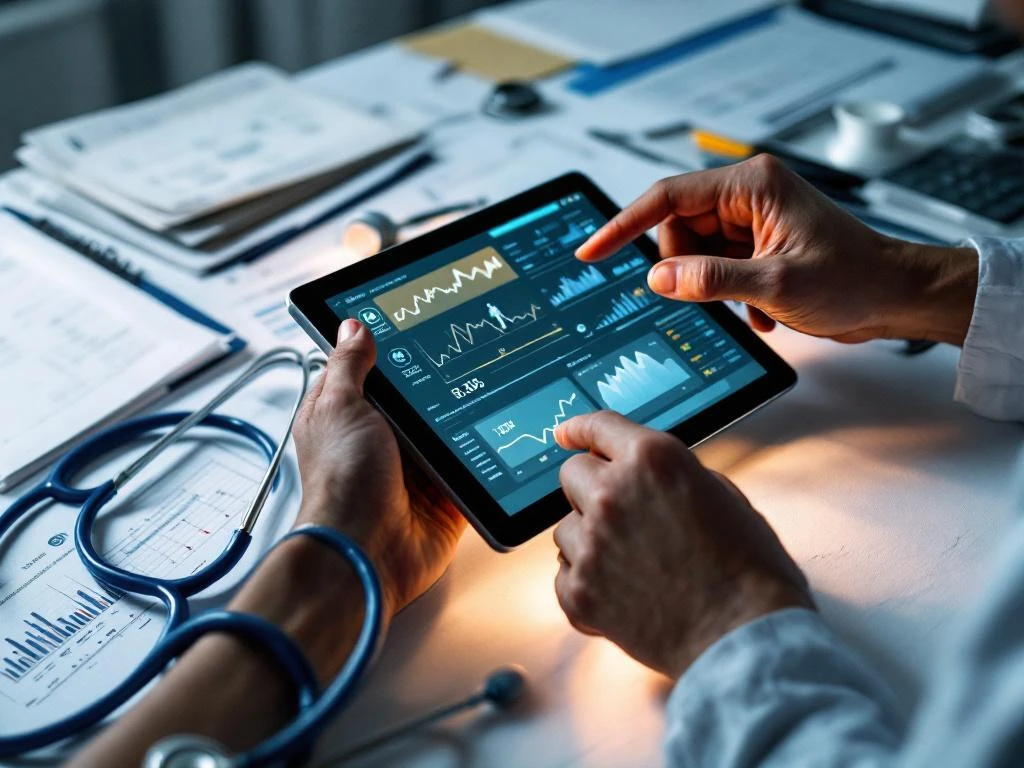
Technology supports healthcare professionals by automating routine tasks and freeing up more time for direct patient care. From AI monitoring that watches over patients 24/7 to digital systems that simplify administration: modern technology helps address staff shortages and improve the quality of care. The key lies in choosing user-friendly solutions that actually make work easier.
Which technologies make a difference in daily healthcare delivery?
AI monitoring, electronic health records, and smart alarm systems are transforming daily healthcare delivery by saving time and reducing errors. These technologies take over routine tasks, allowing you to focus on what truly matters: providing personal care.
The most impactful technologies in healthcare are:
- AI monitoring systems that automatically detect fall risks and only sound alarms when necessary
- Electronic medication dispensing systems that prevent dosing errors
- Digital patient records that make information immediately available
- Smart sensors that monitor vital signs without constant supervision
- Automated scheduling software that optimizes rosters
These tools work best when they integrate seamlessly into your existing workflow. Technology should support the work, not complicate it. Think, for example, of an AI system that only sends notifications during real emergencies, instead of dozens of false alarms per day.
How can technology solve staffing shortages in healthcare?
Technology helps address staffing shortages by automating tasks that consume significant time but require little human expertise. This allows healthcare workers to focus their attention on complex patient care, where their skills are most needed.
Practical ways technology helps with staffing shortages:
- Automatic monitoring replaces manual check rounds during the night
- Digital administration saves hours of paperwork per week
- Smart alarm systems distinguish real emergencies from routine situations
- Robotic medication dispensing prevents errors and saves time
- AI scheduling automatically optimizes staff planning
The most important thing is to have realistic expectations. Technology doesn’t replace healthcare workers but makes them much more effective. A night nurse, for example, can safely supervise more patients when AI in healthcare alerts her to actual problems, instead of having to check every room hourly.
Why do healthcare workers accept some technologies but not others?
Healthcare workers accept technology that actually makes their work easier and respects their expertise. Systems that are complicated, generate many false alarms, or create the feeling they’re being replaced encounter resistance.
Factors that determine whether technology is accepted:
- User-friendliness – the technology must work intuitively
- Reliability – few false alarms and stable operation
- Time savings – it must truly help, not create additional work
- Good training – staff must understand how it works
- Involvement in implementation – participating in decisions about how it’s used
The most successful implementations start small and quickly demonstrate concrete benefits. When healthcare workers notice they have more time for patient contact thanks to the technology, support grows naturally. It also helps to identify ‘super users’ who are enthusiastic and can help others.
What are the biggest concerns about privacy and security with healthcare technology?
Privacy and security concerns primarily revolve around who has access to patient data and how it’s protected. Healthcare organizations are rightfully concerned about data breaches, unauthorized access, and compliance with strict regulations such as GDPR.
The main privacy and security issues are:
- Data security – protection against hackers and data breaches
- Access control – who can view which information
- Compliance with GDPR and NEN 7510 standards
- Transparency about how data is used
- Local storage versus cloud solutions
Building trust begins with transparency. Clearly explain what data is collected, how it’s protected, and who has access to it. Patients and staff must understand that privacy is taken seriously. Choose technology from suppliers who demonstrably comply with healthcare-specific security requirements and undergo regular audits.
How Kepler Vision helps healthcare professionals with AI monitoring
We develop AI solutions that support healthcare workers through reliable 24/7 monitoring without the disadvantages of traditional systems. Our software watches over patients and only alerts during real emergencies, so you can spend your time on care instead of false alarms.
Practical benefits of our AI monitoring:
- Only one false alarm per 92 days – no more alarm fatigue
- Immediate fall detection within seconds
- Privacy guaranteed – images are never viewed by humans
- 24/7 monitoring without additional staff
- Simple installation and use
Our software integrates seamlessly into existing care processes and meets all privacy requirements. Healthcare organizations can therefore safely supervise more patients with the same staff. Want to know how AI monitoring can help your healthcare organization? Contact us for a no-obligation demonstration.
Frequently Asked Questions
How long does it take for healthcare workers to adapt to AI monitoring?
Most healthcare workers adapt within 2-4 weeks with proper training and immediate benefits. Start with enthusiastic staff who can support others during the transition.
What happens if AI monitoring gives false alarms?
Quality AI systems have backup protocols and learn from errors. Standard care procedures remain in place as safety layers, making AI a supplement to existing care.
Can AI monitoring be introduced gradually?
Yes, phased implementation works better than organization-wide rollouts. Start with one department, gather feedback, and expand based on results.
Does healthcare technology pay for itself?
Most healthcare technology pays for itself within 12-24 months through time savings, fewer incidents, and more efficient staff deployment.
Related Articles
- How do you solve staff shortages as an employer?
- What is the difference between a staff shortage and a labor shortage?
- How do you implement fall prevention for elderly people in healthcare facilities?
- What are the benefits of smart care monitoring for clients?
- Why is AI becoming increasingly important in patient safety?
This content was generated with the help of AI and it may contain mistakes