


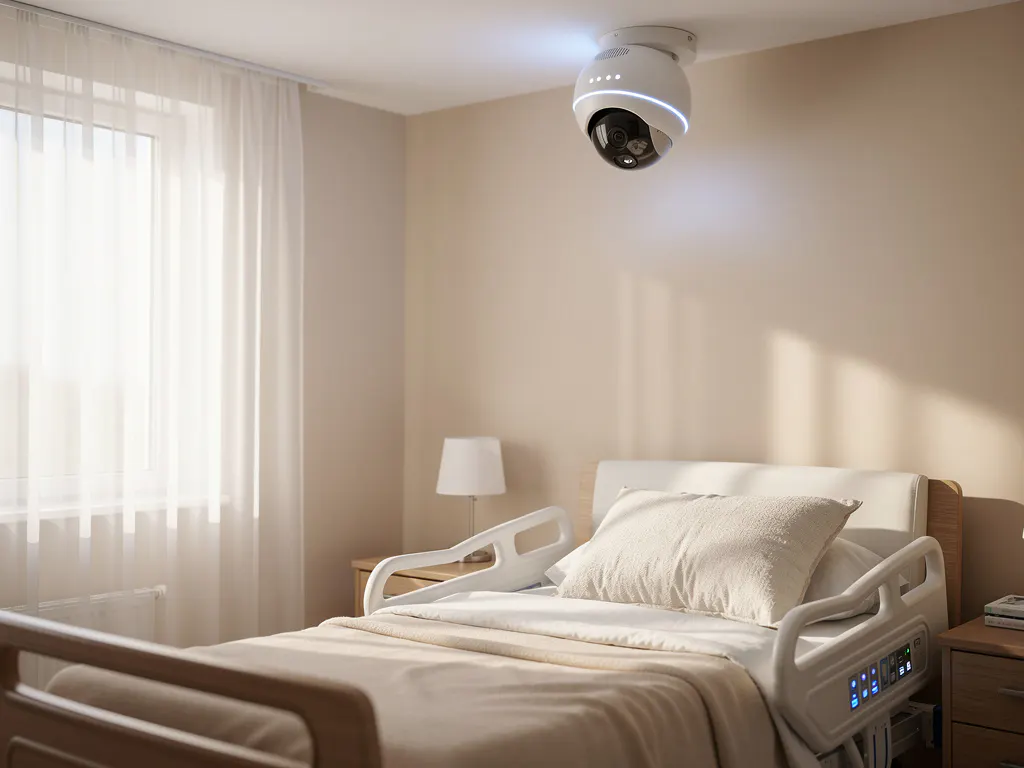
Falls are one of the biggest concerns in elderly care, with an estimated one in three seniors falling annually. Traditional fall prevention methods are often reactive and dependent on human observation, which is not always possible. Modern AI technology now offers possibilities to automate fall prevention, enabling caregivers to act proactively before a fall occurs.
Automated fall prevention combines artificial intelligence with continuous monitoring to detect risk situations and immediately alert care staff. This technology transforms how care facilities handle fall risks and provides a solution to the growing staff shortage in healthcare.
What is automated fall prevention for seniors?
Automated fall prevention for seniors is an AI-driven system that uses continuous monitoring to detect fall risks and proactively warn caregivers before a fall occurs. The system analyzes movement patterns, body postures, and behavioral indicators to identify risky situations.
This technology goes beyond traditional fall detection by not only reacting to falls but also acting preventively. The system recognizes situations where a fall is likely, such as unsteady movements, unusual body postures, or dangerous positions. By using computer vision and machine learning algorithms, the software can recognize patterns that indicate an increased fall risk.
The automation means that constant human supervision is not necessary. The system works 24/7 and can monitor multiple people simultaneously, which is especially valuable in care facilities where staff availability is limited. This makes it possible to provide continuous care without the physical presence of caregivers in every room.
How does AI fall detection technology work in practice?
AI fall detection technology works by using cameras that analyze images in real time with machine learning algorithms. These algorithms are trained to recognize normal movement patterns and detect deviations that may indicate a fall or increased fall risk.
The system uses computer vision to analyze body postures, movement speed, and coordination. When someone suddenly changes posture, moves uncontrollably, or ends up in an unnatural position, the AI recognizes this as a potential emergency situation. The software can distinguish between normal activities, such as sitting down or lying down, and actual fall incidents.
When a risk situation is detected, an alarm is automatically sent to care staff, including location information and the nature of the incident. This fast response time is crucial, as every minute counts in fall incidents. The system can even distinguish between different types of falls and adjust urgency accordingly.
What benefits does automation of fall prevention offer?
Automation of fall prevention offers significant benefits: 24/7 monitoring without staff deployment, faster response times, fewer false alarms than traditional systems, and the ability to monitor multiple people simultaneously. This results in better patient safety and more efficient use of care staff.
One of the most important benefits is the dramatic reduction in response time. Where traditional systems depend on alarm buttons or accidental discovery by staff, automated fall detection can respond within seconds. This can make the difference between a minor injury and serious complications.
The technology also helps optimize staff deployment. Caregivers can focus on direct patient care instead of continuous observation. At the same time, the system provides objective data about fall incidents and risk factors, which helps in developing tailored prevention strategies.
Financially, automation can deliver significant cost savings by preventing hospital admissions and long-term treatments that result from serious fall incidents. The investment in technology often outweighs the costs of traditional staffing and medical treatments.
How do you implement an automated fall prevention program?
The implementation of an automated fall prevention program begins with a thorough analysis of the current situation and the needs of the care facility. Then the right technology is selected, staff is trained, and the system is gradually rolled out, with continuous monitoring and adjustments.
The first step is mapping risk areas and current fall prevention procedures. This helps determine where technology can be most effectively deployed. Think of common areas, bedrooms, bathrooms, and hallways where falls occur most frequently.
Technical implementation requires careful planning of camera positions, network infrastructure, and integration with existing care systems. It is essential that the system seamlessly connects to caregivers’ work processes and does not create additional administrative burdens.
Staff training is crucial for successful use. Caregivers must understand how the system works, how to interpret alarms, and how to respond adequately to notifications. Regular evaluation and adjustment of the system ensure optimal performance and user satisfaction.
What are the privacy aspects of automated fall detection?
Privacy aspects of automated fall detection include data protection, resident consent, transparency about data use, and GDPR compliance. Modern systems use edge computing and anonymization to ensure privacy without compromising effectiveness.
An important privacy element is that advanced AI systems process images locally without storing or transmitting them. The software analyzes movement patterns and body postures without human operators viewing the images. This principle of ‘privacy by design’ means that personal privacy is protected while safety is ensured.
Transparency toward residents and their families is essential. Care facilities must clearly communicate how the technology works, what data is collected, and how it is used. Consent procedures must be clear and residents must always have the option to opt out.
Compliance with international privacy standards such as ISO 27001 and NEN 7510 is crucial for care facilities. These standards ensure that data processing meets the highest security and privacy requirements in healthcare.
How Kepler Vision Technologies helps with fall prevention for seniors
At Kepler Vision Technologies, we offer advanced AI solutions specifically developed for fall prevention in care facilities. Our technology combines the benefits of automated monitoring with exceptional accuracy and privacy protection.
Our solutions offer:
- 24/7 monitoring with only one false alarm per 92 days
- Direct detection of fall incidents within seconds
- Privacy-friendly processing without human observation of images
- Simple plug-and-play implementation
- Compliance with ISO 27001 and NEN 7510 standards
With more than 20 patents and international experience in care facilities, we help organizations solve staff shortages while improving resident safety. Our AI technology is 1,000 times more accurate than traditional systems and provides caregivers with the tools they need to act proactively.
Would you like to learn more about how our fall prevention technology can help your care facility? Contact us for a personal conversation about your specific needs and possibilities.
Frequently Asked Questions
How long does it take to fully implement an automated fall prevention program?
Implementation takes an average of 4-8 weeks, depending on the size of the facility and complexity of the infrastructure. The technical installation itself can be completed within a few days, but staff training, system calibration, and going through test phases usually take the most time.
Can the AI system distinguish between an actual fall and normal activities like sports or yoga?
Yes, modern AI fall detection systems are trained to distinguish between intentional movements and uncontrolled falls. The system analyzes movement patterns, speed, and body posture to determine whether a movement is voluntary or involuntary. In doubtful cases, the system can give a warning with lower priority.
What happens if the system temporarily goes offline or has technical problems?
Professional fall prevention programs always have a backup plan. This can consist of automatic switching to reserve equipment, direct notification to the technical team, or fallback to traditional control methods. It is important to define these emergency procedures in advance and test them regularly.
How much does the implementation and maintenance of an automated fall prevention program cost?
Costs vary greatly per facility and chosen technology, but typically range between €2,000-€5,000 per room for purchase and installation. Monthly maintenance costs are approximately €50-€150 per room. This investment often pays for itself through reduced care costs and more efficient staff use.
Can residents turn off or adjust the system themselves if they want more privacy?
Most systems offer residents the possibility to temporarily set privacy modes for certain moments, such as during personal care. However, for safety reasons, the system usually cannot be completely turned off by residents themselves. Care facilities must have clear procedures for balancing privacy wishes and safety requirements.
How accurate are AI fall prevention programs compared to traditional methods?
Advanced AI systems achieve an accuracy of 95-99% and can reduce false-positive alarms to just a few per month. This is a significant improvement over traditional sensors that often generate dozens of false alarms per day. The speed of detection is also much higher: seconds versus minutes or hours.
What training does care staff need to work effectively with the system?
Care staff typically need 2-4 hours of basic training to understand the system and respond adequately to alarms. This includes interpreting different alarm types, using the software interface, and emergency procedures. Additional training is recommended after 3-6 months of use to discuss best practices and optimize the system.