

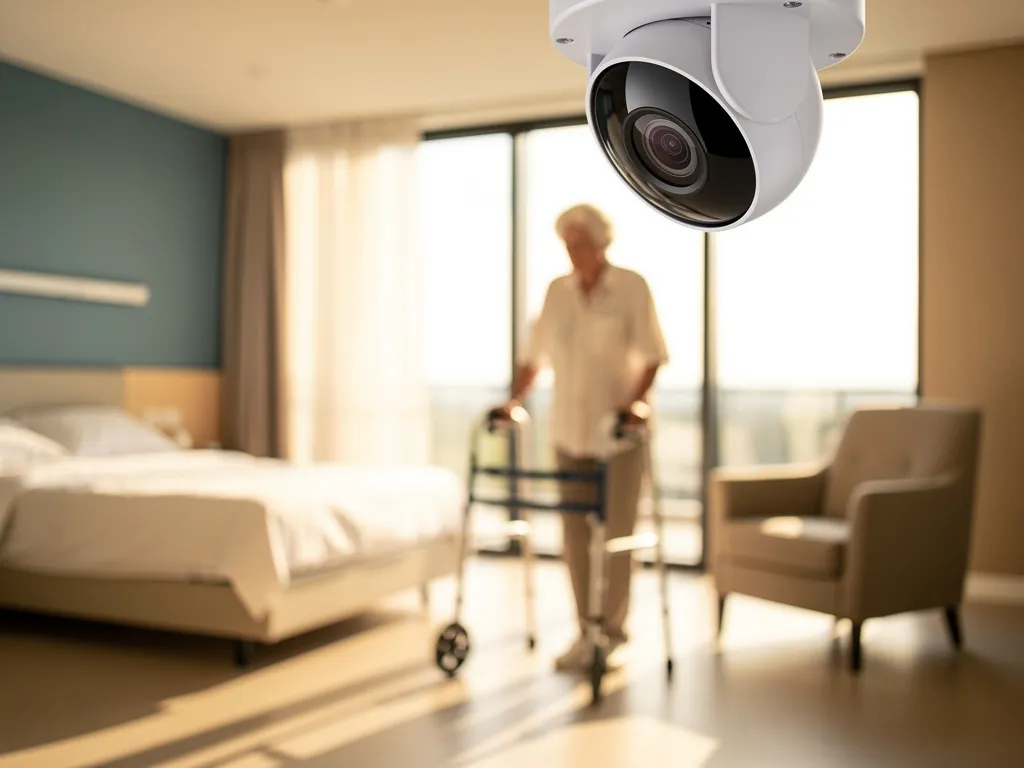
False alarms in fall prevention systems are one of the biggest challenges for healthcare organizations that want to deploy modern technology to protect elderly residents. These unnecessary alerts lead to alarm fatigue among care staff, increase workload, and can even endanger resident safety when real emergencies are overlooked.
A reliable fall prevention system can make the difference between effective care and frustration, both for staff and residents. By understanding what causes false alarms and how modern AI technology solves these problems, healthcare organizations can make better choices for their clients’ safety.
What are false alarms in fall prevention systems and why are they problematic?
False alarms in fall prevention systems are alerts that trigger without an actual fall or emergency situation having occurred. These incorrect notifications arise when the system wrongly interprets normal movements, shadow formation, or other harmless situations as a fall.
The problem of false alarms is comprehensive and has direct consequences for the quality of care. Care workers who regularly receive unnecessary alarms develop alarm fatigue and begin to ignore or take warnings less seriously. This can lead to dangerous situations where real emergencies are missed.
Additionally, each false alarm disrupts the care staff’s work routine. Staff members must interrupt their current activities to check whether help is actually needed. With many false alarms per day, this can lead to stress, inefficiency, and ultimately lower quality of care for all residents.
How do modern AI-driven fall prevention systems work to prevent false alarms?
Modern AI-driven fall prevention systems use advanced machine learning algorithms and computer vision technology to distinguish between real falls and normal daily movements. These systems analyze movement patterns, speed, and body postures in real time to ensure accurate detection.
The artificial intelligence is trained with thousands of different scenarios, allowing the system to learn to recognize what constitutes a real fall versus normal activities like bending, sitting, or lying down. Through continuous analysis of visual data, the AI can detect subtle differences that traditional sensors often miss.
A crucial advantage of AI technology is the ability for self-learning improvement. As the system processes more data, it becomes increasingly accurate in distinguishing real emergency situations. The most advanced systems achieve accuracy levels where only one false alarm occurs per 90+ days.
What factors cause false alarms in traditional fall detection systems?
Traditional fall detection systems generate false alarms due to their limited ability to understand context and interpret complex movement patterns. These older technologies often rely on simple motion sensors or threshold values that cannot distinguish between different types of movements.
Common causes of false alarms in traditional systems include:
- Shadow formation from changing light conditions
- Rapid movements, such as standing up from a chair
- Pets walking through the detection area
- Objects falling or moving
- Insufficient calibration for different body types
External factors such as changing weather conditions, reflections in windows, or moving curtains can also confuse traditional systems. These technologies lack the intelligence to filter such situations and focus only on motion detection without contextual understanding.
How do you choose a reliable fall prevention system for your healthcare organization?
When choosing a reliable fall prevention system, you should prioritize accuracy, ease of use, and compliance with privacy legislation. Look for systems specifically designed for healthcare environments with demonstrable results in minimizing false alarms.
Important selection criteria include:
- Proven accuracy statistics with concrete figures on false alarms
- AI technology that can adapt to different environments
- Privacy safeguards where images are not viewed by humans
- Simple installation and integration with existing systems
- 24/7 technical support and staff training
Ask for references from similar healthcare organizations and test the system if possible in a pilot phase. A reliable supplier will be transparent about the technology’s performance and can provide concrete guarantees about accuracy.
What are the benefits of systems with less than one false alarm per 90 days?
Systems with less than one false alarm per 90 days offer healthcare organizations a transformative improvement in operational efficiency and quality of care. This exceptional accuracy means that care staff can have confidence in every alert they receive.
The benefits of such accurate systems are multifaceted. Care staff experience less stress and fewer interruptions to their work routine, leading to better focus on other care tasks. Residents benefit from faster response times during real emergencies because staff no longer doubt the reliability of alarms.
Financially, fewer false alarms lead to cost savings through reduced staff deployment for unnecessary checks. Organizations can deploy their resources more effectively while simultaneously improving resident safety. This combination of operational efficiency and improved care quality makes an investment in accurate technology highly valuable.
How Kepler Vision Technologies helps with fall prevention for elderly
We at Kepler Vision Technologies have developed a revolutionary solution that definitively solves the problem of false alarms in fall prevention. Our Kepler Night Nurse software generates only one false alarm per 92 days, which is 1,000 times better than traditional technologies.
Our AI-driven approach offers:
- 24/7 monitoring with unprecedented reliability
- Privacy protection where images are never viewed by humans
- Direct alerts within seconds during real emergencies
- Simple plug-and-play installation without complex configuration
- Compliance with ISO 27001 and NEN 7510 standards
Thanks to our advanced computer vision technology and machine learning algorithms, healthcare organizations can finally rely on a system that truly works. Discover how our solution can help your healthcare organization by contacting us for a no-obligation demonstration.
Frequently Asked Questions
How long does it take to implement an AI-driven fall prevention system in our care facility?
The implementation of a modern AI-driven fall prevention system usually takes 1-2 weeks, depending on the size of your facility. Most systems are plug-and-play and require minimal technical configuration. Staff can be trained within a few days to use the system effectively.
What happens if the system does generate a false alarm?
In the rare cases of false alarms, these can be easily marked in the system, allowing the AI to learn and improve further. Modern systems also have the ability to adjust specific zones or time periods to further optimize accuracy for your unique environment.
Can residents disable or avoid the fall prevention system?
No, modern AI-driven systems work completely automatically and cannot be disabled by residents. The cameras are discreetly placed and the software works in the background without bothering residents. This guarantees continuous protection, even for residents with dementia who might forget to use wearable devices.
How does the system handle resident privacy?
Advanced AI systems process visual data locally and do not store recognizable images. The technology only analyzes movement patterns and body postures without human operators ever seeing the images. All systems comply with GDPR regulations and care-specific privacy standards such as NEN 7510.
What are the costs of a reliable fall prevention system compared to traditional methods?
While the initial investment may be higher, accurate systems save significant costs through fewer unnecessary checks and increased staff efficiency. Most healthcare organizations see a payback period of 6-12 months through reduced staff deployment for false alarms and improved care quality.
Can the system distinguish between different types of falls?
Yes, advanced AI systems can classify different types of falls and determine urgency. The system can distinguish between a slow fall, a sudden fall, or someone becoming unconscious. This information helps care staff determine the appropriate response and prioritize when dealing with multiple alarms.
What happens during power outages or technical failures?
Professional fall prevention systems have built-in backup systems and batteries that keep the system operational for several hours during power outages. In case of technical problems, care staff are automatically informed, and most suppliers offer 24/7 technical support to resolve issues quickly.
Related Articles
- How to Prevent Alarm Fatigue in AI Patient Monitoring Implementation
- What are the signs of excessive workload in the workplace?
- What are the latest developments in fall prevention for the elderly?
- What technology is used in fall prevention for the elderly?
- How do you prevent privacy violations in fall prevention for seniors?
This content was generated with the help of AI and it may contain mistakes