


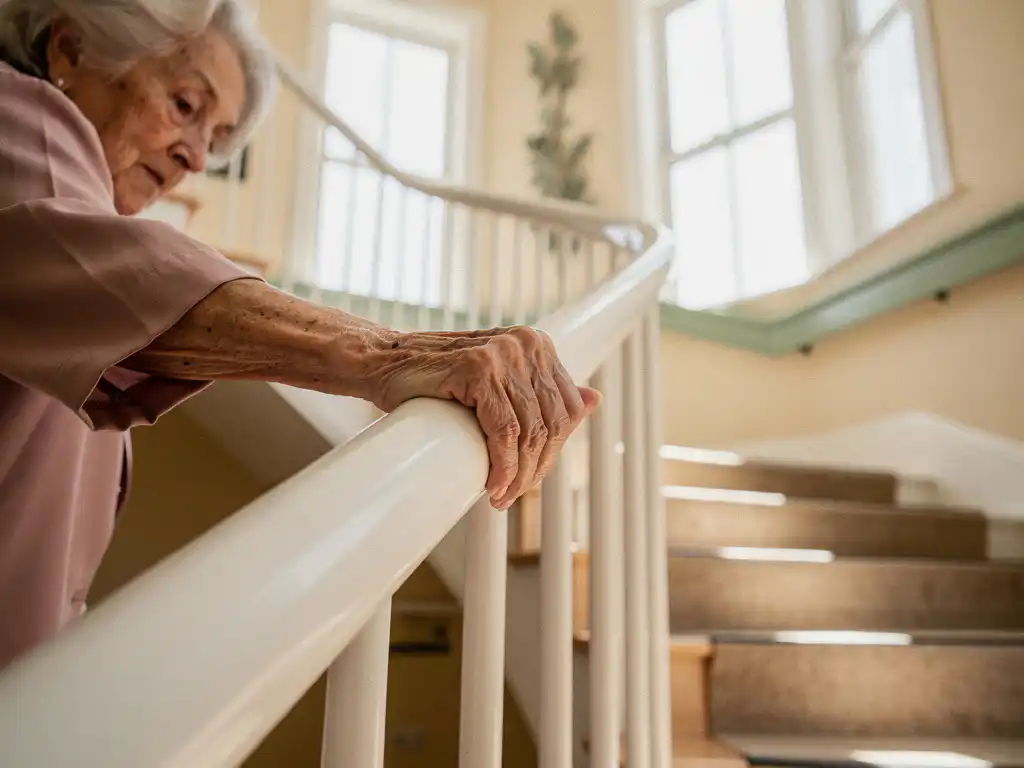
Fall prevention for seniors is becoming increasingly important as the population ages and healthcare organizations struggle with staff shortages. While the technology is promising, practical implementation proves complex and challenging. From technical obstacles to staff resistance: healthcare organizations face various barriers when implementing modern fall prevention systems.
These challenges require a thoughtful approach, where technical aspects, human factors, and organizational changes are carefully considered. Understanding these implementation challenges helps healthcare organizations better prepare and successfully introduce fall prevention for seniors.
What is fall prevention for seniors and why is implementation so complex?
Fall prevention for seniors encompasses technologies and strategies that detect, predict, and prevent falls among vulnerable residents in care facilities. Implementation is complex because various systems, processes, and stakeholders must be integrated into an existing care environment.
The complexity arises from multiple factors that must be addressed simultaneously. First, modern fall prevention requires integration with existing IT infrastructure, which is often outdated or incompatible. Additionally, healthcare staff must learn new work processes while already being overloaded.
Furthermore, regulation and privacy play a crucial role. Healthcare organizations must comply with strict GDPR requirements and healthcare sector standards, which requires additional procedures and documentation. The combination of technical, operational, and legal aspects makes implementation a multidimensional challenge that requires careful planning and expertise.
What technical challenges do healthcare organizations encounter when implementing fall prevention?
The main technical challenges are network infrastructure, system integration, reliability, and maintenance of fall prevention technology. Many care facilities have outdated IT systems that are not suitable for modern AI solutions.
Network problems often form the first obstacle. Fall prevention systems require stable internet connections and sufficient bandwidth for real-time monitoring. Many elderly care centers have weak wifi networks that regularly fail, undermining the effectiveness of fall detection.
System integration also brings complexity. New fall prevention technology must communicate with existing care records, alarm systems, and communication tools. This integration often requires custom programming and extensive testing to prevent compatibility issues.
Additionally, reliability is crucial. False alarms lead to alarm fatigue among staff, while missed detections can have serious consequences. Finding the right balance between sensitivity and specificity requires careful calibration and continuous monitoring of system performance.
How do you overcome resistance from care staff to new fall prevention technology?
You overcome resistance from care staff through early involvement, extensive training, and demonstrating concrete benefits for their daily work. Transparent communication about goals and expectations is essential for acceptance.
Start by identifying key users and champions within the care team. These early adopters can convince colleagues and serve as ambassadors for the new technology. Organize workshops where staff can share concerns and suggestions, so they feel ownership over the implementation process.
Training must be practical and relevant. Show how fall prevention technology reduces workload through faster detection and fewer false alarms. Use concrete examples of situations where the system saves time or signals critical moments earlier.
Implement gradually and measure satisfaction regularly. Start with a pilot department and gather feedback before scaling up. Show measurable results, such as shorter response times or better patient outcomes, to support the value of the investment.
What are the biggest privacy challenges with fall detection systems?
The biggest privacy challenges are image processing, data protection, resident consent, and GDPR compliance. Healthcare organizations must balance between effective monitoring and respect for the privacy of vulnerable seniors.
Image processing forms the core dilemma. Traditional camera systems continuously record images of residents in private situations, raising ethical and legal questions. Residents and families rightfully worry about who has access to these images and how they are stored.
Data protection requires robust technical measures. All collected data must be encrypted, securely stored, and only accessible to authorized personnel. Healthcare organizations must also have clear procedures for data deletion and incident response in case of data breaches.
Obtaining consent can be complex, especially with residents who have cognitive limitations. Legal representatives must be involved, and organizations must be transparent about data collection and use. Developing privacy-friendly technology that effectively monitors without capturing private moments is becoming increasingly important.
How much does implementing fall prevention technology cost and how do healthcare organizations justify the investment?
Implementation costs vary from €5,000 to €50,000 per department, depending on the complexity of the system and the size of the organization. Healthcare organizations justify this investment with cost savings through fewer fall incidents and more efficient staff deployment.
Total costs include hardware, software, installation, training, and maintenance. Simple systems cost less but offer limited functionality, while advanced AI solutions require higher initial investments and deliver better long-term results.
The return on investment comes from various sources. Fewer fall incidents mean fewer hospital admissions, which saves an average of €8,000 per incident. More efficient monitoring enables staff to care for more residents, helping to address staff shortages.
Additionally, fall prevention systems improve quality of care and resident satisfaction, which provides reputation benefits and higher occupancy rates. Insurers sometimes give discounts to organizations with proven safety systems, further strengthening the business case.
How Kepler Vision Technologies helps with fall prevention implementation
We help healthcare organizations overcome these implementation challenges with our proven fall prevention solutions. Our Kepler Night Nurse technology offers a unique approach that combines privacy, reliability, and ease of use.
Our solution distinguishes itself through:
- Only one false alarm per 92 days — 1,000 times better than traditional systems
- A privacy-first design where images are never viewed by humans
- A plug-and-play installation that requires minimal IT expertise
- 24/7 monitoring with direct alerting of care staff
- Full compliance with ISO 27001 and NEN 7510 standards
Through our years of experience with international healthcare organizations, we understand the practical challenges of implementation. We guide organizations from planning to full operational deployment, including training and support of care teams.
Would you like to know more about how we can simplify your fall prevention implementation? Contact us for a no-obligation consultation about your specific situation and challenges.
Frequently Asked Questions
How long does it take to get a fall prevention system fully operational?
A complete implementation takes an average of 3-6 months, depending on the size of the organization and the complexity of existing systems. This includes planning, installation, staff training, and a pilot phase for optimization. At Kepler Vision, we shorten this process through our plug-and-play technology and extensive support.
What happens if the system gives a false alarm during the night?
Modern fall prevention systems like Kepler Night Nurse are specifically designed to minimize false alarms – we have only one false alarm per 92 days. When a false alarm does occur, care staff can easily confirm this via the app and the system learns from this feedback to improve future precision.
Can residents turn off the system if they want privacy?
Yes, residents always have the right to refuse monitoring or temporarily disable it. Modern systems offer options like ‘privacy mode’ during certain activities. It’s important to make clear agreements in advance about when and how residents can make this choice, in consultation with family and caregivers.
How do you train night staff who have less experience with technology?
Start with simple, practical training in small groups and use visual aids. Have experienced colleagues serve as mentors and organize hands-on practice sessions with various scenarios. Provide 24/7 technical support during the first weeks and create a simple manual with many images for quick reference.
What if the internet connection fails – does the system still work?
Quality fall prevention systems have backup functionality and local storage for when the internet connection temporarily fails. Alarms are generated locally and stored until the connection is restored. However, it is essential to have a stable internet connection for optimal performance and real-time monitoring.
How do you measure the success of fall prevention implementation after 6 months?
Measure concrete KPIs such as the number of fall incidents, staff response times, resident satisfaction, and staff satisfaction. Compare these with baseline measurements from before implementation. Also important indicators are the number of hospital admissions due to falls, the time staff saves through more efficient monitoring, and feedback from families about improved safety.
Related Articles
- What are the migration costs to new fall prevention systems for the elderly?
- How can I claim fall prevention physiotherapy?
- How do you secure fall prevention for seniors against cyberattacks?
- How can healthcare institutions strategically deploy innovation?
- Why is continuous monitoring a key to future-proof care?
This content was generated with the help of AI and it may contain mistakes