


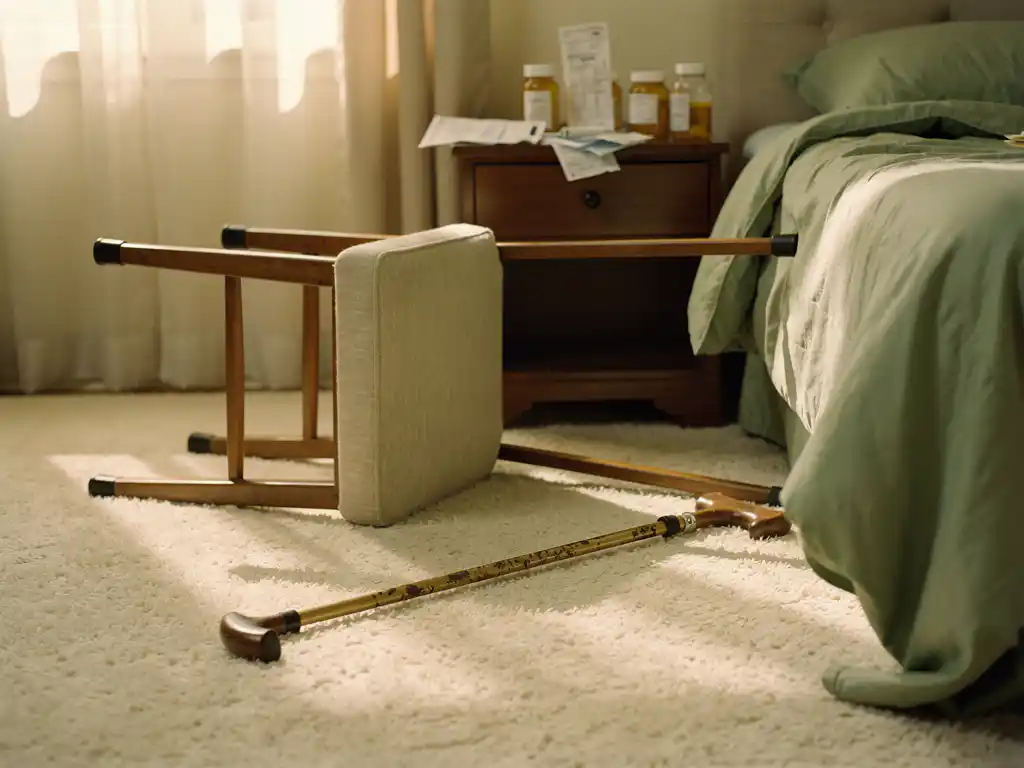
Falls among the elderly represent one of the greatest challenges in healthcare delivery, with far-reaching consequences that extend well beyond physical injury. Without adequate fall prevention for seniors, costs can rise exponentially, placing a heavy burden on both individual families and healthcare organizations. These costs manifest at various levels, from direct medical expenses to hidden operational burdens that are often overlooked.
Understanding this cost structure is essential for healthcare providers who want to implement effective prevention measures. By gaining insight into both the visible and invisible costs of fall incidents, organizations can make informed decisions about investments in fall prevention technology.
What are the direct medical costs of falls among the elderly?
The direct medical costs of falls among the elderly include acute care, diagnostic testing, surgical procedures, and rehabilitation. An average fall incident requiring hospitalization costs between €8,000 and €15,000, with hip fractures potentially reaching €25,000 per incident.
These costs begin immediately after the fall incident with ambulance transport and emergency care. Diagnostic procedures such as X-rays, CT scans, and MRI examinations form a significant portion of the initial costs. Complex fractures often require extended hospital stays, with orthopedic surgery and anesthesia further driving up the bill.
Rehabilitation costs often constitute the largest portion of total medical expenses. Physical therapy, occupational therapy, and specialized care may be needed for months. For elderly individuals who experience permanent functional loss, lifelong care costs arise that far exceed the original treatment costs.
What hidden costs does a fall incident entail?
Hidden costs of fall incidents include productivity loss among healthcare staff, administrative burdens, legal risks, and reputational damage. These indirect costs can amount to 150-200% of direct medical costs and are often underestimated in cost calculations.
Staff must invest significantly more time in individual care following a fall incident. Additional documentation, incident reporting, and communication with family require valuable hours. Furthermore, guilt and stress often arise among healthcare workers, which can lead to sick leave or staff turnover.
Legal costs represent a growing concern for healthcare organizations. Liability claims, insurance premiums, and legal proceedings can cost tens of thousands of euros per incident. Reputational damage affects the intake of new residents and can lead to lower occupancy rates, threatening the organization’s financial stability.
How do falls without prevention affect the operational costs of healthcare organizations?
Falls without adequate prevention increase operational costs through more intensive care, higher staffing requirements, increased insurance premiums, and compliance costs. Organizations see an average of 25-40% higher operational costs per resident who has experienced a fall incident.
Care intensity rises dramatically after fall incidents. Residents often need more assistance with daily activities, requiring adjustments to staff-to-resident ratios. This leads to overtime, hiring external staff, and higher labor costs. Night watches are deployed more frequently, further driving up personnel costs.
Insurance premiums rise significantly for organizations with many fall incidents. Insurance companies use risk-based pricing, where organizations with poor fall statistics pay considerably more. Additionally, regulators require extra compliance measures, resulting in higher administrative and operational costs.
What does it cost to implement fall prevention technology versus the cost of doing nothing?
Implementing fall prevention technology costs an average one-time investment of €2,000-€5,000 per resident, while the cost of doing nothing can reach €15,000-€30,000 per fall incident. Return on investment is typically realized within 6-12 months by preventing just a few fall incidents.
The initial investment in fall prevention technology includes hardware, software, installation, and training. While these costs may seem substantial, they are minimal compared to the costs of repeated fall incidents. Modern systems often have low maintenance costs and a long lifespan, keeping the cost per resident per year relatively low.
The costs of doing nothing accumulate exponentially. Each fall that is not prevented generates not only direct medical costs but also long-term care costs, operational disruptions, and reputational damage. Organizations that do not implement fall prevention often see a spiral of rising costs and declining quality of care.
How can AI systems like fall detection reduce total healthcare costs?
AI systems for fall detection reduce total healthcare costs through rapid response, preventive interventions, and optimization of staffing. These systems can reduce care costs by 30-50% by preventing fall incidents and improving operational efficiency.
Rapid detection and response minimize the consequences of falls. When a fall is detected within seconds, healthcare workers can provide immediate assistance, helping prevent serious injuries. This quick response not only reduces medical costs but also prevents long-term complications that require expensive treatments.
AI systems also offer preventive capabilities by recognizing patterns that indicate increased fall risk. By identifying risky situations before they lead to falls, preventive measures can be taken. This proactive nature of AI technology transforms healthcare from reactive to preventive, resulting in significant cost savings.
How Kepler Vision Technologies helps with fall prevention for seniors
We at Kepler Vision Technologies offer a revolutionary solution for fall prevention in elderly care with our AI-driven systems. Our technology helps healthcare organizations drastically reduce the enormous costs of fall incidents by:
- Direct fall detection: Our Kepler Night Nurse detects falls within seconds and immediately alerts healthcare staff
- Unprecedented accuracy: Only one false alarm per 92 days, which is 1,000 times better than traditional systems
- 24/7 monitoring: Continuous surveillance without privacy violations, where images are never viewed by humans
- Cost-effective implementation: A plug-and-play concept that is easy to install and configure
- Compliance and safety: Fully compliant with ISO 27001 and NEN 7510 standards
By investing in our fall prevention technology, healthcare organizations can not only improve the safety of their residents but also realize significant cost savings. Our international experience shows that organizations implementing our systems can reduce their fall incident-related costs by 30-50%. Would you like to learn more about how our solutions can help your organization? Contact us for a no-obligation consultation and discover the possibilities for your healthcare organization.
Frequently Asked Questions
How long does it take for an investment in fall prevention technology to pay for itself?
The payback period for fall prevention technology averages between 6-12 months. By preventing just 1-2 fall incidents per year per system, the savings are already greater than the initial investment. Organizations often see concrete cost savings within the first months through reduced care intensity and fewer incident reports.
What financial support is available for implementing fall prevention systems?
Many health insurers and government agencies offer subsidies or financial support for proven fall prevention technology. Additionally, costs can often be spread over multiple years through lease arrangements. It is advisable to inquire with your insurer about specific reimbursement options for AI-driven care technology.
What are the most common implementation mistakes with fall prevention technology?
The biggest mistakes are insufficient staff training, incorrect sensor placement, and ignoring system alarms due to ‘alarm fatigue’. Successful implementation requires a phased approach, where staff is trained step by step and the system is gradually rolled out. It is also essential to have clear protocols for responding to alarms.
How can small healthcare organizations with limited budgets still implement fall prevention?
Small organizations can start with a phased implementation, first equipping high-risk areas. Collaboration with other small healthcare organizations can lead to advantageous group purchases. Additionally, there are often specific subsidy schemes available for smaller care providers through provincial or municipal funds.
What role do family members and residents themselves play in accepting fall prevention technology?
Family members and residents often have concerns about privacy and autonomy. Transparent communication about how the technology works, what data is collected, and how privacy is protected is crucial. Involving resident councils and families in the implementation significantly increases acceptance. Technology demonstrations help alleviate fears.
How do you measure the success of a fall prevention system after implementation?
Success is measured using concrete KPIs such as the number of fall incidents per month, average response time to alarms, reduction in hospital admissions, and decrease in total care costs per resident. Soft indicators such as satisfaction of staff, family, and residents are also important success factors that should be regularly evaluated.
Related Articles
- What is workplace happiness and how does it relate to workload?
- What causes high work pressure in the healthcare sector?
- Which risk factors increase the need for fall prevention in older adults?
- What technological trends are shaping tomorrow's healthcare?
- What are the building blocks of innovative healthcare monitoring?
This content was generated with the help of AI and it may contain mistakes