


Fall prevention for elderly individuals is becoming increasingly important as the aging population grows and healthcare organizations face staffing shortages. Choosing the right fall prevention provider can make the difference between effective care and unnecessary risks for residents. A careful evaluation of different providers helps organizations find the best solution that fits their specific needs and budget.
This guide helps healthcare organizations make an informed choice by outlining the key evaluation criteria and considerations. From technical specifications to privacy aspects: each component plays a crucial role in the selection process.
What is fall prevention for elderly individuals and why is it crucial for healthcare organizations?
Fall prevention for elderly individuals encompasses technological systems and strategies that detect, prevent, or minimize the consequences of falls among older adults. These systems use sensors, cameras, or wearable devices to identify risky situations and immediately alert healthcare staff.
For healthcare organizations, fall prevention is crucial because falls are the leading cause of injuries among elderly individuals. Approximately 30% of people over 65 fall at least once per year, often with serious consequences such as hip fractures. These incidents not only lead to higher healthcare costs but also to longer hospital stays and reduced quality of life for residents.
Modern fall prevention systems help healthcare organizations provide 24/7 monitoring without constant physical supervision. This is especially valuable given current staffing shortages in healthcare, where one caregiver often must supervise multiple residents. Effective fall prevention reduces workload while simultaneously improving resident safety.
What different types of fall prevention systems are available?
There are three main categories of fall prevention systems available: wearable devices, environmental sensors, and camera-based AI systems. Each type has specific advantages and limitations that healthcare organizations must weigh.
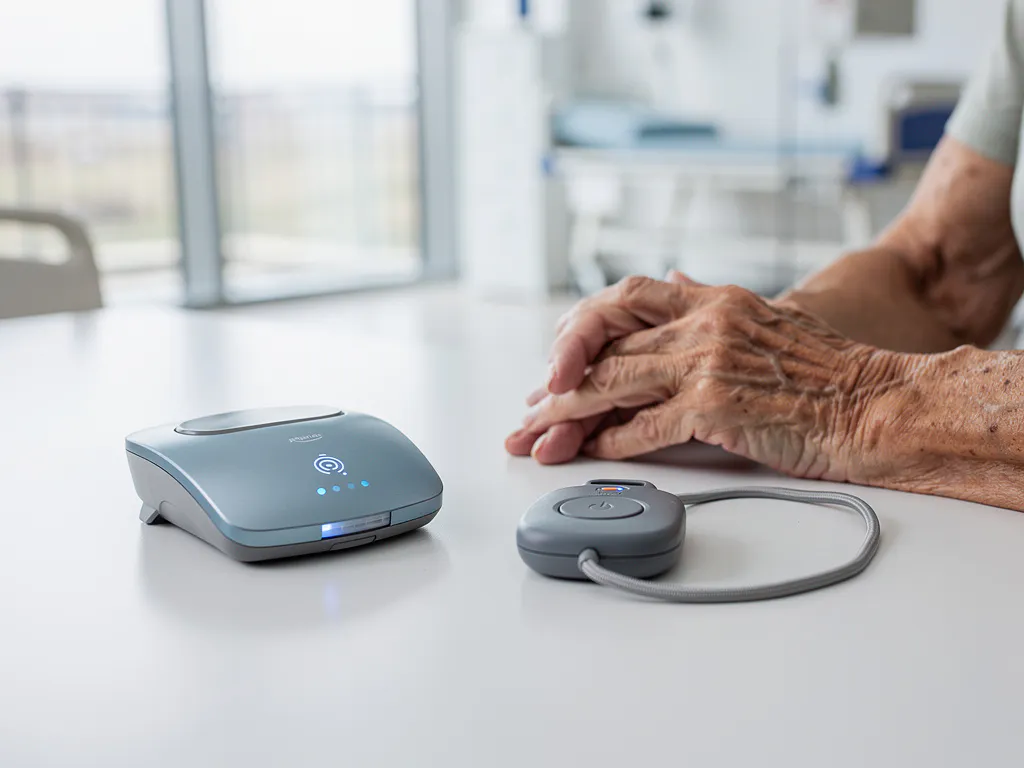
Wearable devices, such as wristbands or pendants, detect sudden movements and impact. They are relatively inexpensive but require residents to consistently wear the device. Many elderly individuals forget or refuse to use these devices, which limits their effectiveness.
Environmental sensors are placed in rooms or on beds and detect movement patterns. These systems work without active cooperation from residents but can be sensitive to false alarms from pets or moving objects.
Camera-based AI systems analyze video footage in real time to detect fall risks and actual falls. These systems offer the highest accuracy and require no cooperation from residents, but sometimes raise privacy concerns that must be carefully addressed.
How do you evaluate the accuracy of fall detection providers?
Fall detection accuracy is measured using two crucial parameters: the detection rate of actual falls and the number of false alarms per time period. A reliable system detects at least 95% of all falls within 30 seconds and generates fewer than one false alarm per week.
Ask providers for concrete performance data from real healthcare environments, not just laboratory tests. Real environments contain more variables, such as different lighting conditions, furniture, and movement patterns, which can affect performance. Look specifically at the average response time between fall detection and alerting healthcare personnel.
False alarms are just as important as the detection rate because they lead to alarm fatigue among healthcare staff. If a system generates multiple false alarms daily, staff will respond less quickly to real emergencies. Ask about the specific causes of false alarms and how the system minimizes them.
Test the systems in a pilot phase with a limited number of rooms if possible before implementing a full rollout. This provides insight into actual performance within your specific healthcare environment and helps make an informed decision.
What are the key privacy and compliance considerations for fall prevention systems?
Privacy and compliance are fundamental with fall prevention systems because they often process sensitive health data and operate in residents’ private spaces. Systems must comply with GDPR and specific healthcare sector standards such as NEN 7510 and ISO 27001.
Camera-based systems require extra attention to privacy because they potentially capture identifiable images. Look for providers that use edge computing, where image analysis occurs locally without images being stored or sent to external servers. Some advanced systems process images in real time without human operators ever having access to the video footage.
Check whether the provider is transparent about data processing and storage. Ask specifically about server locations, encryption of data during transport and storage, and access controls for technical personnel. A reliable provider can demonstrate that only authorized healthcare staff have access to relevant alarm data.
Ensure the system allows residents and their families to give informed consent. This means a clear explanation of how the system works, what data is collected, and how privacy is protected. Document these consent procedures carefully for compliance audits.
How do you compare costs and ROI of different fall prevention providers?
The total costs of fall prevention systems consist of acquisition costs, installation, maintenance, and training, with return on investment calculated based on cost savings from fewer fall incidents and higher staff efficiency. A good ROI analysis looks at a period of at least three years.
Acquisition costs vary greatly between systems. Wearable devices typically cost $50-200 per resident, while advanced AI systems can cost $500-2000 per room. Don’t forget to include costs for installation, network equipment, and any infrastructure modifications in your calculation.
Calculate potential savings from fewer fall incidents. Each prevented fall saves an average of $15,000-25,000 in medical costs, legal procedures, and reputation damage. If a system in a facility with 100 beds prevents 10 serious falls annually, this already delivers $150,000-250,000 in savings.
Staff efficiency often forms the largest ROI component. Automatic monitoring enables healthcare staff to supervise more residents without quality loss. Calculate how much time staff save through fewer manual checks and faster response to emergencies. This time savings can be used for direct patient care or help solve staffing shortages.
What implementation and support does a good fall prevention provider offer?
A professional fall prevention provider offers a complete implementation process, including technical installation, staff training, and ongoing support with a 24/7 helpdesk and regular system updates. Implementation should be fully operational within 2-4 weeks.
The implementation phase begins with a thorough analysis of your healthcare environment to optimally align the system with the specific situation. This includes identifying risk areas, network infrastructure, and integration requirements with existing healthcare systems. A good provider offers project management to ensure smooth implementation.
Training healthcare personnel is crucial for successful adoption. Look for providers that offer both theoretical and practical training, including simulation exercises with the alarm system. Staff must understand how the system works, how to respond to alarms, and how false alarms can be minimized.
Ongoing support includes a technical helpdesk, regular system updates, and performance reports. A reliable provider proactively monitors system performance and warns of deviations. Ask about response times for technical problems and whether local technicians are available for emergencies.
How Kepler Vision Technologies helps with fall prevention for elderly individuals
We offer advanced AI solutions specifically developed to address the challenges of fall prevention in healthcare organizations. Our systems combine exceptional accuracy with strict privacy protection:
- Unmatched precision: Only one false alarm per 92 days, which is 1,000 times better than traditional systems
- Complete privacy: Images are never viewed by humans and processing occurs locally
- 24/7 monitoring: Automatic detection of falls, fall risks, and lying positions without resident interaction
- Quick implementation: Plug-and-play concept with complete installation within weeks
- Compliance-ready: Meets ISO 27001 and NEN 7510 standards, with an extensive patent portfolio
Our international experience with healthcare organizations throughout Europe demonstrates that effective fall prevention both improves resident safety and helps solve staffing shortages. Discover how our AI solutions can transform your healthcare organization by contacting us for a personal demonstration and cost-benefit analysis.
Frequently Asked Questions
How long does it take for a fall prevention system to be fully integrated into our daily care processes?
Technical installation usually takes 2-4 weeks, but full integration into care processes requires 6-8 weeks. This includes staff training, adapting work procedures, and optimizing alarm protocols. Plan a gradual rollout per department to minimize resistance and give staff time to become familiar with the system.
What happens if the fall prevention system fails or has technical problems?
Professional providers offer redundant systems and 24/7 technical support with maximum 4-hour response time. Ensure you have an emergency protocol where staff falls back on traditional control rounds during system failure. Ask about local backup solutions and service level agreements that guarantee uptime of at least 99.5%.
How do I convince residents and families who are concerned about privacy and camera surveillance?
Organize information sessions where you explain that modern AI systems process images locally without human observation. Show concrete examples of how privacy is protected and what safety benefits it provides. Always offer the option to opt out and document all consent procedures transparently for families.
Can fall prevention systems be integrated with our existing care software and alarm systems?
Yes, most modern fall prevention systems offer APIs for integration with electronic patient records, nurse call systems, and care software. Check in advance whether your current systems are compatible and ask the provider for an integration plan. This prevents duplicate registration and ensures seamless work processes.
What financing options are available for fall prevention systems?
Many providers offer lease options, monthly or per-resident payment, and sometimes subsidies through health insurers or government programs. Research whether your organization qualifies for innovation subsidies or prevention funds. A good business case showing savings on fall incidents helps obtain financing from management.
How do I measure the success of a fall prevention system after implementation?
Monitor KPIs such as the number of fall incidents per month, response times to alarms, satisfaction of residents and families, and staff efficiency. Compare these figures with the situation before implementation. Ask the provider for monthly performance reports and conduct a thorough evaluation after 6 months to calculate ROI.
What are the most common implementation mistakes I should avoid?
Avoid insufficient staff training, ignoring privacy concerns of residents, and not adapting existing care protocols. Always start with a pilot phase in a limited number of rooms, involve all stakeholders from the beginning, and ensure clear communication about goals and expectations to all staff members.
Related Articles
- What are the causes of the labor shortage in the Netherlands?
- What causes high work pressure in the healthcare sector?
- When should you start fall prevention for seniors?
- What are the benefits of cloud-based fall prevention for seniors?
- How can technology help with the shortage of healthcare personnel?
This content was generated with the help of AI and it may contain mistakes