


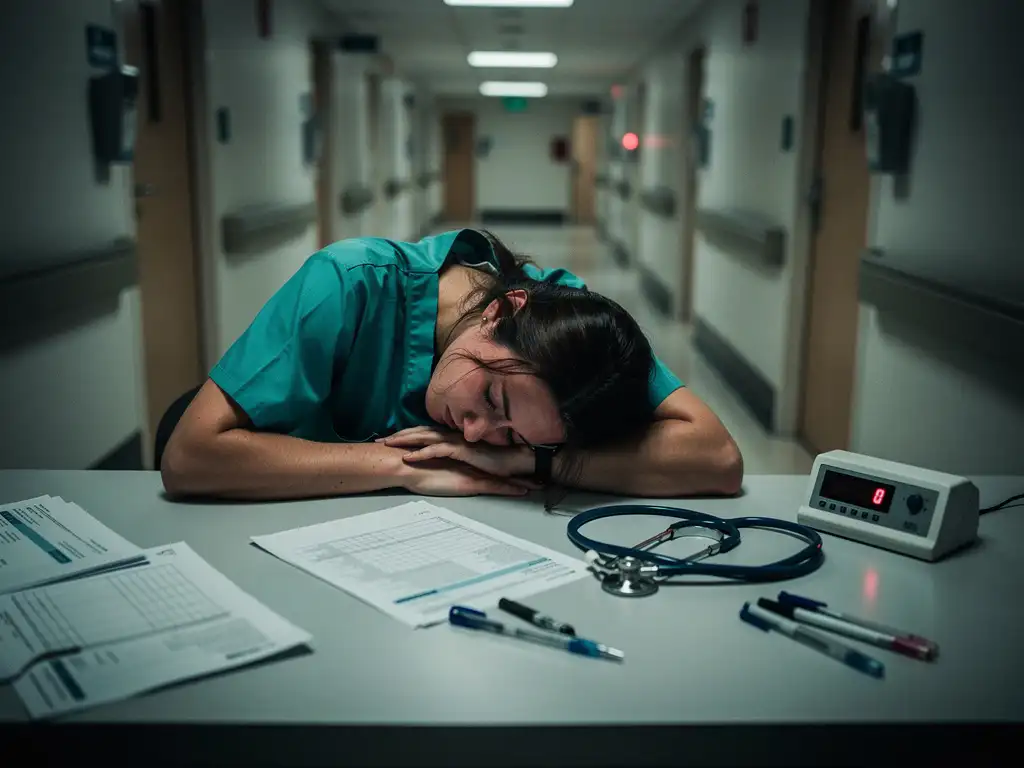
Chronic understaffing in healthcare leads to serious risks: reduced quality of care, a higher likelihood of patient accidents, and dangerously high workloads for the staff who remain. Care facilities that are chronically understaffed see the consequences reflected in client safety, employee wellbeing, and the organization’s financial stability. In this article, we answer the most frequently asked questions about staff shortages in healthcare and what can be done about them. Read more about the role technology plays in this on the Kepler Vision website.
What impact does chronic understaffing have on the quality of care?
Chronic understaffing has a direct impact on the quality of care: clients receive less attention, risks are identified more slowly, and staff make more mistakes due to fatigue and stress. Excessive workloads caused by too few people are one of the primary drivers of quality deterioration in care facilities.
When healthcare workers are consistently expected to take on too many tasks, the likelihood of errors increases. Think of missed medication doses, insufficient personal attention for clients, or the delayed detection of a deteriorating health condition. These are not isolated incidents — they are predictable consequences of a system under pressure.
Furthermore, sustained workload pressure has a negative effect on staff themselves. Burnout, sick leave, and turnover all increase, which only deepens the shortage. It is a vicious cycle that is difficult to break without structural intervention.
How severe is the staff shortage in Dutch healthcare?
The staff shortage in Dutch healthcare is substantial and grows year after year. Demand for care increases by approximately six percent annually, while the supply of healthcare workers fails to keep pace. Care facilities, particularly in elderly care, experience this as one of the greatest challenges of the moment.
By 2026, many care facilities are dealing with chronic understaffing. Vacancies remain open for extended periods, staff leave earlier due to high workloads, and the number of new graduates entering the field is insufficient to close the gap. This affects not only large hospitals but also smaller elderly care centers that struggle to attract candidates in a competitive labor market.
The combination of an aging population, growing demand for care, and a limited labor market makes the structural shortage a long-term problem. Temporary solutions such as agency workers or overtime are costly and do not address the underlying cause.
What risks do patients face when nighttime supervision is inadequate?
Inadequate nighttime supervision exposes patients and clients to significant risks. Falls go unnoticed or are detected too late, emergencies go undetected, and response times in acute situations increase. It is precisely during the nighttime hours that staffing levels are at their lowest, while client vulnerability is at its highest.
Elderly and vulnerable patients fall more frequently at night. When a staff member takes a long time to respond, the consequences can be severe — ranging from broken bones to prolonged unconsciousness. A rapid response to fall incidents is, quite literally, a matter of life and death.
In addition, inadequate nighttime supervision creates anxiety among clients and their families. The feeling that no one is watching over what happens during the night undermines trust in the care facility. For care organizations, this also represents a reputational risk that should not be underestimated.
What are the financial consequences of staff shortages for care facilities?
Staff shortages bring significant financial consequences for care facilities. The costs of sick leave, agency staff, and potential liability claims following incidents add up quickly. At the same time, productivity declines due to overburdened employees, which further increases operational costs.
Agency workers and flexible staffing are expensive solutions. Care facilities pay a considerable premium for temporary staff, without this structurally improving the continuity or quality of care. In the long run, this is financially unsustainable.
Incidents arising from understaffing — such as falls or missed medical warning signs — can also lead to legal liability and reputational damage. The financial impact of this is difficult to quantify, but can be very substantial for individual organizations.
How can AI technology help offset staff shortages in healthcare?
AI technology can help offset staff shortages in healthcare by taking over routine monitoring tasks, freeing healthcare workers to focus their attention on tasks that require a human presence. Rather than conducting manual check rounds, staff only receive an alert when something actually requires their attention.
Smart monitoring software can provide continuous oversight of clients, including during nighttime hours. The software detects anomalies in behavior or position and immediately alerts staff when intervention is needed. This enhances safety without requiring additional personnel.
AI does not replace care — it makes existing staff more effective. By reducing unnecessary check rounds and only alerting staff in genuine risk situations, workloads decrease noticeably. Staff can focus on personal interaction and direct care delivery, which also contributes to job satisfaction and staff retention.
When is deploying AI monitoring in healthcare the right choice?
Deploying AI monitoring in healthcare is the right choice when a facility chronically lacks sufficient staff for safe nighttime supervision, when the number of fall incidents is high, or when employees are consistently overburdened due to too few colleagues. AI monitoring is not an emergency fix — it is a structural improvement to the supervision process.
Care facilities considering the adoption of AI can ask themselves the following questions:
- Have there been recurring nighttime incidents where response time was a contributing factor?
- Do staff members consistently experience excessive pressure due to insufficient colleagues?
- Is attracting new staff in the short term a realistic prospect?
- Are patient data privacy and security a priority for the organization?
If the answer to one or more of these questions is yes, AI monitoring offers a concrete and proven approach. It is also a choice that suits facilities that want to work proactively toward quality improvement, rather than waiting for incidents to occur.
How Kepler Vision addresses chronic staff shortages in healthcare
At Kepler Vision Technologies, we develop AI software that supports care facilities in monitoring clients, even when insufficient staff are available for continuous manual supervision. Our solutions are specifically designed for the challenges of modern healthcare.
What our software does in practice:
- Real-time fall detection: the software immediately detects when someone falls and sends an alert to care staff within seconds.
- Fall prevention: by monitoring behavior and lying positions, the software identifies risk situations before an incident occurs.
- Privacy-first approach: footage is never viewed by humans. Staff only enter a room when the software requests it.
- Extremely low error rate: just one false alarm every 92 days, which reduces rather than increases workload.
- Simple implementation: the plug-and-play concept makes installation and configuration accessible for any facility.
Want to find out whether our AI solution is the right fit for your care organization? Contact us and discover what Kepler Vision can do for your facility.
Frequently Asked Questions
How long does it take to implement AI monitoring software in a care facility?
Thanks to the plug-and-play concept of modern AI monitoring solutions, implementation is typically fast and straightforward. In most cases, the software is up and running within a few days, with no significant changes required to the existing infrastructure. It is advisable to inform and involve staff in advance of the rollout, so they feel confident using the technology and can apply it effectively.
How do clients and their families feel about the idea of AI monitoring in the bedroom?
Concerns about privacy are understandable, but modern AI monitoring systems are specifically designed with a privacy-first approach: no footage is stored or viewed by humans. The software analyzes movements and positions purely algorithmically. When care facilities communicate this clearly to clients and families, and emphasize that the technology actually enhances safety without compromising privacy, acceptance is generally high.
Is AI monitoring a replacement for care staff or a supplement to them?
AI monitoring is emphatically not a replacement for care staff — it functions as a powerful supplement. The technology takes over routine monitoring tasks, allowing staff to invest their valuable time and energy in direct care delivery and personal interaction. The goal is to enable existing staff to work more effectively and with less strain, not to replace human care.
What are the most common mistakes made when addressing staff shortages in healthcare?
A common mistake is continuing to rely on short-term solutions such as agency workers and overtime, without structurally addressing the underlying causes. This is costly, undermines continuity of care, and increases the workload for permanent staff. Another pitfall is waiting for incidents to occur before taking action, when proactive measures such as technological support can actually prevent incidents from happening in the first place.
Which care facilities benefit most from AI monitoring technology?
AI monitoring technology offers the greatest added value for facilities in elderly care, nursing homes, and rehabilitation centers where vulnerable clients face an elevated risk of falls during the night. Facilities with chronic understaffing during night shifts or high rates of staff sick leave can also benefit immediately. Smaller care facilities that find it harder to attract staff in the labor market will find AI monitoring a cost-effective way to maintain a high level of safety.
How do you measure the success of AI monitoring after implementation?
The success of AI monitoring can be measured through concrete indicators such as the number of fall incidents before and after implementation, average response times to alerts, staff sick leave rates, and employee satisfaction. The number of unnecessary check rounds eliminated is also a valuable metric. By systematically tracking these figures, care facilities can demonstrate the return on investment of the technology and continue to optimize its use.
Are there subsidies or funding options available for care facilities looking to invest in AI technology?
Yes, there are various funding options available for care facilities looking to invest in innovative technology. Government bodies and healthcare purchasers such as care offices regularly offer subsidies and incentive programs for digitalization and innovation in healthcare. It is advisable to contact your care office or industry association for up-to-date opportunities, and to ask the supplier which financing arrangements they offer or support.
Related Articles
- What are the causes of the labor shortage in the Netherlands?
- How do other countries deal with staff shortages?
- Which sectors are struggling the most with staff shortages?
- What fall prevention methods for elderly people exist?
- What are the most important innovations in healthcare technology today?
This content was generated with the help of AI and it may contain mistakes