


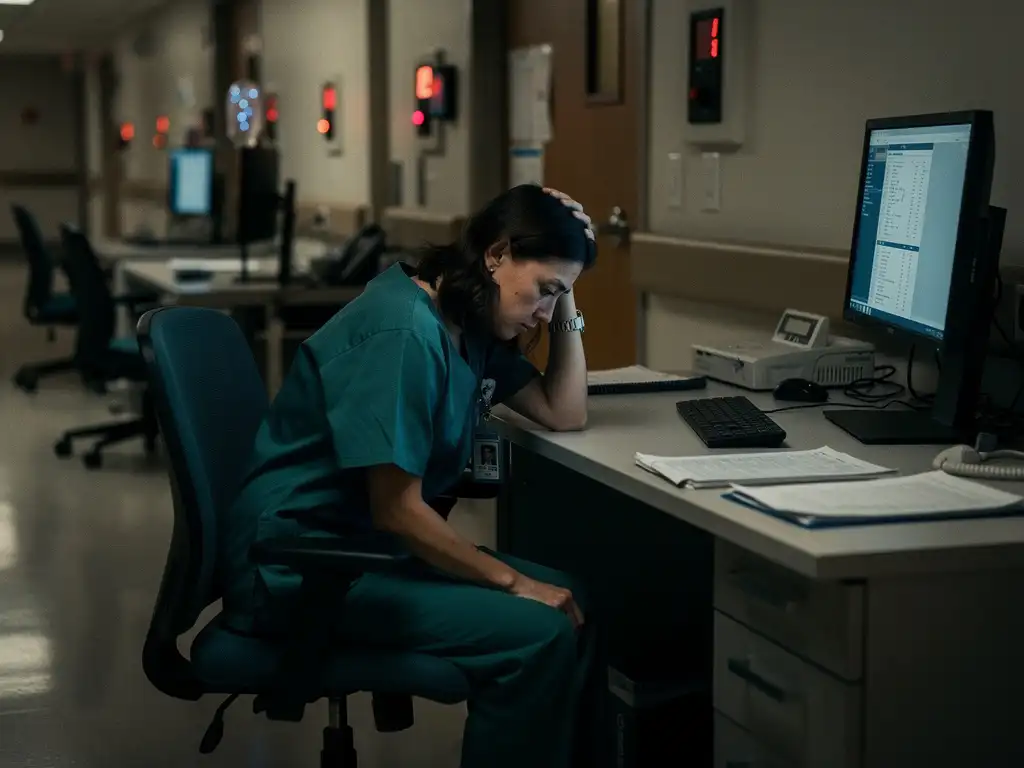
Staffing shortages in healthcare can be prevented through a combination of smart workforce policies, targeted recruitment, better working conditions, and intelligent technology that reduces the burden on staff. No single measure will fully solve the shortage, but together they significantly ease the pressure. In this article, we answer the most frequently asked questions about staffing shortages in healthcare and the concrete steps your organization can take.
What are the main causes of staffing shortages in healthcare?
Staffing shortages in healthcare arise from a combination of an aging population, high workloads, limited career advancement opportunities, and a growing demand for care services that structurally outpaces the supply of healthcare professionals. The labor market simply cannot keep up with the pace of demand.
The aging population plays a dual role: on one hand, the demand for care increases as the population grows older; on the other, experienced healthcare professionals are leaving the workforce through retirement. At the same time, fewer young people are choosing careers in healthcare, partly due to the heavy physical and mental demands of the work.
High workloads and administrative burdens are also major reasons why staff leave. Healthcare workers spend a large portion of their time on paperwork and reporting rather than direct patient care. This leads to frustration and attrition, which further worsens the shortage. Organizations that do not actively address this risk entering a negative spiral, where departing staff increase the workload for those who remain.
How severe is the staffing shortage in the healthcare sector?
The staffing shortage in the healthcare sector is significant and grows larger every year. Demand for care services is increasing by approximately 6% per year, while the supply of healthcare professionals continues to lag behind. This means healthcare organizations must structurally deliver more care with fewer people.
The problem is particularly acute in elderly care facilities. Hiring and retaining staff is difficult, if not impossible, for many institutions. Vacancies remain open longer, employees routinely work overtime, and the quality of care is under pressure. This is not a temporary problem — it is a structural challenge that will only grow more severe in the years ahead.
Hospitals and psychiatric clinics face similar challenges. The combination of rising patient numbers, increasingly complex care needs, and a shrinking workforce makes it nearly impossible for many institutions to maintain the desired standard of care without fundamentally changing the way they work.
What strategies help reduce staffing shortages in healthcare?
Addressing staffing shortages in healthcare requires a multi-pronged approach: invest simultaneously in recruitment, retention of existing staff, smarter workflows, and technological support. Organizations that rely on only one strategy find that its impact remains limited.
The most effective strategies are:
- Invest in employee well-being: Reduce workload by cutting administrative tasks and giving staff greater autonomy. Satisfied employees stay longer and attract colleagues.
- Improve onboarding and mentoring: New employees who receive proper guidance are less likely to drop out. Mentorship programs and clear onboarding pathways significantly reduce turnover.
- Flexible scheduling: Give employees more control over their working hours. This increases the organization’s attractiveness as an employer and reduces absenteeism.
- Use of technology: Automate routine tasks and monitoring so that staff can direct their time and attention toward care that truly requires a human presence.
- Partnerships with educational institutions: Build lasting relationships with healthcare training programs to facilitate internships and a direct pipeline of new talent.
None of these strategies works as a quick fix. The organizations that achieve the best results combine multiple approaches and continuously measure which measures have the greatest impact.
How can AI technology address staffing shortages in healthcare?
AI technology cannot fully solve staffing shortages in healthcare, but it significantly reduces the pressure by taking over routine tasks and continuous monitoring from staff. This allows healthcare professionals to focus their time and energy on tasks that genuinely require human involvement.
One concrete example is automated patient monitoring. Traditionally, monitoring clients and patients requires regular physical checks, including at night. This places a heavy burden on night shifts, which are already difficult to fill. AI monitoring systems can perform this surveillance continuously and reliably, so staff only need to respond when something is actually wrong.
AI also helps prioritize care actions. When a system automatically flags which situations are urgent and which are not, staff can work more efficiently. This reduces not only the workload but also the mental strain of having to remain constantly alert to potential emergencies.
What are the benefits of AI monitoring for healthcare organizations?
AI monitoring offers healthcare organizations three core benefits: greater patient safety, fewer unnecessary interventions by staff, and better protection of client privacy. Together, these advantages make care delivery more efficient without compromising on quality.
Higher accuracy, fewer false alarms
One of the biggest frustrations with traditional monitoring technology is the high number of false alarms. Staff become desensitized and respond more slowly — which is precisely what makes this dangerous. Modern AI systems are considerably more accurate and generate far fewer unnecessary alerts. This keeps staff sharp and prevents alarm fatigue.
Privacy as a default
A common concern about camera surveillance in healthcare is the intrusion on client privacy. Well-designed AI monitoring systems process footage entirely automatically, without any human ever viewing the images. A staff member only enters the room when the system indicates it is necessary. This gives clients and their families greater peace of mind and confidence.
When is AI monitoring the right choice for your healthcare organization?
AI monitoring is the right choice when your healthcare organization is structurally dealing with staffing shortages, high workloads on night shifts, or an elevated risk of fall incidents among clients. It is not a solution for temporary peaks, but a structural investment in more efficient care delivery.
Ask yourself the following questions to determine whether AI monitoring is right for your situation:
- Are night shifts difficult to fill or structurally understaffed?
- Do fall incidents occur regularly, and do you want to be able to respond more quickly?
- Do staff spend a lot of time on preventive checks that yield little result?
- Is client privacy an important consideration when choosing monitoring technology?
- Are you looking for a solution that is easy to implement without major infrastructure changes?
If you answer yes to several of these questions, AI monitoring is almost certainly a valuable addition to your staffing strategy. It is not a replacement for staff, but a tool that enables them to work smarter.
How Kepler Vision Technologies helps address staffing shortages in healthcare
At Kepler Vision Technologies, we develop AI solutions that help healthcare organizations manage staffing shortages without compromising on quality or privacy. Our software, Kepler Night Nurse and Kepler NurseAssist, monitors clients in elderly care facilities and patients in hospitals around the clock, 24/7.
What our solution offers in practice:
- Immediate fall detection: Care staff receive an alert within seconds of a fall, preventing long response times and undetected emergencies.
- Exceptional accuracy: Our software generates just one false alarm every 92 days — a thousand times better than outdated technologies.
- Privacy by design: Footage is never viewed by humans. Staff only enter the room when the software determines it is necessary.
- Simple implementation: Thanks to our plug-and-play concept, the software can be quickly planned, configured, and installed — even in existing facilities.
- International compliance: We meet ISO 27001 and NEN 7510 standards and hold a robust portfolio of 21 patents.
Want to find out how our AI solutions can support your organization in tackling staffing shortages? Get in touch and discover what Kepler Vision Technologies can do for you.
Frequently Asked Questions
How long does it take before AI monitoring software has a noticeable effect on staff workload?
Most healthcare organizations notice a difference within the first few weeks after implementation, particularly on night shifts where preventive checks decrease significantly. A structurally measurable effect on workload and employee satisfaction is typically visible after two to three months. It is important that staff are properly involved in the implementation process so that they experience the technology as a support tool and can start using it right away.
What are the most common mistakes healthcare organizations make when addressing staffing shortages?
The most common mistake is relying on just one measure — such as recruiting more staff — without paying attention to retaining existing employees. Another frequent error is underestimating the role of workload and administrative burden as reasons for leaving: attracting new staff while failing to address the underlying causes leads to a revolving door effect. Successful organizations always combine multiple strategies and continuously evaluate which approach has the greatest impact.
Is AI monitoring also suitable for smaller healthcare organizations with a limited budget?
Yes, modern AI monitoring solutions such as plug-and-play systems are specifically designed to be accessible to smaller facilities as well, without requiring major infrastructure investments or lengthy implementation processes. The return on investment is often even more quickly visible for smaller organizations, because the impact of having one or two fewer staff members on the floor is immediately felt. It is advisable to ask the supplier about modular or scalable pricing models that match the size of your organization.
How do you handle resistance from staff or clients toward AI monitoring technology?
Resistance is normal and usually stems from unfamiliarity or concerns about privacy and job security. The key is transparent communication: explain to staff that the technology supports them rather than replaces them, and inform clients and their families about how privacy is protected — for example, by making clear that footage is never viewed by humans. Actively involve staff in the implementation and pilot phase so they can experience firsthand what the technology does and does not do.
What role does flexible scheduling play in reducing staffing shortages in healthcare?
Flexible scheduling is one of the most direct ways to retain staff, as it gives them greater control over their work-life balance. Research shows that employees with more scheduling autonomy leave their jobs significantly less often and have lower rates of absenteeism. Combine flexible scheduling with smart technology that lightens the load on night shifts, and you make the organization more attractive to both current and prospective staff.
How do you measure whether measures against staffing shortages are actually working?
Use a combination of quantitative and qualitative indicators: track staff turnover, absenteeism, the number of open vacancies, and the average time it takes to fill them. In addition, employee satisfaction surveys provide insight into how staff experience workload and working conditions. For technological measures such as AI monitoring, you can specifically measure how many unnecessary checks have been eliminated and how response times to incidents have changed.
Are there subsidies or funding opportunities available for healthcare organizations looking to invest in AI technology?
Yes, various funding opportunities are available for healthcare organizations in the Netherlands looking to invest in care technology and innovation, including subsidies through the Dutch Healthcare Institute (Zorginstituut Nederland), regional innovation funds, and European programs such as Horizon Europe. In addition, some health insurers and municipalities offer supplementary funding for technology projects that demonstrably contribute to quality and efficiency. It is advisable to contact your industry association or the technology supplier, as they can often help identify suitable funding options.
Related Articles
- How do you solve understaffing without hiring new people right away?
- How do you keep healthcare workers in the workforce longer?
- How does workload affect employee engagement?
- How does staff shortage affect the workload of employees?
- How often should a fall risk assessment be performed?
This content was generated with the help of AI and it may contain mistakes