


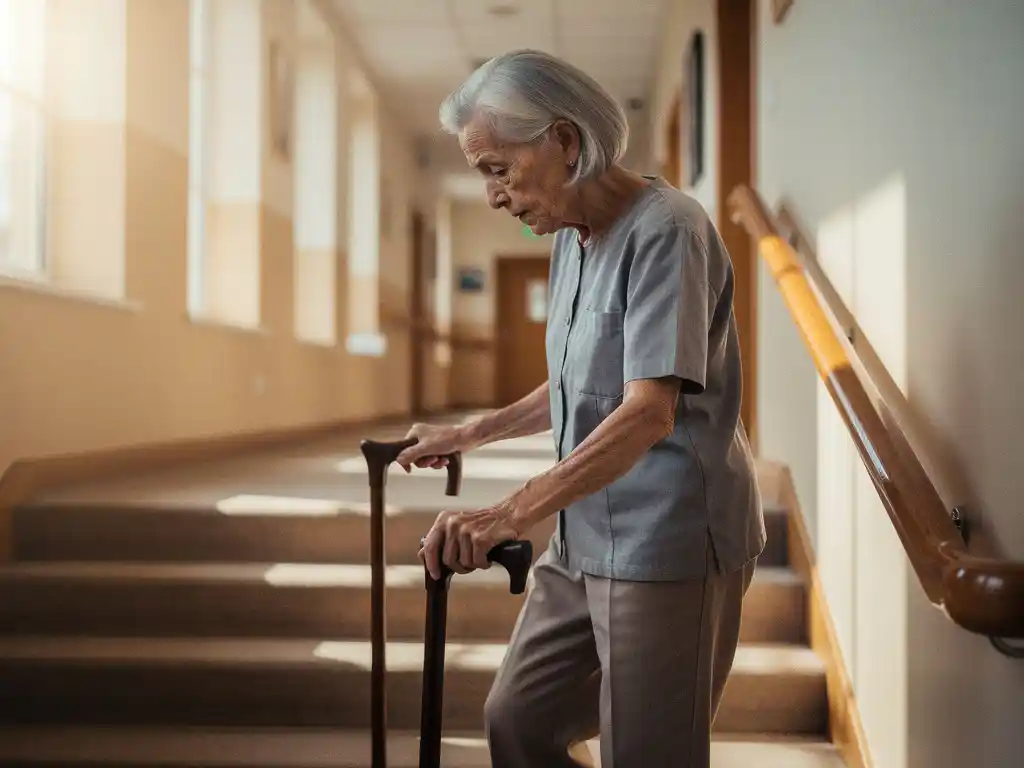
Falls among elderly individuals are one of the most common and serious health problems in healthcare. With the aging population, the number of fall incidents is increasing, which not only leads to serious injuries but also creates a significant burden for healthcare organizations. However, modern fall prevention techniques can make a substantial difference in the safety and quality of life for elderly individuals.
Effective fall prevention goes beyond traditional methods and increasingly utilizes advanced technologies. By understanding what fall prevention entails, which factors increase risk, and how modern systems work, healthcare providers can make better-informed decisions to protect their residents.
What is fall prevention and why is it so important for elderly individuals?
Fall prevention for elderly individuals encompasses all measures and strategies aimed at reducing the risk of falling and minimizing the consequences of fall incidents. This includes both proactive interventions to prevent falls and reactive systems to provide quick assistance when a fall occurs.
The importance of fall prevention is underscored by the serious consequences that falls can have for elderly individuals. Approximately one in three elderly people falls at least once per year, and these fall incidents can lead to hip fractures, head injuries, and other serious wounds. Besides physical damage, falls often also cause psychological consequences, such as fear of falling again, which can lead to reduced mobility and social isolation.
For healthcare organizations, effective fall prevention means not only better outcomes for residents but also relief from workload for staff. By reducing the number of fall incidents, healthcare workers can better distribute their time and attention across other aspects of care.
Which factors increase fall risk in elderly individuals?
Fall risk in elderly individuals is determined by a combination of intrinsic factors, such as age, medication use, cognitive decline, and reduced muscle strength, and extrinsic factors, such as environmental hazards and inadequate lighting.
Intrinsic risk factors include various physical and cognitive changes that naturally occur with aging. Reduced muscle strength and balance, vision problems, and medication side effects can all contribute to increased fall risk. Additionally, chronic conditions such as diabetes, arthritis, and dementia play an important role.
Extrinsic environmental factors are often easier to address but are sometimes overlooked. Loose rugs, slippery floors, insufficient lighting, and obstacles in walkways can all cause fall incidents. In healthcare environments, it is therefore crucial to regularly conduct risk analyses and adapt the environment where necessary.
How do modern AI systems for fall detection and prevention work?
Modern AI systems for fall detection and prevention use advanced computer vision technology to continuously monitor the behavior and movements of residents. They recognize patterns that indicate increased fall risk or detect an actual fall within seconds.
These systems work with cameras that are strategically placed in rooms and common areas. The AI software analyzes the video streams in real time and can distinguish between normal daily activities and potentially dangerous situations. When the system detects a fall or observes risky movements, it immediately sends an alert to healthcare staff.
An important advantage of modern AI systems is their accuracy. While traditional fall sensors often lead to many false alarms, advanced AI systems can drastically reduce the number of false alarms. This means that healthcare workers are only alerted when help is truly needed, which increases efficiency and prevents alarm fatigue.
What are the proven benefits of automated fall prevention?
Automated fall prevention offers proven benefits, such as faster response times during fall incidents, a significant reduction in false alarms, improved staff efficiency, and better outcomes for residents through early detection of risk situations.
One of the most notable benefits is the dramatic improvement in response time. Where traditional systems often depend on residents calling for help themselves or periodic checks by staff, automated systems can sound an alarm within seconds after a fall. This quick response can make the difference between a minor injury and a serious complication.
Additionally, modern systems lead to a significant improvement in quality of life for residents. By eliminating the risk of lying down for extended periods after a fall and proactively identifying risky situations, residents can feel safer and maintain more independence. For healthcare organizations, this also means relief from legal and ethical responsibilities.
How do healthcare organizations implement effective fall prevention strategies?
Healthcare organizations implement effective fall prevention strategies by adopting a holistic approach that combines risk analysis, staff training, environmental modifications, and modern technology in an integrated safety plan that is regularly evaluated and adjusted.
Implementation usually begins with a thorough analysis of the current situation and identifying the greatest risk factors within the organization. This includes mapping fall incidents from the past, assessing the physical environment, and evaluating existing protocols. Based on this analysis, a personalized implementation plan can be developed.
A successful implementation process also requires the involvement of all stakeholders, from management to frontline healthcare workers. Training and education are essential to ensure that everyone understands how the new systems work and what their role is within the fall prevention protocol. Regular evaluation and adjustment of the strategy ensure that effectiveness is maintained and that the system can adapt to changing needs.
How Kepler Vision Technologies helps with fall prevention for elderly individuals
We offer advanced AI solutions specifically designed to help healthcare organizations with effective fall prevention. Our technology combines the latest developments in computer vision with years of expertise in healthcare to provide a reliable and privacy-friendly solution.
Our fall prevention solutions offer the following benefits:
- Immediate fall detection within seconds, with only one false alarm per 92 days
- 24/7 monitoring without infringing on residents’ privacy
- Automated alerts to healthcare staff during risky situations
- Simple implementation thanks to our plug-and-play concept
- Full compliance with ISO 27001 and NEN 7510 standards
By implementing our proven technology, healthcare organizations can not only improve the safety of their residents but also relieve their staff and increase operational efficiency. Would you like to learn more about how our fall prevention solutions can help your organization? Contact us for a personal conversation about the possibilities.
Frequently Asked Questions
How long does it take to implement an AI fall prevention system in our healthcare facility?
The implementation of an AI fall prevention system typically takes 2-4 weeks, depending on the size of your facility and the number of spaces to be monitored. This includes the installation of cameras, configuring the software, staff training, and a testing period to optimize the system for your specific environment.
What happens if the system detects a fall while no staff is nearby?
Upon fall detection, the system immediately sends automatic alerts to multiple healthcare workers through various channels (app, SMS, or pager). The system can also be linked to central control rooms or external emergency services to ensure that someone always responds, even during night shifts or staff shortages.
Can residents accidentally disable or disrupt the AI system?
No, modern AI fall prevention systems are designed to be tamper-proof. The cameras are placed in strategic, unreachable locations and the system operates fully automatically without residents needing to interact with it. Even if a camera is temporarily blocked, the system alerts staff about this.
How does the system distinguish between a real fall and normal activities like bending or crouching?
Advanced AI algorithms analyze movement patterns, speed of movement, body posture, and the duration someone lies on the ground. The system continuously learns and can distinguish between voluntary movements (like bending) and involuntary falls by recognizing the specific characteristics of each movement.
What are the costs of an AI fall prevention system and is this reimbursed by insurance?
The costs vary depending on the number of spaces to be monitored and desired functionalities, but the investment is often recovered through reduced healthcare costs and liability risks. Some health insurers and municipalities offer subsidies or reimbursements for proven effective fall prevention technology. It is advisable to verify this in advance with your insurer.
How does the system handle privacy and GDPR legislation?
Modern AI fall prevention systems are fully GDPR-compliant and process visual material locally without storing recognizable images. The systems only analyze movement patterns and do not store video recordings. All data is encrypted and residents and family are fully informed about the use of the technology.
Can the system also detect other emergency situations, such as unconsciousness or epileptic seizures?
Yes, advanced AI systems can be configured to recognize various abnormal behavioral patterns, such as prolonged motionless lying, abnormal movements that may indicate epilepsy, or situations where someone needs help but cannot call. This makes the system a versatile safety tool for overall resident safety.
Related Articles
- How to Safeguard Patient Privacy in Camera-Based AI Monitoring
- What are the signs of excessive workload in the workplace?
- What are the consequences of staff shortages for patients and clients?
- Which mobile apps support fall prevention for seniors?
- How do you implement fall prevention for elderly people in healthcare facilities?
This content was generated with the help of AI and it may contain mistakes