


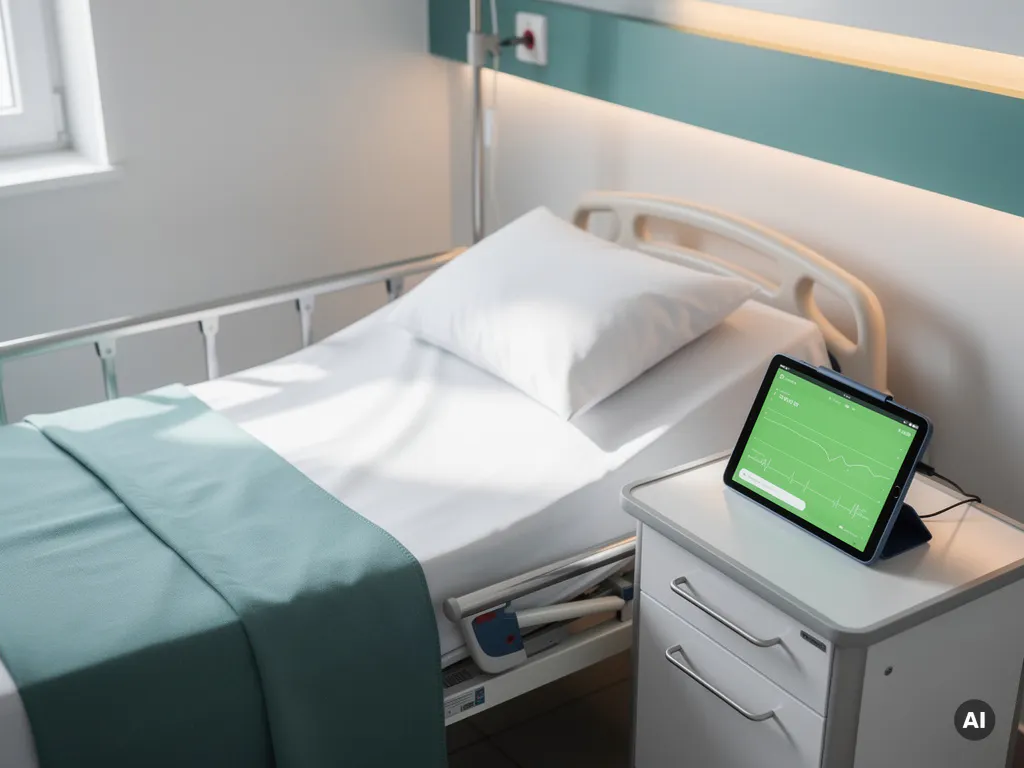
Implementing AI patient monitoring in a hospital takes an average of two to six weeks, depending on the scale of the rollout and the existing infrastructure. A pilot on a single ward can be up and running within a few days, while a hospital-wide implementation requires more preparation and coordination. In this article, we answer the most frequently asked questions about the implementation process, from the first steps to the moment monitoring is fully operational.
What steps are needed before installation begins?
Before the technical installation of AI monitoring software, there are three essential preparation steps: an infrastructure check, a privacy assessment, and alignment with the care team. This preparation typically takes one to two weeks and largely determines how smoothly the rest of the process goes.
Specifically, the steps are as follows:
- Technical inventory: Check whether the existing network and hardware infrastructure is suitable for the software. Consider Wi-Fi coverage, power supply, and available devices.
- Privacy and compliance assessment: Ensure the solution complies with applicable laws and regulations, such as the GDPR. This also includes determining who has access to which data.
- Stakeholder alignment: Involve care managers, IT staff, and healthcare providers early in the process. Their input prevents surprises during the rollout.
- Location selection: Determine which rooms or wards will be equipped with the monitoring software first.
Thorough preparation shortens installation time and reduces the risk of technical or organisational bottlenecks later on.
How long does the technical installation of AI monitoring software take?
The technical installation of AI monitoring software for a single room or ward typically takes only a few hours. Modern solutions are designed as plug-and-play systems, meaning no major structural modifications are required. For a complete ward, allow one to three working days.
The installation consists of placing sensors or cameras in patient rooms, connecting them to the hospital network, and configuring the software. Because images processed by the software are never viewed by humans, no additional measures are needed to secure live footage. This significantly simplifies the technical setup and speeds up installation.
After the physical installation, a testing phase follows in which the system is calibrated to the specific space. Factors such as room layout, lighting, and bed type can affect accuracy and are optimised during this phase.
What is the difference between a pilot and a full rollout?
A pilot is a small-scale test period in one or a few rooms or wards, designed to validate the software in your specific hospital environment. A full rollout is the hospital-wide implementation that follows after the pilot has been completed successfully. The difference lies in scale, lead time, and purpose.
During a pilot, which typically lasts two to four weeks, the care team learns to work with the system and any adjustments are made before the rollout is scaled up. This is also the time to measure how the software performs in terms of detection accuracy and false alarms.
A full rollout builds on the lessons learned from the pilot. The configurations and workflows optimised during the pilot are applied to all locations. This makes the full rollout faster and smoother than if you were to start hospital-wide from the outset.
How are care staff trained on the new AI software?
Care staff are trained through a hands-on introduction that typically lasts one to two hours. The training focuses on interpreting notifications, responding to alarms, and using the software in day-to-day care practice. Extensive technical knowledge is not required.
Because modern AI monitoring software is designed for use by healthcare professionals without an IT background, the interface is intuitive. Care staff only need to enter a patient’s room when the software requests it, which reduces workload and increases focus on genuine care moments.
In addition to the initial training, it is advisable to designate a point of contact within the team who can answer questions during the first few weeks. This accelerates adoption and increases confidence in the system.
What factors determine how quickly the implementation proceeds?
The speed of AI patient monitoring implementation is determined by four main factors: the state of the IT infrastructure, the availability of internal stakeholders, the scale of the rollout, and the degree of customisation required. Organisations with a modern network infrastructure and an actively engaged project team typically implement the fastest.
- IT infrastructure: A stable and comprehensive network significantly speeds up installation. Outdated systems sometimes require additional modifications.
- Internal decision-making: The faster stakeholders are available for alignment and approval, the shorter the lead time.
- Scale of the rollout: A pilot on one ward goes faster than a rollout across multiple floors or locations.
- Custom versus standard: Plug-and-play systems are implemented faster than solutions that need to be deeply integrated with existing hospital systems.
Organisations that establish a clear project structure before installation experience fewer delays and a smoother transition to operational monitoring.
When is AI monitoring fully operational after installation?
AI patient monitoring is fully operational once the software has been configured, tested, and the care team has been trained. In most cases, this is within 24 to 72 hours of the technical installation. The software then immediately detects unsafe situations and alerts care staff within seconds.
After the first operational days, a brief run-in period follows during which the system adapts to the specific environment. This does not affect functionality, but can further refine detection accuracy. Care teams find in practice that confidence in the system grows as they gain more experience with the notifications and response times.
Fully operational also means that the software is active 24 hours a day, 7 days a week, including outside office hours when staff are less available. It is precisely during those periods that continuous automated monitoring offers the greatest added value.
How we help with AI patient monitoring in your hospital
We understand that the transition to automated patient monitoring raises questions, particularly regarding implementation time, privacy, and the impact on your care team. That is why we have designed our solutions to be deployable quickly, reliably, and in a privacy-safe manner. Here is what we offer:
- Fast plug-and-play installation without major structural modifications to your building
- Exceptionally low error rate with only one false alarm per 92 days, providing peace of mind for care teams and preventing unnecessary disruptions
- Full privacy protection because images are never viewed by humans and patient data processing complies with ISO 27001 and NEN 7510
- Fall detection, fall prevention, and lying position recognition in one integrated software solution
- Training support so your care staff can work with the software quickly and confidently
Would you like to know how quickly we can implement AI patient monitoring in your hospital or care facility? Contact us and we will discuss the options for your specific situation together.
Frequently Asked Questions
Can AI patient monitoring be integrated with our existing electronic patient record (EPR)?
Most modern AI monitoring solutions are designed as standalone systems that operate alongside your existing EPR, without requiring deep integration. A connection to your EPR is possible in many cases, but requires additional coordination with your IT department and the software supplier. It is advisable to discuss this during the preparation phase, so that any integration steps are included in the planning and lead time.
What happens if the internet connection goes down while the system is in use?
High-quality AI monitoring systems are designed with local processing capacity, meaning that core functions such as fall detection and alerting also work without an active internet connection. In that case, image processing takes place locally on the device or the internal network. It is advisable to explicitly ask the supplier how the system handles network outages, so you can be sure that monitoring is guaranteed even in those situations.
How do patients and their families respond to the presence of cameras or sensors in the room?
Experience shows that patients and families generally respond positively to monitoring once it is clearly explained that images are never viewed by humans and are processed exclusively by the AI. Transparent communication about the purpose of the system — namely faster assistance in the event of falls — significantly increases acceptance. It is advisable to prepare a short, easy-to-understand explanation that care staff can use when introducing the system to patients and their loved ones.
What common mistakes should hospitals avoid when implementing AI patient monitoring?
A common mistake is skipping the pilot phase and rolling out hospital-wide immediately, which increases the risk of unexpected problems and makes adoption by care staff more difficult. Another pitfall is involving healthcare providers too late in the implementation, which creates resistance that delays the rollout. Also ensure there is a clear internal point of contact and a structured feedback moment after the first operational weeks, so that adjustments are made in a timely manner.
Is AI patient monitoring also suitable for smaller care facilities or nursing homes, or is it only for large hospitals?
AI patient monitoring is explicitly not reserved for large hospitals; plug-and-play systems are highly scalable and can therefore also be used in smaller care facilities, rehabilitation centres, and nursing homes. Implementation time at smaller locations is typically shorter and the investment in preparation is more limited. Discuss with the supplier which configuration best suits your scale and patient population, so that the system is optimally tailored to your specific care environment.
How is the accuracy of the system measured and reported after implementation?
After implementation, you can monitor the accuracy of the system through reports on the number of detected incidents, response times, and the number of false alarms per period. A low number of false alarms — such as één per 92 days — is a concrete indicator of system quality and prevents alarm fatigue in care teams. Ask your supplier about the available dashboards or periodic reports, so you can continuously evaluate the performance of the system and make adjustments where necessary.
What are the next steps after the pilot has been completed successfully?
After a successful pilot, you evaluate the findings together with the supplier: detection accuracy, user experiences, and any technical adjustments that were made. Based on this, a rollout plan is drawn up for the next wards or locations, using the configurations and workflows from the pilot as a starting point. Also schedule a formal go/no-go moment with all relevant stakeholders, so that the decision to scale up is broadly supported within the organisation.
Related Articles
- What Requirements Should You Set for an AI Patient Monitoring System?
- Which conversation techniques help in addressing workload pressure?
- How do you solve staff shortages as an employer?
- What are the costs of fall prevention?
- What is the difference between fall detection and fall prevention for elderly people?
This content was generated with the help of AI and it may contain mistakes