


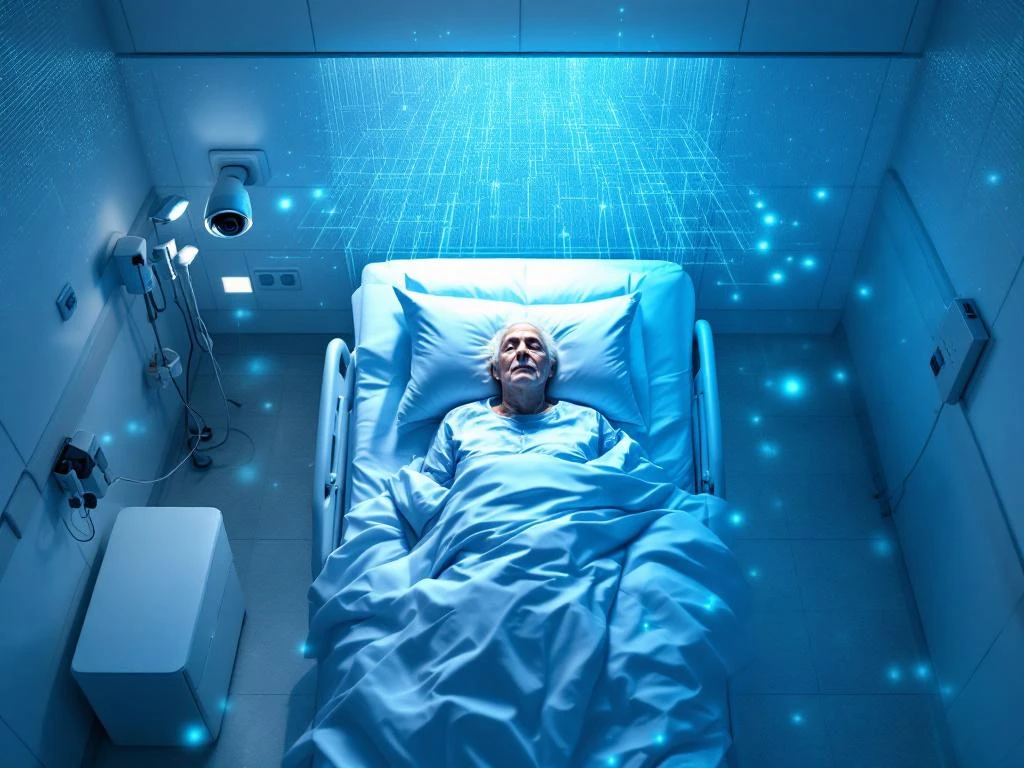
AI in healthcare helps recognize abnormal behavior through continuous patient monitoring and detection of unusual patterns. This technology uses computer vision and machine learning to directly identify risk situations such as falls, agitation, or changes in movement patterns. AI systems operate 24/7 without human intervention and only alert healthcare staff when truly necessary.
What exactly is AI recognition of abnormal behavior in healthcare?
AI recognition of abnormal behavior uses computer vision and machine learning to automatically detect unusual patterns in patient behavior. The system analyzes visual material in real time and compares it with learned normal behavioral patterns to identify deviations.
The technology works with cameras that continuously capture images from patient rooms. These images are processed by AI algorithms trained to recognize specific movements, postures, and behaviors. When the system detects something unusual, it immediately sends an alert to healthcare staff.
Computer vision analyzes visual information such as body postures, movement speed, and patient location. Machine learning ensures the system continuously improves at distinguishing between normal variations and genuine risk situations. This happens without people needing to view the images.
What types of abnormal behavior can AI recognize in healthcare situations?
AI systems can recognize falls, restless behavior, lying position abnormalities, and movement changes in healthcare facilities. This detection occurs within seconds of the abnormal behavior occurring, enabling rapid intervention.
Fall detection is one of the most important applications. The system recognizes when someone suddenly goes from a standing to a lying position or when normal movement patterns abruptly stop. It also detects when patients lie in unnatural positions for extended periods.
Other behaviors that AI can recognize include:
- Restless behavior, such as repetitive movements or attempts to get out of bed
- Changes in normal daily routines
- Abnormal sleep patterns or prolonged inactivity
- Unusual movements that may indicate pain or discomfort
- Situations where patients need help but cannot ask for assistance
How accurate is AI at recognizing emergency situations?
Modern AI systems for healthcare monitoring are highly accurate and generate far fewer false alarms than traditional monitoring methods. Good systems detect genuine emergency situations within seconds and minimize unnecessary interruptions for healthcare staff.
Accuracy depends on the quality of AI training and the specific environment where the system is used. Advanced systems can distinguish between normal movements and genuine risk situations by continuously learning and adapting to local conditions.
Traditional monitoring methods, such as motion sensors or pressure mats, often generate many false alarms due to normal activities. AI systems are much more intelligent because they understand context and recognize patterns. This means healthcare staff are only alerted when something is genuinely wrong.
Detection speed is also important. While traditional methods sometimes need minutes to signal a problem, AI systems can respond within seconds. This can make the difference between a minor fall and serious injury.
What happens to patient privacy with AI monitoring?
AI monitoring protects patient privacy by automatically processing images without human intervention. Healthcare workers do not see images but only receive notifications when the system detects abnormal behavior.
The technology operates according to the principle of privacy by design. This means privacy protection is built into the system and not added afterwards. Images are processed locally and not stored for human review.
Compliance with healthcare regulations is important in AI monitoring. Systems must meet standards such as ISO 27001 and NEN 7510 for information security in healthcare. These standards ensure patient data is safely processed and stored.
Transparency to patients and families is also important. Healthcare organizations must clearly explain how the system works, what data is collected, and how privacy is protected. Patients have the right to know that AI monitoring is being used.
How we help with AI recognition of abnormal behavior
We develop AI solutions that watch over patients 24/7 and only alert healthcare staff when truly necessary. Our software helps healthcare facilities address staffing shortages with intelligent monitoring that respects privacy.
Our key solutions include:
- Night Nurse: detects falls and unsafe situations in elderly care facilities
- NurseAssist: monitors patients in hospitals and psychiatric clinics
- Very low false alarm ratio of only one per 92 days
- Direct alerts within seconds of detection
- Complete privacy through automatic image processing
- Simple installation and configuration
Our systems are developed based on 21 international patents and comply with all relevant privacy standards. We help international healthcare organizations deliver better care with fewer staff while guaranteeing patient safety and privacy.
Want to know how our AI solutions can help your healthcare facility? Contact us for a no-obligation demonstration of our technology.
Frequently Asked Questions
How accurate is AI monitoring in healthcare?
Modern AI systems achieve over 95% accuracy in detecting genuine emergencies while generating only one false alarm per 92 days on average.
How long does installation take?
Installation typically takes 1-2 days per room, with a 2-4 week training period for optimal system performance.
Does AI monitoring protect patient privacy?
Yes, images are processed automatically without human viewing. Only alerts are sent to staff when abnormal behavior is detected.