


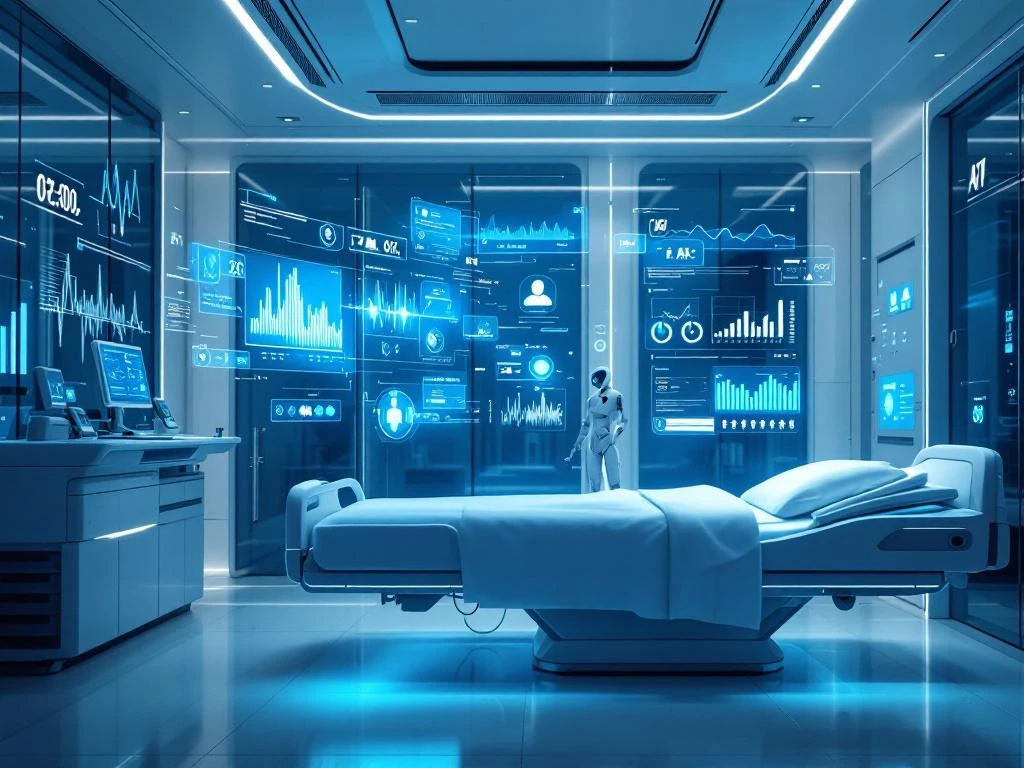
Healthcare technology is poised for a revolutionary transformation that will fundamentally change how we deliver care in the coming years. AI in healthcare, robotics, telemedicine, and wearables will address staff shortages and improve patient care. These technologies offer concrete solutions to challenges such as 24/7 monitoring, administrative burdens, and healthcare accessibility.
Which healthcare technologies will make the biggest difference in the coming years?
The most impactful healthcare technologies of the coming years are AI monitoring systems, care robots, telemedicine platforms, and wearable health monitoring. These technologies directly address problems such as staff shortages, patient safety, and healthcare accessibility.
AI in healthcare transforms patient monitoring by enabling continuous surveillance without human presence. These systems detect emergency situations, such as falls or breathing problems, and immediately alert the appropriate staff. This leads to faster response times and better patient outcomes.
Care robots take over repetitive tasks, such as medication dispensing, cleaning, and material transport. This gives healthcare staff more time for direct patient care. Telemedicine makes care accessible to patients in remote areas and reduces unnecessary hospital visits.
Wearables and smart sensors continuously monitor vital functions and alert when abnormalities occur. This technology helps with early detection of health problems and supports preventive care.
How will AI solve the staff shortage in healthcare?
AI solves staff shortages by automating routine tasks and supporting healthcare staff with monitoring and administration. Artificial intelligence can work 24/7 without breaks and takes over time-consuming activities from overburdened staff.
In practice, AI automates administrative processes, such as scheduling appointments, updating patient records, and processing invoices. This saves hours per day that healthcare providers can spend on direct patient care.
For patient monitoring, AI offers continuous surveillance without requiring a nurse to be physically present. The system analyzes behavior, movement patterns, and vital functions and only alerts when intervention is needed. This means one caregiver can effectively supervise more patients.
Implementation happens gradually in the coming years. Hospitals and care institutions usually start with specific departments or processes before rolling out AI more broadly. Staff training and adaptation of work processes are important components of successful implementation.
What are the biggest challenges in implementing new healthcare technology?
The main challenges are high initial costs, privacy and security requirements, staff training, and resistance to change. Successful implementation requires careful planning, good training, and gradual introduction of new systems.
Costs often form the biggest barrier. New technology requires significant investments in hardware, software, and training. Create a business case that shows how technology saves costs in the long term through more efficient processes and better patient outcomes.
Privacy and regulation are complex in healthcare. Technology must comply with strict requirements for data protection and patient privacy. Work with suppliers who have demonstrable experience with healthcare applications and compliance.
Staff training requires time and resources. Start with a pilot group of enthusiastic employees and have them train others. This creates support and makes the transition smoother for the entire team.
You can reduce resistance to change by involving staff from the beginning in the choice and implementation of technology. Explain how technology makes their work easier instead of threatening it.
How does new technology change the role of healthcare workers?
Healthcare workers get more time for personal patient care as technology takes over routine tasks. Their role shifts from executive to more coordinating and relational, where human skills become more important than ever.
Nurses spend less time on administration and monitoring and more on conversations with patients, treatment planning, and complex care delivery. Technology becomes their assistant, not their replacement.
New skills that become important are digital literacy, interpreting data from monitoring systems, and working with automated processes. Healthcare organizations must invest in continuing education to prepare staff for these changes.
The human factor remains irreplaceable. Empathy, critical thinking, and complex decision-making are typically human qualities that technology cannot take over. Healthcare workers become more strategic and relational in their work.
Doctors receive better diagnostic support through AI analysis of medical images and patient data. This helps with faster and more accurate diagnoses, but final responsibility always remains with the doctor.
How Kepler Vision helps with the future of healthcare technology
Kepler Vision develops AI solutions that directly contribute to the future of healthcare by addressing staff shortages with smart monitoring technology. Our software watches over patients 24/7 and only alerts when human intervention is needed.
Our solutions offer:
- Kepler Night Nurse – Detects falls within seconds with minimal false alarms
- Kepler NurseAssist – Automatically monitors lying positions and unsafe situations
- Privacy-first design – Images are never viewed by humans
- Easy implementation – Plug-and-play system without complex installation
- Proven reliability – Only one false alarm per 92 days
Our technology gives your care team more time for personal patient care while improving safety. The system complies with all privacy requirements and integrates seamlessly into existing work processes.
Want to know how our AI monitoring can help your healthcare organization? Contact us for a demonstration and discover how we can shape the future of healthcare together.
Frequently Asked Questions
How long does it take to implement healthcare AI technology?
Most healthcare AI systems take 3-6 months to implement successfully, including staff training and system integration.
What ROI can healthcare facilities expect from AI monitoring?
Healthcare facilities typically see 200-400% ROI within 18 months through reduced staff costs and improved efficiency.
How do AI systems ensure patient privacy?
Modern healthcare AI systems use privacy-by-design principles, processing data locally without storing personal images or information.