


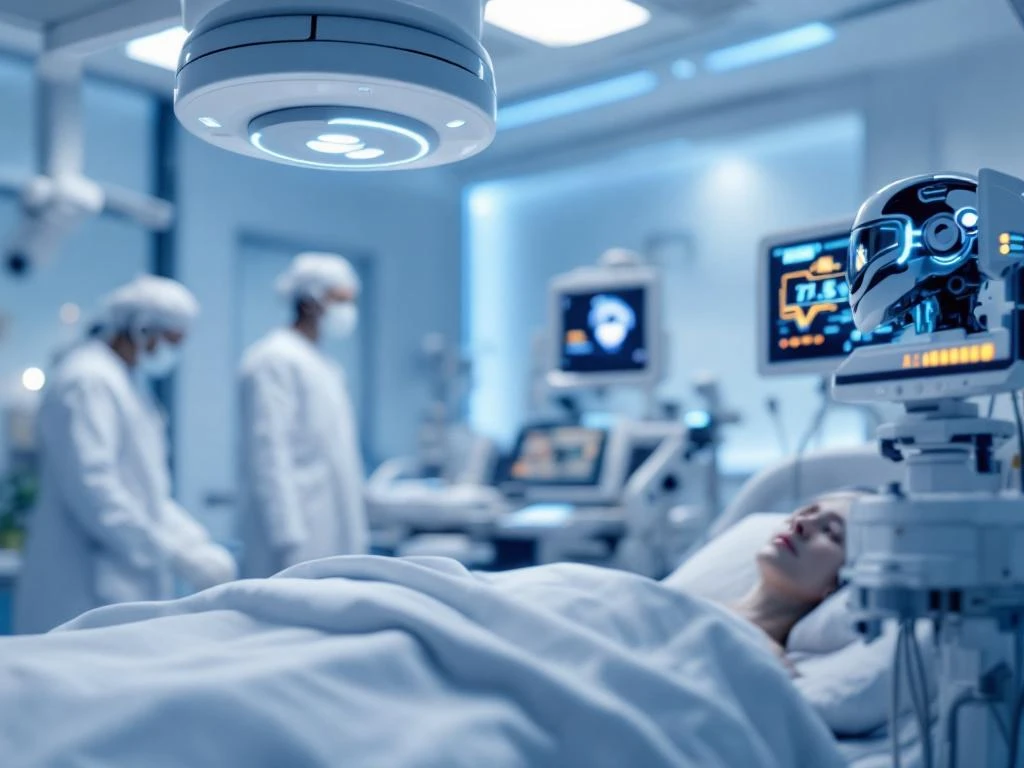
Smart technologies support healthcare teams by automating routine tasks, detecting risks early, and giving caregivers more time for personal patient care. AI in healthcare helps with monitoring, planning, and administration, allowing staff to focus on what truly matters. These technologies not only improve efficiency but also make care safer for patients.
Which smart technologies make the biggest difference in healthcare?
AI monitoring, automatic alarm systems, predictive analytics, and digital assistants are the technologies that help healthcare teams the most right now. These tools automate time-consuming tasks and give caregivers faster access to important patient information.
AI monitoring continuously supervises patients and detects changes in their condition. This means healthcare workers don’t need to be physically present at all times, but are immediately alerted if something is wrong. You can monitor more patients simultaneously without compromising quality.
Automatic alarm systems work together with this monitoring. They filter important signals from routine updates, so you’re only interrupted when action is truly needed. This prevents alarm fatigue and ensures urgent situations get the attention they deserve.
Predictive analytics map patterns in patient data to predict problems before they occur. This helps with care planning and preventing complications. Digital assistants support administrative tasks, such as updating records and scheduling appointments.
How does technology make patients safer?
Modern technology prevents risks by monitoring 24/7 and responding immediately to dangerous situations. Fall detection systems, continuous monitoring, and early warning systems work together to protect patients without violating their privacy.
Fall detection is one of the most effective safety technologies in healthcare. Modern systems can detect when someone falls within seconds and automatically call for help. This drastically shortens the time between incident and care delivery, which often makes the difference between a minor and major injury.
Continuous monitoring tracks vital functions and movement patterns. If abnormalities occur that could indicate a medical emergency, healthcare workers receive immediate notification. This means problems are often noticed before the patient realizes something is wrong.
The important thing about these technologies is that they respect privacy. Modern systems analyze images and data automatically, without requiring human oversight. Healthcare workers only receive an alert when help is actually needed, which protects patient dignity.
Why are healthcare workers increasingly accepting new technology?
Healthcare workers embrace new technology because modern systems are user-friendly and help them rather than replace them. They save time, reduce stress, and create more space for the work caregivers truly chose: caring for people.
The biggest change lies in user-friendliness. Previously, technical systems were complicated and time-consuming to learn. Now they’re designed with healthcare workers in mind. You don’t need to be an IT expert to work with them.
Time savings also play a major role. When technology helps you handle administration faster or alerts you directly to problems, you have more time for patients. That’s exactly what most caregivers want: less time behind a computer, more time at the bedside.
Modern systems support healthcare workers’ jobs rather than taking them over. They handle routine monitoring but leave important decisions and personal care to people. This gives healthcare workers the feeling that technology strengthens their expertise rather than threatens it.
What are the biggest benefits of AI support for healthcare teams?
AI support reduces workload, improves patient outcomes, and makes planning more efficient. It takes over administrative tasks and gives caregivers more time for personal patient attention. This leads to better care and greater satisfaction among healthcare workers.
Reduced workload is the most direct benefit. AI can automate many routine tasks, from tracking medication administration to monitoring vital functions. This means you spend less time on administration as a caregiver and have more time for actual patient care.
Better patient outcomes result because AI can recognize patterns that humans might miss. The system never sleeps and doesn’t have bad days, so problems are noticed and treated faster. This leads to fewer complications and faster recovery.
More efficient planning becomes possible because AI can analyze large amounts of information and make predictions. You can better assess which patients need extra attention and deploy staff where they’re needed most.
Perhaps the most important benefit is that AI in healthcare solutions give you more time for what truly matters: the conversation with the patient, offering comfort, and making that human connection that technology can never replace.
How Kepler Vision helps healthcare teams with smart technology
Kepler Vision develops AI solutions that support healthcare teams with 24/7 monitoring and fall detection. Our technology generates minimal false alarms and protects patient privacy, while being easy to implement in existing care environments.
Our AI monitoring continuously supervises patients without requiring healthcare workers to be constantly present. The system immediately detects when someone falls and alerts within seconds, allowing you to provide help faster.
Key benefits of our solution:
- Only one false alarm per 92 days – much more reliable than other systems
- Privacy-protecting technology that analyzes images without human intervention
- Simple installation that fits into your current workflow
- 24/7 monitoring that never takes a break
Want to know how our AI technology can support your healthcare team? Contact us for a no-obligation conversation about the possibilities in your organization.
Frequently Asked Questions
How long does it take to implement AI monitoring?
Implementation typically takes 2-4 weeks, including installation and training.
Is fall detection accurate enough for practical use?
Yes, our fall detection has over 95% accuracy with only one false alarm per 92 days.
How is privacy ensured with AI monitoring?
Our technology analyzes images automatically without human intervention and patients retain control over their settings.