


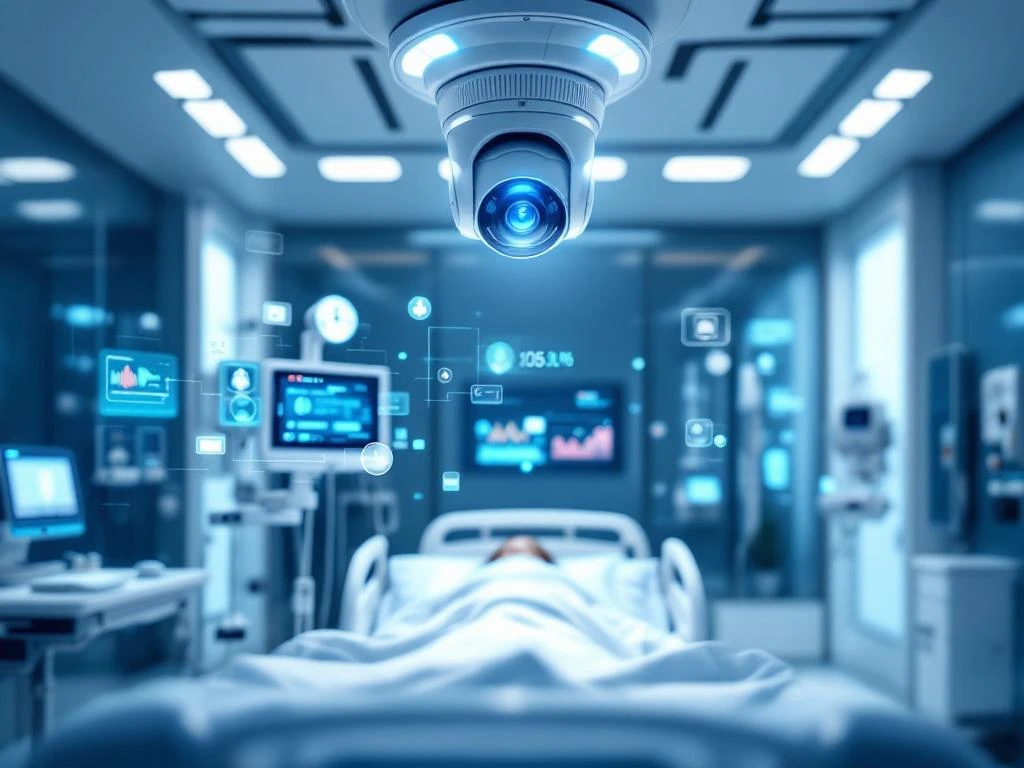
Smart technology helps reduce risks in healthcare through automatic monitoring, early detection of problems, and reducing human errors. AI systems can detect fall incidents, monitor patient behavior, and alert healthcare staff when intervention is needed. This reduces the workload of healthcare workers and increases safety for patients, while privacy is ensured through advanced security protocols.
What are the biggest risks in modern healthcare?
Modern healthcare faces three primary risk factors: fall incidents, staff shortages, and monitoring challenges. Fall incidents pose the greatest threat to patient safety, especially in elderly care facilities where residents are often alone.
Staff shortages make it impossible to provide continuous monitoring. A healthcare worker cannot be everywhere at once, leaving dangerous situations unnoticed. This problem is exacerbated by the increasing demand for care, which grows by approximately 6% annually.
Monitoring challenges arise from the balance between patient privacy and safety. Traditional surveillance methods are often invasive or generate too many false alarms, overwhelming healthcare staff with unnecessary warnings.
Daily risks in healthcare environments include:
- Unnoticed falls during nighttime hours
- Delayed response in emergency situations
- Medication errors due to time pressure
- Insufficient monitoring of vulnerable patients
How does smart technology work in preventing healthcare incidents?
AI monitoring systems use advanced algorithms to analyze patient behavior and detect anomalies. These systems work 24/7 without fatigue and can recognize patterns that humans might miss.
Sensor technology plays an important role by monitoring movements, vital functions, and environmental factors. Modern sensors are unobtrusive and do not disrupt patients’ daily lives, while providing a continuous data stream for analysis.
Automatic alert systems send direct notifications to healthcare staff when risk situations are detected. This eliminates delays and ensures a quick response when every second counts.
Concrete examples of risk detection:
- Fall detection within seconds of the incident
- Recognition of unusual movement patterns
- Monitoring of sleep positions and breathing
- Detection of wandering behavior and disorientation
What benefits does automated monitoring offer for healthcare staff?
Automated monitoring reduces the workload of healthcare workers by taking over routine surveillance tasks. This allows them to focus on direct patient care and personal interaction, which improves the quality of care.
The system works as an extra pair of eyes that never rests. Healthcare staff do not need to be physically present with every patient constantly, but are only alerted when their intervention is actually needed.
This leads to a better work-life balance and less stress. Healthcare workers can work more efficiently and have more time for activities that truly require human attention, such as having conversations and providing emotional support.
Practical benefits for healthcare staff:
- Fewer false alarms and unnecessary interruptions
- Faster response in real emergency situations
- Better distribution of attention across all patients
- Documentation of incidents for analysis
How is patient privacy protected with smart healthcare technology?
Modern healthcare technology protects patient privacy through edge computing and local data processing. Images and data are analyzed directly on-site, without sensitive information reaching external servers.
Compliance with regulations such as ISO 27001 and NEN 7510 ensures strict security standards. These protocols guarantee that patient data is handled and stored according to the highest safety standards.
AI in healthcare works with anonymized data and pattern recognition. The system recognizes situations and behaviors without storing personal identification. Healthcare workers only receive relevant alerts, not the underlying image material.
Features of a secure implementation:
- Local data processing without cloud storage
- Encrypted communication between systems
- Access control and user authorization
- Regular security audits and updates
How Kepler Vision helps with risk reduction in healthcare
We develop AI solutions specifically designed for fall detection and patient monitoring in healthcare facilities. Our Kepler Night Nurse and NurseAssist software provide 24/7 surveillance with unprecedented accuracy.
Our technology generates an average of only one false alarm per 92 days, which drastically reduces the workload of healthcare staff. Within seconds of a fall incident, healthcare workers receive an alert, ensuring rapid assistance is guaranteed.
Key benefits of our solution:
- Fall detection, fall prevention, and lying position detection
- Complete privacy protection: images are never viewed by humans
- Plug-and-play installation without complex configuration
- ISO 27001 and NEN 7510 compliance for maximum security
Would you like to know how our AI technology can help your healthcare organization with risk reduction? Contact Kepler Vision for a personal demonstration and discover how you can improve the safety of your patients while relieving your healthcare staff.
Frequently Asked Questions
How long does implementation of AI monitoring take?
Implementation typically takes 2-4 weeks depending on facility size. Plug-and-play solutions can be operational within days.
What are the costs compared to traditional surveillance?
Higher initial costs but significant long-term savings through reduced personnel costs and prevented incidents. ROI achieved within 12-18 months.
Can patients refuse monitoring for privacy?
Yes, patients can refuse monitoring, but this must be balanced against safety risks through informed consent protocols.