


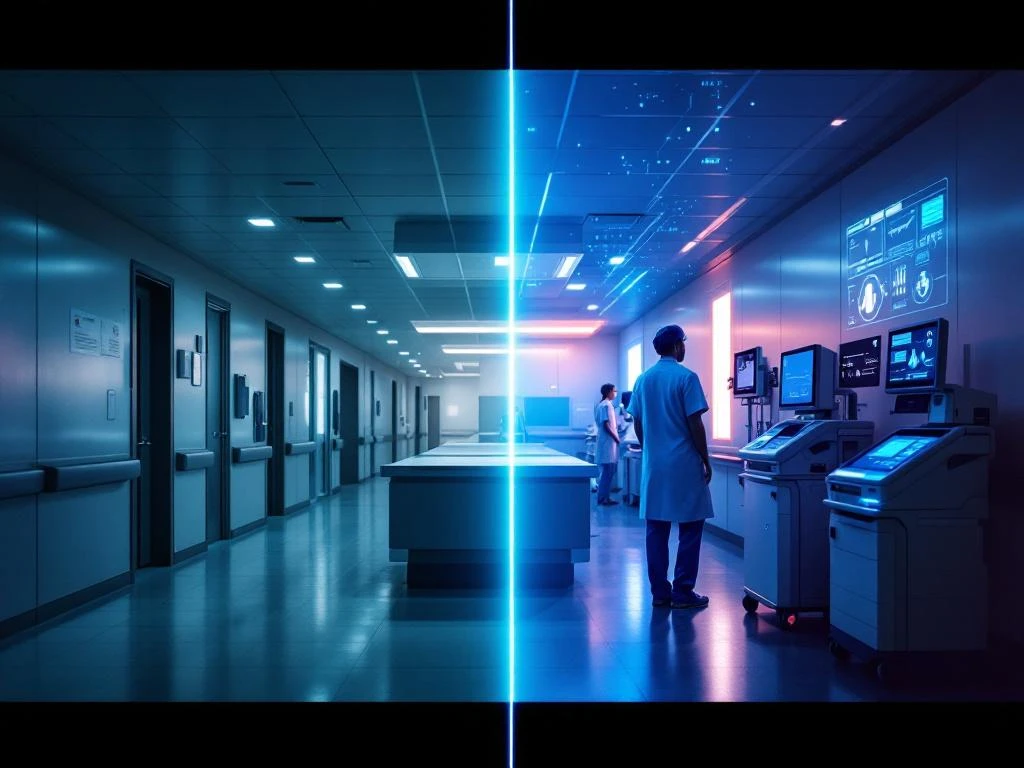
Technology can address the healthcare staffing shortage by automating repetitive tasks, enabling 24/7 monitoring, and reducing workload pressure. AI in healthcare particularly helps with patient monitoring, fall detection, and administrative processes, allowing healthcare workers to focus on direct patient care. Modern solutions like AI monitoring and automatic alarm systems make it possible to provide safe and quality care with fewer staff members.
Why is there such a significant shortage of healthcare personnel?
The healthcare staffing shortage arises from a combination of an aging population, high work pressure, and the exodus of experienced staff members. Healthcare demand grows annually, while fewer people choose a career in healthcare. Traditional recruitment methods fall short because they don’t address the underlying problems.
The aging population creates a double problem: more people need care, while simultaneously many experienced healthcare workers are retiring. The workload in healthcare institutions has increased enormously in recent years, leading to burnout and premature departure of staff.
Additionally, irregular working hours, physically demanding tasks, and emotional burden make the profession less attractive to new generations. The result is that healthcare institutions find it increasingly difficult to fill vacancies, which only further increases the workload for the remaining staff.
What technological solutions exist for staffing shortages in healthcare?
Various technologies can help healthcare organizations with staffing shortages. AI monitoring systems take over supervisory tasks, automatic alarm systems warn of emergency situations, and digital care platforms streamline administrative processes. These solutions support existing staff and enable more efficient healthcare delivery.
Robotics plays an increasingly important role in physically demanding tasks, such as lifting and moving patients. Telemedicine makes it possible to monitor patients remotely and conduct consultations, saving travel time and staff deployment.
Digital medication dispensers provide automatic medication distribution, while smart sensors can monitor vital functions without constant presence of healthcare staff. These technologies work together to create a safer and more efficient care environment.
How does AI monitoring work exactly in healthcare institutions?
AI monitoring uses computer vision technology to continuously observe patients via cameras that analyze images in real-time. The system recognizes dangerous situations, such as falls or unusual movements, and sends direct alerts to healthcare staff. Patient privacy is ensured because humans never see the images.
The technology works with advanced algorithms that are trained to distinguish between normal and abnormal situations. When someone falls or needs help, the system analyzes the situation within seconds and determines whether an alarm is necessary.
The great advantage is that AI in healthcare can work 24/7 without fatigue or distraction. The systems become increasingly accurate through machine learning, keeping the number of false alarms minimal and alerting healthcare staff only when truly necessary.
What are the benefits of automated care monitoring?
Automated monitoring offers faster response times, fewer false alarms, and significant workload relief for healthcare staff. Patients receive greater safety through constant monitoring, while healthcare workers can focus on direct care delivery instead of routine observation. This leads to cost savings and improved care quality.
For healthcare workers, automation means they no longer need to constantly check whether patients are safe. They can spend their time on personal care, treatments, and other tasks that require human expertise.
Patients experience more privacy because they are not constantly physically monitored. At the same time, they know that help comes quickly when needed. Family and loved ones have more confidence in care quality due to constant monitoring.
Cost savings arise from more efficient staff use and fewer incidents that require expensive treatments. Early detection of problems often prevents more serious situations that cost more care and resources.
How Kepler Vision helps with the healthcare staffing shortage
Kepler Vision offers AI in healthcare solutions that directly contribute to reducing staffing shortages. Our Kepler Night Nurse and NurseAssist systems take over 24/7 monitoring tasks from healthcare workers, allowing them to focus on direct patient care and other tasks that require human expertise.
Our technology offers concrete benefits:
- Fall detection within seconds – Direct alert in emergency situations
- Minimal false alarms – Only one false alarm per 92 days
- Privacy-protecting monitoring – Images are never viewed by humans
- 24/7 monitoring without breaks – Constant safety for patients
- Simple installation – Plug-and-play concept for quick implementation
Through our AI solutions, healthcare institutions can provide safe and quality care with fewer staff. This helps solve staffing shortages while maintaining or even improving care quality.
Would you like to know how our technology can help your healthcare institution with staffing shortages? Contact us for a no-obligation conversation about the possibilities.
Frequently Asked Questions
How long does it take to implement AI monitoring?
Implementation typically takes 1-2 weeks with minimal staff training required.
Are false alarms common with AI systems?
No, modern AI systems have very low false alarm rates - only one per 92 days.
How is patient privacy protected?
AI analyzes images in real-time without humans ever viewing them, ensuring complete privacy.
Related Articles
- What does smart monitoring mean for the safety of vulnerable clients?
- How does AI help improve continuity of care?
- How can technology contribute to early detection in healthcare?
- Wat is de levensduur van valpreventie voor ouderen technologie?
- Wat zijn de energievereisten van valpreventie voor ouderen apparatuur?