


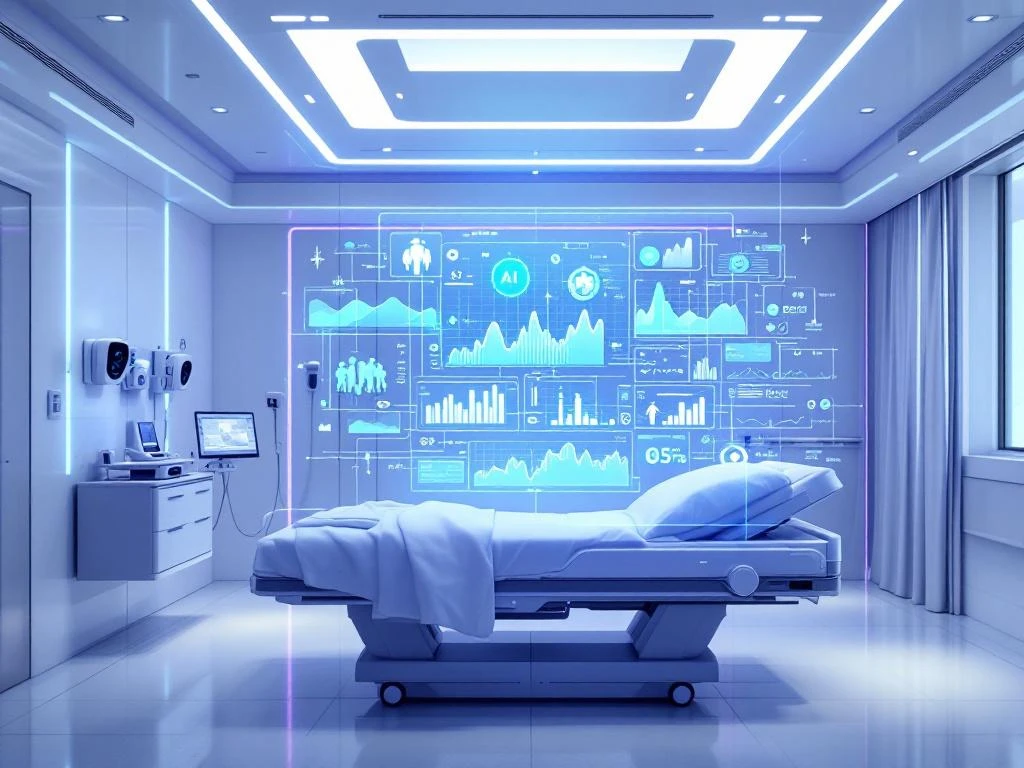
The future of healthcare is being shaped by smart technology that helps solve staff shortages, improves patient safety, and enables continuous monitoring. AI in healthcare supports automatic fall detection, real-time alerts, and privacy-protected observation. These developments make healthcare more efficient, reliable, and accessible for everyone.
What does smart technology actually mean for healthcare delivery?
Smart technology in healthcare encompasses AI systems, automation, and digital tools that support and improve care processes. These technologies can monitor patients, alert healthcare staff during emergencies, and automate administrative tasks without human intervention.
The most practical examples of smart technology are AI monitoring systems that provide continuous observation. These systems can analyze movements, detect unsafe situations, and directly send alerts to healthcare workers. Other examples include digital medication reminders, automatic care round scheduling, and smart sensors that track vital functions.
These developments are so important now because healthcare demand is increasing by 6% annually, while fewer staff are available. Smart technology helps bridge this gap by taking over tasks that were previously performed manually. This gives healthcare workers more time for direct patient care and human contact.
The technology works best when it seamlessly integrates with existing care processes. The goal is not to replace people, but to support them so they can do their work better and more efficiently.
What problems does smart technology solve in current healthcare?
Smart technology addresses three main problems: staff shortages, increasing healthcare demand, and safety risks. These challenges make it difficult to deliver quality care, but technology offers practical solutions that have direct impact on daily healthcare delivery.
Staff shortage is the biggest problem in healthcare. Healthcare organizations struggle to find and retain new employees, while workload continues to increase. AI systems take over routine monitoring, allowing healthcare workers to focus on more complex care needs and personal attention for patients.
Safety risks, such as falls or unnoticed emergency situations, are addressed through continuous monitoring. Traditional systems generate many false alarms, but modern AI technology is much more accurate. This means healthcare staff are only alerted when something is actually wrong.
The increasing healthcare demand is managed through more efficient work processes. Automation ensures that one healthcare worker can safely guide more patients without quality loss. This helps reduce waiting lists and ensures more people receive the care they need.
How is artificial intelligence changing the way we monitor patients?
AI in healthcare enables continuous, reliable patient monitoring without healthcare workers needing to be physically present. These systems analyze movement patterns, detect anomalies, and send real-time alerts to the right staff when intervention is needed.
Automatic fall detection is one of the most valuable applications. AI systems can recognize when someone falls within seconds and immediately activate help. This prevents long waiting times where patients lie helplessly on the floor, which can prevent serious injuries and trauma.
Continuous observation means patients are monitored 24/7 without compromising their privacy. The AI only analyzes movements and behavior patterns, while images are never viewed by humans. Healthcare workers only receive notification when their attention is truly needed.
Real-time alert systems ensure fast response times. Instead of periodic checks, care teams can respond immediately to acute situations. This not only improves patient safety but also provides peace of mind to family members who know their loved ones are being well monitored.
What are the biggest concerns about privacy and security in smart healthcare?
Privacy and data protection are legitimate concerns with smart healthcare technology. Patients want assurance that their personal information is safe and that technology respects their dignity. Modern AI systems are specifically designed to address these concerns.
Data protection is ensured through strict compliance with standards such as ISO 27001 and NEN 7510. These certifications ensure that patient data is handled according to the highest security standards. All data is stored encrypted and only used for the specific purpose for which it was collected.
Patient privacy is protected through smart system design. The best AI systems only analyze movement patterns, without images being viewed by humans. This means patients maintain their privacy while still receiving the benefits of continuous monitoring.
Security standards are maintained through regular audits and updates. Healthcare technology must comply with medical device guidelines and is continuously tested for reliability. This ensures that systems only alert when truly necessary and false alarms are kept to a minimum.
How Kepler Vision helps with digital transformation in healthcare
Kepler Vision develops AI solutions specifically designed for challenges in modern healthcare. Our software combines reliable technology with respect for patient privacy, enabling healthcare organizations to relieve their staff without compromising quality.
Our main products offer concrete benefits:
- Kepler Night Nurse – 24/7 fall detection with only one false alarm per 92 days
- Kepler NurseAssist – intelligent patient monitoring for hospitals and care facilities
- Privacy-protected analysis, where images are never viewed by humans
- Real-time alerts that reach healthcare staff immediately
- Simple installation that integrates with existing systems
Our technology helps healthcare organizations address their staff shortages while improving patient safety. With 21 international patents and compliance with all relevant healthcare standards, we are a reliable partner for your digital transformation in healthcare.
Want to know how our AI solutions can help your healthcare organization? Contact us for a no-obligation demonstration of our technology and discover how we can realize the future of healthcare together.
Frequently Asked Questions
How accurate is AI fall detection?
Kepler's AI systems achieve 95% accuracy with only one false alarm per 92 days, preventing alarm fatigue among healthcare staff.
How long does AI implementation take?
Most AI monitoring systems can be implemented within 2-4 weeks with minimal infrastructure changes.
Is patient privacy protected with AI monitoring?
Yes, modern AI systems analyze movement patterns only - no images are viewed by humans, ensuring complete privacy protection.
Related Articles
- What are the future expectations for healthcare technology?
- Wat zijn de nieuwste ontwikkelingen in valpreventie voor ouderen?
- How does AI improve collaboration between healthcare and technology?
- Hoe implementeer je valpreventie voor ouderen in zorginstellingen?
- What does real-time care monitoring mean for healthcare institutions?