


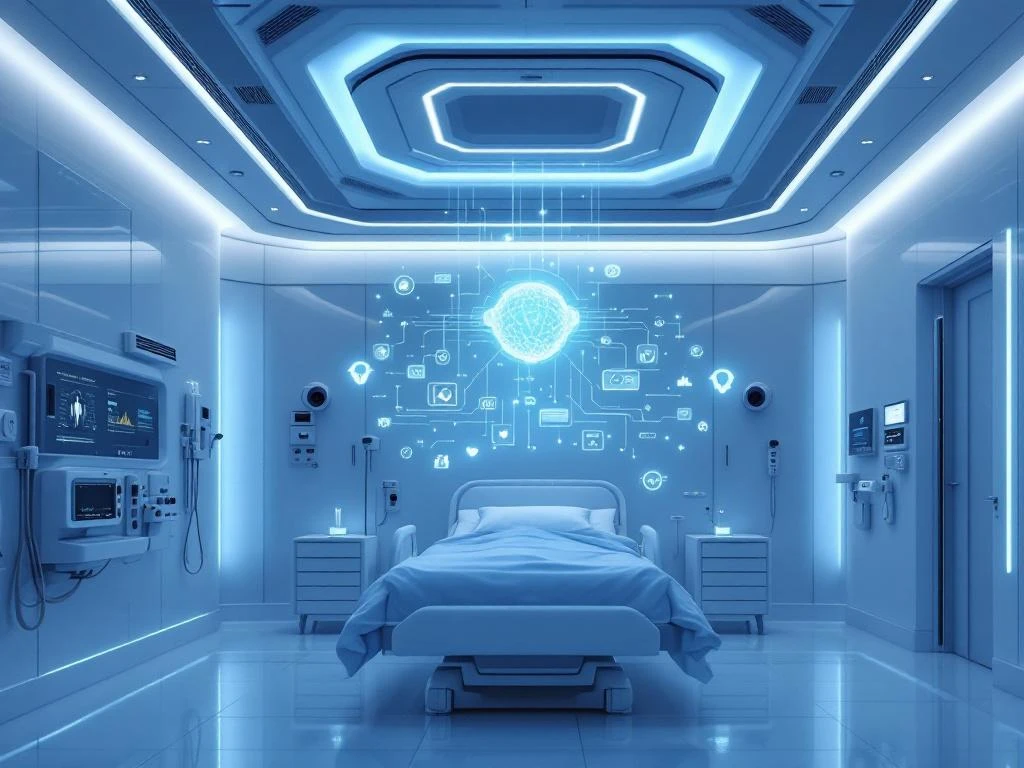
AI in healthcare helps healthcare institutions solve staff shortages and improve patient safety. Modern AI systems monitor patients 24/7, automatically detect emergency situations, and support healthcare workers with routine tasks. These technologies reduce workload while simultaneously increasing the quality of care through faster response times and more accurate monitoring.
What are the key AI innovations for healthcare institutions?
The most relevant AI applications in healthcare are fall detection, patient monitoring, predictive analytics, and automation of routine tasks. These technologies transform daily operations in healthcare institutions by supporting human expertise with intelligent systems.
Fall detection stands out as a practical AI application. These systems recognize within seconds when a patient falls and immediately send an alert to healthcare workers. This prevents people from lying on the ground for extended periods after a fall, which can prevent complications.
Patient monitoring via AI continuously supervises vital functions and behavioral patterns. The software detects deviations that human observation might miss, especially during night shifts when fewer staff are present.
Predictive analytics help healthcare institutions anticipate problems before they occur. By recognizing patterns in data, teams can take preventive measures that help prevent acute situations.
Automation of administrative tasks gives healthcare workers more time for direct patient care. AI can generate reports, send medication reminders, and optimize schedules without human intervention.
How can AI address staff shortages in healthcare?
AI solutions address staff shortages by providing 24/7 monitoring without requiring additional staff. Automatic alarm systems alert personnel only when intervention is truly needed, enabling efficient use of available staff.
Practical applications with immediate impact include night watch systems that provide continuous surveillance. One healthcare worker can safely monitor more patients because AI forms the first line of observation.
Automatic alerting ensures that staff don’t need to constantly check whether everything is going well. The AI only sends warnings for actual problems, which reduces stress and improves focus.
Routine tasks such as tracking sleep patterns, movement registration, and medication compliance are automatically documented. This saves hours of administrative work per day.
Through this support, healthcare institutions can maintain the same quality level with fewer staff, or increase quality with the same team. AI functions as an tireless assistant that never takes a break.
What benefits does AI monitoring offer for patient safety?
AI monitoring improves patient safety through faster detection of emergency situations than is possible with human observation alone. Modern systems respond within seconds to dangerous situations, while traditional methods can take minutes or even hours.
The accuracy of AI systems significantly exceeds older technologies. Where traditional alarm systems often give false alarms, modern AI solutions are developed to distinguish between real emergencies and normal movements.
Continuous monitoring means that patients are never unobserved. Even during busy moments or staff changes, the AI maintains supervision, ensuring no critical moments are missed.
Preventing incidents is often more valuable than treating them. AI can recognize patterns that indicate increased fall risk and warns preventively, so additional precautionary measures can be taken.
Reliability is crucial in healthcare. Modern AI systems are programmed to perform consistently, without fatigue or distraction, factors that do play a role in humans during long shifts.
How does AI ensure better privacy and compliance in healthcare institutions?
Modern AI systems protect privacy through image processing without human intervention. The software analyzes images automatically, without humans ever seeing them, which better protects patient privacy than traditional camera systems.
Compliance with ISO 27001 and NEN 7510 standards is built into professional AI solutions. These certifications guarantee that patient data is handled according to the highest security standards.
Data protection occurs through local processing of information. Many AI systems work without sensitive data leaving the healthcare institution, which minimizes the risk of data breaches.
Access control ensures that only authorized personnel receive alerts. The system logs who viewed what information when, enabling transparency and accountability.
Automatic encryption of all communication between AI systems and healthcare workers prevents sensitive information from being intercepted. This provides additional protection on top of standard network security.
How Kepler Vision helps with AI innovations in healthcare
We offer concrete AI solutions that have direct impact on daily healthcare delivery. Our Night Nurse and NurseAssist systems combine fall detection, fall prevention, and lying position detection in user-friendly software that international healthcare organizations trust daily.
Practical benefits you’ll experience immediately:
- Fall detection within seconds with an average of only one false alarm per 92 days
- 24/7 monitoring without additional staff costs
- Complete privacy through image processing without human intervention
- ISO 27001 and NEN 7510 compliance for data protection
- Plug-and-play implementation without complex installations
Our software integrates seamlessly into existing care processes. Healthcare workers receive alerts only when actual intervention is needed, which reduces stress and increases efficiency.
Implementation is simple and fully guided by our team. From planning to configuration and training: we ensure that your AI solution functions optimally from day one.
Want to know how our AI innovations can help your healthcare institution with staff shortages and patient safety? Contact Kepler Vision for a personal demonstration of our systems in action.
Frequently Asked Questions
How long does AI implementation take in healthcare?
Implementation typically takes 2-4 weeks from planning to full operation.
How accurate are AI fall detection systems?
Professional AI fall detection achieves 95-98% accuracy with only 1 false alarm per 90+ days.
Do AI systems integrate with existing healthcare software?
Yes, modern AI solutions integrate seamlessly with EPRs and nurse call systems via standard APIs.