


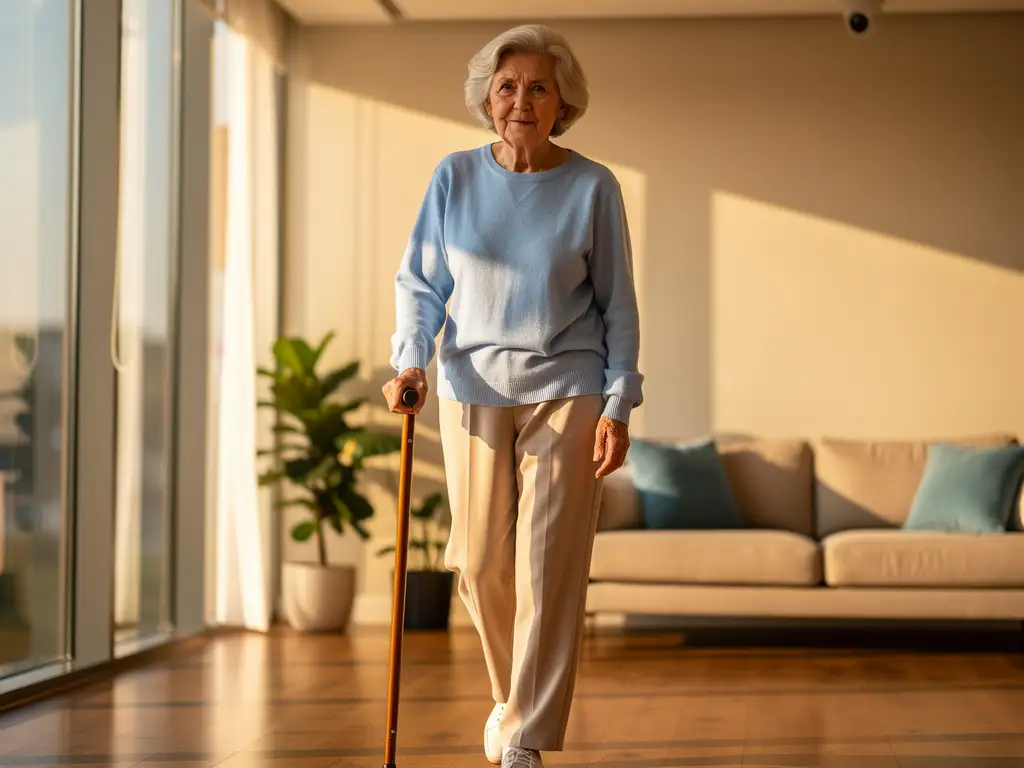
Fall prevention for seniors is becoming increasingly important as the population ages and healthcare organizations struggle with staff shortages. Artificial intelligence offers innovative solutions that surpass traditional methods through continuous monitoring and rapid detection of risk situations. This technology transforms how we organize healthcare delivery and enables seniors to live safer and more independently.
AI-driven fall prevention combines advanced sensor technology with machine learning algorithms to identify fall risks before they occur. By analyzing patterns in movement and behavior, these systems can proactively warn and support caregivers in providing timely care.
What is AI-driven fall prevention and how does it work?
AI-driven fall prevention is a technology that uses artificial intelligence to predict and prevent fall risks in seniors through continuous monitoring of movement patterns and behavior. The system analyzes real-time image data to detect unsafe situations before a fall occurs.
The technology works by combining cameras and sensors with advanced algorithms that learn to recognize movement patterns. Machine learning models are trained on thousands of hours of video footage to distinguish normal movements from potentially dangerous situations. When the system detects an increased fall risk, such as unsteady movements or unusual postures, an alert is automatically sent to care staff.
The AI system can simultaneously monitor various risk factors, such as walking speed, balance, posture changes, and environmental factors. By combining this data, an accurate picture emerges of each individual resident’s safety situation.
Why is fall prevention so important for seniors?
Fall prevention is crucial for seniors because falls are the leading cause of injury-related hospitalizations in people over 65, with serious consequences for both health and quality of life. Approximately one in three seniors falls annually, with hip fractures and head injuries being the most common and dangerous injuries.
The consequences of falls extend far beyond just physical injuries. After a fall, many seniors develop fear of falling, causing them to limit their activities and become socially isolated. This reduced mobility leads to muscle atrophy, decreased balance, and paradoxically to an even higher fall risk.
For healthcare organizations, fall incidents also mean significant costs due to longer hospital stays, rehabilitation, and more intensive care needs. Effective fall prevention not only prevents human suffering but also reduces pressure on the healthcare system and lowers total care costs per resident.
What advantages does AI fall prevention offer over traditional methods?
AI fall prevention offers superior accuracy, continuous monitoring, and proactive detection compared to traditional methods like fall alarms and periodic checks. Where traditional systems only react after a fall, AI can predict and prevent risk situations.
Traditional fall alarms have several limitations. Residents often forget to wear their alarm button, batteries run out, or the device doesn’t work properly during an emergency. Moreover, these systems only activate after a fall, wasting precious time. AI systems, on the other hand, work completely automatically and require no action from the resident.
A significant advantage is the dramatic reduction of false alarms. Traditional motion sensors often generate dozens of false alarms per day, leading to alarm fatigue among care staff. Advanced AI systems can minimize these false alarms by precisely distinguishing between normal activities and actual emergency situations.
AI fall prevention also provides valuable data insights. By analyzing movement patterns over time, caregivers can identify trends that indicate deterioration in mobility or balance, allowing preventive measures to be taken before problems escalate.
How accurate are AI fall prevention systems in practice?
Modern AI fall prevention systems achieve an accuracy of more than 95% in fall detection, with advanced systems generating only one false alarm per 92 days. These performances exceed traditional detection methods by a factor of more than 1000.
The high accuracy is achieved by combining multiple AI techniques. Computer vision algorithms analyze movement patterns, pose detection identifies unnatural postures, and machine learning models predict fall risks based on historical data. This layered approach eliminates most false positives that occur with simpler systems.
In practical tests, AI systems consistently show better results than traditional methods. Where older technologies like motion sensors or pressure mats can generate dozens of false alarms daily, modern AI systems keep this limited to a few per month. This reliability is essential for acceptance by care staff and effective implementation.
Accuracy continuously improves because AI systems learn from every new situation. As more data is collected and analyzed, the algorithms become increasingly better at recognizing subtle patterns that indicate increased fall risk.
What are the costs of AI fall prevention for healthcare organizations?
AI fall prevention systems cost on average between 50 and 200 euros per resident per month, depending on functionalities and the scale of implementation. This investment is often recouped within 6 to 12 months through lower care costs and more efficient staff deployment.
Total costs consist of various components: purchase or lease of hardware (cameras, sensors), software licenses, installation and configuration, and ongoing maintenance and support. Larger healthcare organizations can often benefit from economies of scale and lower costs per resident.
The return on investment is substantial through various cost savings. Fewer fall incidents lead to fewer hospitalizations, shorter rehabilitation periods, and lower insurance premiums. Additionally, healthcare organizations can deploy their staff more efficiently because less time is spent responding to false alarms.
Indirect benefits include improved reputation, higher resident satisfaction, and reduced liability risks. Many health insurers now recognize the value of fall prevention and offer discounts or subsidies for organizations that invest in proven effective AI solutions.
How is privacy ensured in AI monitoring of seniors?
Privacy is ensured through edge computing, automatic image processing, and strict compliance with GDPR and healthcare sector-specific regulations like NEN 7510. Images are analyzed directly on-site and never viewed by humans or stored externally.
Modern AI fall prevention systems use privacy-by-design principles. Image analysis happens locally on the device itself, ensuring sensitive image data never leaves the care facility. Only abstracted alerts and metadata are sent to care staff, never the actual images.
Additional privacy measures include encryption of all data communication, role-based access control for care staff, and automatic deletion of temporary data after a predetermined period. Residents and family are fully informed about the system’s operation and give explicit consent.
Certifications like ISO 27001 for information security and NEN 7510 for healthcare information systems guarantee that AI fall prevention systems meet the highest privacy and security standards expected of healthcare organizations.
How Kepler Vision Technologies helps with fall prevention for seniors
We offer advanced AI solutions specifically developed for fall prevention in care environments. Our Kepler Night Nurse and Kepler NurseAssist software combine market-leading accuracy with complete privacy protection.
Our solutions offer concrete benefits:
- Only one false alarm per 92 days – 1000x better than traditional systems
- 24/7 monitoring without privacy invasion
- Direct alerts within seconds of detection
- Fall detection, fall prevention, and lying position recognition in one system
- Full compliance with ISO 27001 and NEN 7510 standards
With 21 international patents and implementations at healthcare organizations throughout Europe, we have proven expertise in solving staff shortages through intelligent monitoring. Our plug-and-play solutions are easy to install and immediately operational. Want to learn more about how our AI technology can help your healthcare organization? Contact us for a personal demonstration and customized advice.
Frequently Asked Questions
How long does it take to implement an AI fall prevention system in our care facility?
Implementation of an AI fall prevention system takes an average of 2-4 weeks, depending on the size of your facility. This includes camera installation, software configuration, staff training, and a testing period. Plug-and-play solutions like those from Kepler Vision can often be operational within a few days.
What happens if the AI system has a technical malfunction?
Professional AI fall prevention systems have built-in redundancy and backup systems. In case of a malfunction, they automatically switch to safety mode and the technical team is immediately alerted. Most systems have an uptime of more than 99.5% and offer 24/7 technical support for critical situations.
Can residents turn off the AI system when they want privacy?
Yes, residents always have the right to temporarily disable monitoring, for example during personal care. This can be done via a simple button or app. The system does alert care staff that monitoring is paused and reminds them to reactivate it for optimal safety.
How do I train my care staff to work effectively with the AI system?
Training consists of a practical workshop of 2-4 hours where staff learn to handle alerts, interpret the dashboard, and respond correctly to various notifications. Most suppliers offer continuous support, online training materials, and refresher courses to keep staff up-to-date.
Does AI fall prevention also work well for residents with dementia or confusion?
AI systems are actually very effective for residents with cognitive impairments, because this group often forgets to use alarm systems. The AI can detect restless behavior, wandering, and increased fall risk without residents needing to take action. Some systems can even recognize patterns that indicate worsening dementia symptoms.
What are the most common implementation errors that healthcare organizations make?
Common mistakes are insufficient staff training, too few cameras per room, no clear protocols for responding to alerts, and not involving residents and family in the implementation. Successful implementation requires a phased approach with pilot projects before organization-wide rollout.
How do I measure the success of my AI fall prevention investment?
Measure KPIs such as the number of fall incidents, hospitalizations, average response time to emergencies, staff satisfaction, and resident satisfaction. Compare these figures with the situation before implementation. Most organizations see a significant improvement in these indicators within 3-6 months and a positive ROI within 12 months.
Related Articles
- How to Run a Successful Pilot with AI Patient Monitoring
- How do you talk to your team about workload as a manager?
- How large is the staff shortage in the Netherlands in 2025?
- What do you do when the workload is too high due to understaffing?
- How do other countries deal with staff shortages?
This content was generated with the help of AI and it may contain mistakes