


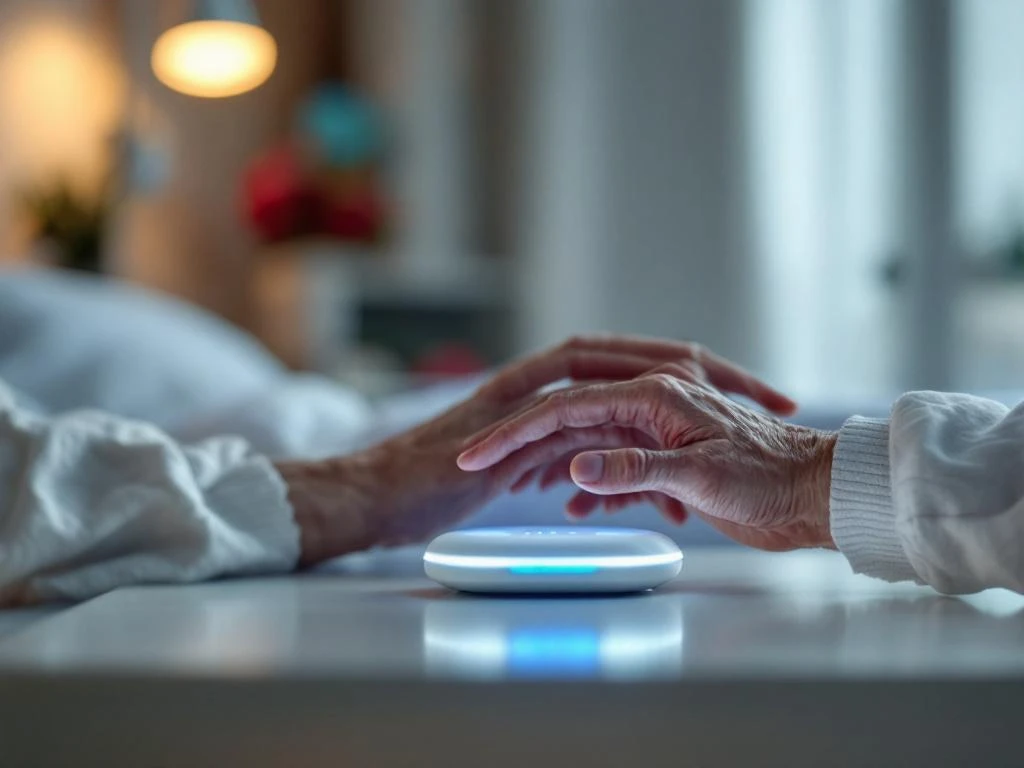
Intelligent care systems offer many advantages for healthcare organizations struggling with staff shortages and increasing care demands. These AI-driven technologies help with 24/7 monitoring, improve patient safety through faster detection of emergency situations, and relieve healthcare workers by taking over routine tasks. At the same time, they protect privacy better than traditional methods.
What are intelligent care systems actually?
Intelligent care systems are AI-driven technologies that support healthcare workers by automatically monitoring patients. They use machine learning, sensors, and computer vision to recognize situations and only raise alarms when truly necessary.
These systems differ from traditional care methods because they can monitor continuously without requiring constant human observation. A traditional camera requires someone to watch the footage, while AI in healthcare independently recognizes patterns and makes decisions.
Consider fall detection, for example: where previously a healthcare worker had to be physically present or check regularly, an intelligent system can now remain vigilant 24/7. It recognizes when someone falls and sends an immediate notification, without requiring someone to constantly watch a screen.
How do smart care systems help with staff shortages?
Smart care systems address staff shortages by taking over routine monitoring from healthcare workers. They enable 24/7 monitoring without requiring constant staff availability, allowing employees to focus on direct patient care.
The major advantage lies in efficiency: where you normally need multiple staff members to monitor different rooms, one system can monitor dozens of patients simultaneously. Healthcare workers only receive notifications when something actually requires attention.
This means concrete time savings and workload relief. Staff no longer need to make preventive rounds to all rooms “just to be safe.” They can spend their time on patients who actually need care, which improves the quality of care while requiring fewer staff.
What advantages do intelligent systems offer for patient safety?
Intelligent systems improve patient safety through immediate detection of emergency situations such as falls, unusual movements, or abnormal behaviors. They respond within seconds, while manual checks can take minutes or even hours between rounds.
Continuous monitoring means there are no “blind moments” when an emergency situation could go unnoticed. This is especially important at night or during busy periods when staff are spread across different departments.
Additionally, these systems reduce human errors that can arise from fatigue, busyness, or distraction. An AI system doesn’t get tired and doesn’t miss signals because it’s occupied with something else. It provides a reliable extra layer of safety that is always active.
What do smart care systems mean for patient privacy?
Modern AI care systems actually protect privacy better than traditional methods because images are never viewed by humans. The AI analyzes situations automatically and only sends notifications when action is needed, without healthcare workers seeing patients’ private moments.
These systems are designed to comply with strict privacy legislation such as GDPR. They process images locally, don’t store unnecessary data, and only give healthcare workers access to information relevant to care delivery.
Compare this to traditional cameras where security staff or healthcare personnel constantly monitor, or with regular physical checks that disturb patients. Intelligent systems offer more autonomy and dignity for patients while simultaneously guaranteeing better care.
How Kepler Vision helps with intelligent care solutions
We develop AI solutions specifically designed for healthcare organizations struggling with staff shortages. Our systems monitor patients 24/7 and immediately detect when someone falls or needs help, without requiring healthcare workers to constantly monitor.
Our intelligent care technology offers:
- Fall detection that alerts within seconds during emergency situations
- 24/7 monitoring without images being viewed by humans
- A very low false alarm ratio, so your staff isn’t unnecessarily disturbed
- Complete privacy compliance according to GDPR standards
- Simple installation and integration into existing care processes
Want to know how our AI solutions can help your healthcare organization with staff shortages and better patient safety? Contact us for a no-obligation demonstration of our intelligent care systems.
Frequently Asked Questions
How long does implementation take?
Implementation usually takes 2-4 weeks, including installation and staff training.
Are false alarms common?
Modern AI systems have less than 5% false alarms and continuously improve through learning.
Do systems work with dementia patients?
Yes, they effectively detect wandering and fall risks without restricting patient freedom.