


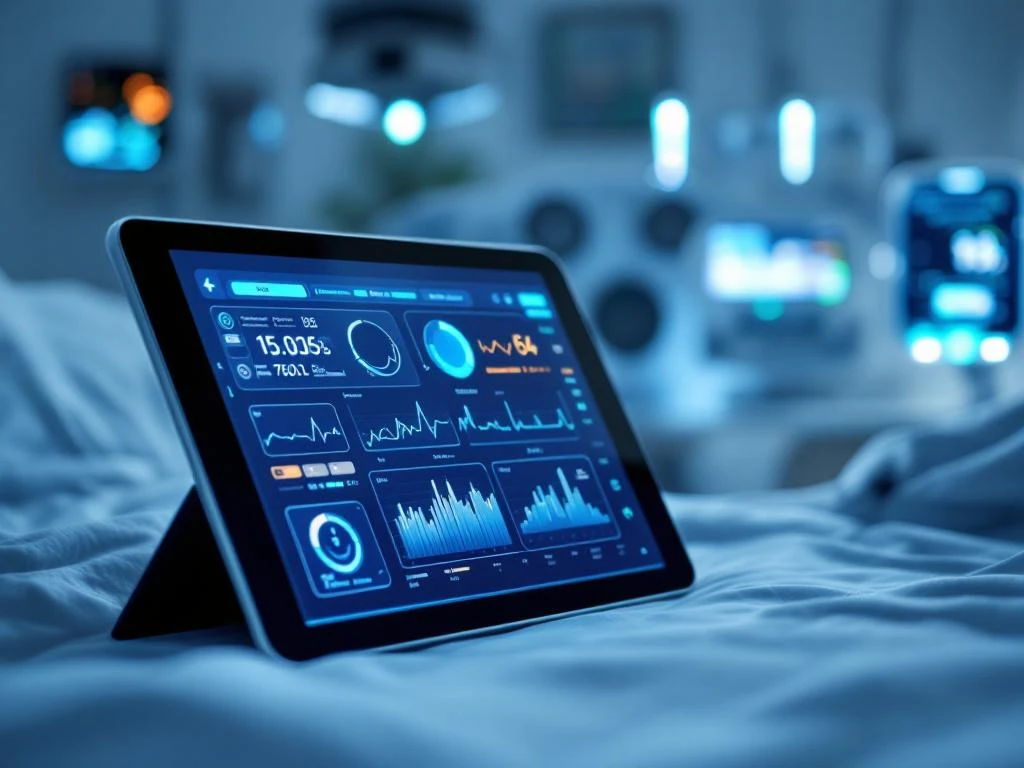
Technology is transforming preventive care by enabling proactive monitoring and early detection, rather than just responding to problems. AI in healthcare, sensors, and automatic detection systems help healthcare organizations prevent problems before they occur. This article answers the key questions about how technology is transforming preventive care and what concrete benefits this offers for patients and healthcare staff.
What is preventive care and why is technology becoming increasingly important?
Preventive care focuses on preventing health problems before they arise, rather than only treating someone when they are already sick. Technology makes this approach much more effective by enabling continuous monitoring and early detection.
Traditionally, healthcare worked mostly reactively: you went to the doctor when you felt sick, or healthcare staff checked patients during fixed rounds. This meant that problems were often only discovered after they had already occurred. Technological developments are fundamentally changing this.
Modern healthcare technology can monitor 24/7 without someone constantly having to be present. Sensors, cameras, and AI systems continuously monitor whether everything is going well. This way they can warn at the first signs of problems, often before the patient or resident notices it themselves.
This shift toward proactive care is becoming increasingly important because healthcare demand is increasing, while less staff is available. Technology helps deploy available staff more efficiently by only raising alarms when it is really necessary.
Which technologies make the difference in preventive care?
AI in healthcare and smart sensors are the key technologies that enable preventive care. These systems work together to recognize risks and prevent problems before they escalate.
Artificial intelligence analyzes patterns in behavior and vital signs that humans would miss. AI systems can, for example, recognize when someone becomes restless or moves differently than normal. This can indicate emerging health problems or increased fall risk.
Automatic detection systems use cameras and sensors to recognize unsafe situations. They can detect when someone falls, lies in the same place too long, or is in a dangerous position. The advantage is that these systems never get tired and always stay alert.
Wearable devices continuously measure vital functions such as heart rate, blood pressure, and movement patterns. This data helps healthcare providers see trends that may indicate deteriorating health, often weeks before symptoms occur.
Smart environmental sensors in rooms and homes detect changes in daily routines. If someone, for example, gets up more often at night or is less active during the day, this can be an early signal of health problems.
How does automatic monitoring help prevent care incidents?
Automatic monitoring prevents care incidents through continuous surveillance without interruption, while human checks are always limited to specific moments. 24/7 systems never miss a critical moment and can respond within seconds.
The big difference with traditional care is that automatic systems don’t take breaks. Healthcare staff cannot be everywhere at once and need rest. An AI system, on the other hand, always keeps an eye on all patients or residents simultaneously, even at night when less staff is present.
Quick response time is important for many care incidents. In a fall, every minute counts: the longer someone lies on the ground, the greater the chance of complications. Automatic detection warns healthcare staff within seconds, while with traditional checks hours can pass before someone is found.
The systems also learn to recognize patterns that indicate increased risk. They can, for example, see that someone becomes more restless at night or gets up more often, which may indicate emerging health problems. Staff can then take preventive measures before an incident occurs.
For healthcare staff, this means they can work more efficiently. Instead of constant check rounds, they can focus on direct patient care and only intervene when the system indicates it is necessary.
Why do healthcare organizations choose smart preventive solutions?
Healthcare organizations choose smart preventive solutions because they face growing staff shortages, while healthcare demand increases by approximately 6% per year. Technology helps bridge this gap by deploying available staff more effectively.
Cost control plays an important role in this decision. Preventive care is often cheaper than treatment afterward. By detecting problems early, healthcare organizations can prevent expensive emergency treatments and hospital admissions. This not only saves money, but also improves patients’ quality of life.
Improved patient outcomes motivate healthcare organizations to invest in AI in healthcare. When problems are detected earlier, treatments are often less invasive and more successful. Patients recover faster and have fewer complications.
The workload for healthcare staff decreases when technology takes over routine monitoring. This leads to more job satisfaction and can help retain staff. Healthcare providers can concentrate on what they do best: providing direct patient care.
Compliance and quality requirements are becoming increasingly strict. Automatic systems help healthcare organizations comply with regulations through consistent monitoring and documentation. This reduces risks and improves accountability to supervisors.
How we help with preventive care
We develop AI solutions for preventive healthcare that help healthcare organizations switch to preventive care through automatic fall detection and continuous monitoring. Our systems work 24/7 and only warn when it is really necessary, allowing healthcare staff to work more efficiently.
Our technology offers concrete benefits for preventive care:
- Fall detection within seconds: the system recognizes falls immediately and warns healthcare staff right away.
- Fall prevention through risk recognition: AI detects behavior patterns that indicate increased fall risk.
- Continuous monitoring without privacy breach: images are never viewed by humans, but only analyzed by AI.
- Minimal false alarms: only one false alarm per 92 days ensures confidence in the system.
- Simple implementation: plug-and-play installation without complex modifications.
The result is that healthcare organizations can deploy their staff where it is most needed, while patients and residents are safer than ever. You can start improving preventive care in your organization immediately. Discover more about our advanced AI solutions for preventive care for a conversation about how this technology fits your specific situation.
Frequently Asked Questions
How does AI prevent falls before they happen?
AI analyzes movement patterns and behavior to identify increased fall risk. When someone moves unsteadily or shows restlessness, the system alerts staff for preventive intervention.
Is privacy protected with camera monitoring?
Yes, privacy is fully guaranteed. AI analyzes movement patterns without storing personal images. All data processing is local and GDPR-compliant.
How reliable are the system alerts?
Our system generates only one false alarm per 92 days, ensuring staff can trust every notification without experiencing alarm fatigue.
Related Articles
- What are the consequences of staff shortages for patients and clients?
- What is the future of the labor market amid persistent staff shortages?
- What are the causes of the labor shortage in the Netherlands?
- How do you measure the success of fall prevention programs for older adults?
- What fall prevention exercises can I do at home?
This content was generated with the help of AI and it may contain mistakes