

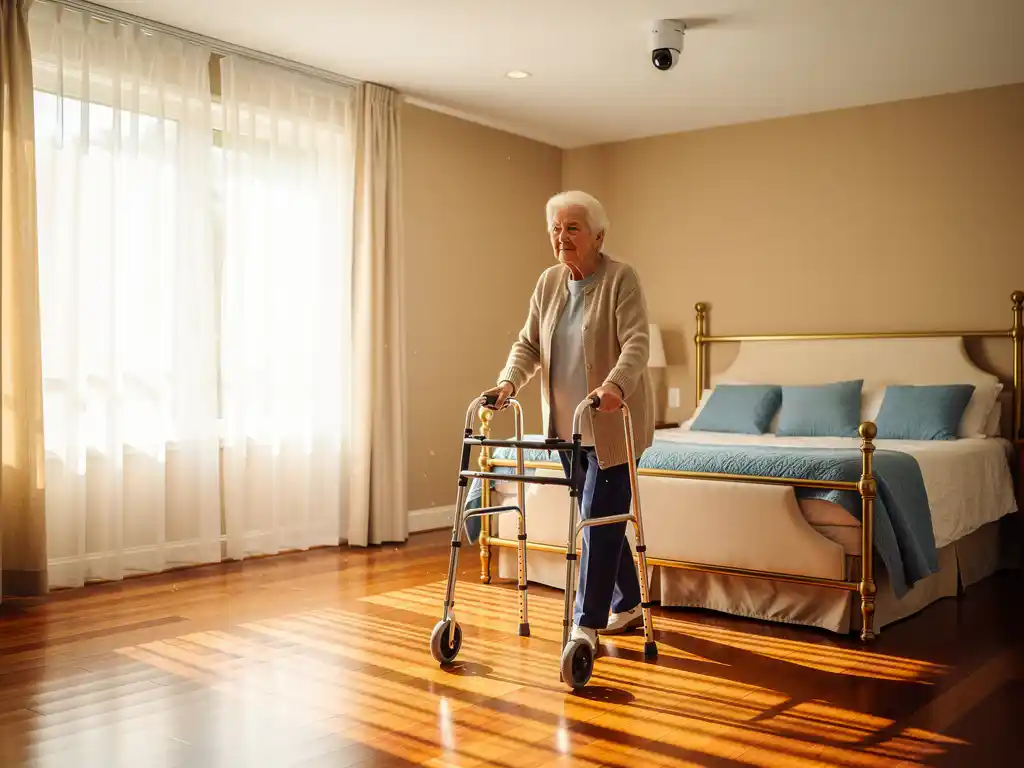
Falls are one of the greatest health risks for seniors: approximately one in three elderly people falls each year. The consequences can be far-reaching, from broken bones to loss of confidence and even death. Fortunately, technology is developing rapidly, and modern AI solutions make it possible not only to detect falls faster, but also to prevent them before they happen.
In this era of healthcare staffing shortages, fall prevention for seniors is becoming increasingly important. New technologies offer healthcare organizations powerful tools to better protect their residents while simultaneously supporting care staff in their daily work.
What is fall prevention and why is it so important for seniors?
Fall prevention for seniors encompasses all measures and technologies designed to prevent falls or minimize their consequences. It goes beyond just detecting a fall: it focuses on recognizing risk situations before something actually happens.
The urgency of fall prevention becomes clear when we look at the statistics. Falls are the leading cause of injury in people over 65 years old. Moreover, a fall can lead to a cycle of fear where seniors become less active, which actually increases their fall risk. For healthcare organizations, falls also mean higher costs due to longer hospital stays and more intensive care.
Modern fall prevention focuses on three main areas: risk analysis, environmental modifications, and technological monitoring. By combining these elements, healthcare providers can create a safer environment where seniors can remain independent longer.
How does modern AI technology for fall detection work?
Modern AI technology for fall detection uses advanced computer vision and machine learning algorithms to analyze movement patterns of seniors in real time. These systems can distinguish between normal activities and potentially dangerous situations.
The technology works by strategically placing cameras in living spaces, with AI software continuously analyzing the images. The system learns to recognize normal movement patterns and can detect deviations that indicate increased fall risk. Think of unsteady movements, sudden direction changes, or unusual gait patterns.
An important advantage of modern AI systems is their privacy-friendly approach. The images are analyzed directly by the software without staff ever seeing them. Only when the system detects a risk situation is care personnel alerted to take action.
What types of fall prevention technologies are available?
There are various types of fall prevention technologies available, each with their own strengths. Wearable sensors, such as wristbands or pendants, can measure movement and orientation, but have the disadvantage that residents must wear and charge them.
Floor sensors form another category, where pressure-sensitive mats are placed under beds or in bathrooms. These detect when someone falls, but cannot provide preventive warnings. Additionally, they can be cumbersome in daily use.
The most advanced solutions are camera-based AI systems that offer 24/7 monitoring without residents needing to wear anything. These systems can not only detect falls, but also recognize risky situations before a fall actually occurs. They analyze gait patterns, detect unsteady movements, and can even monitor lying positions to prevent pressure sores.
How accurate are modern fall detection systems?
The accuracy of modern fall detection systems has improved significantly in recent years. The best AI-based systems can now achieve accuracy with only one false alarm per 92 days on average, which is 1,000 times better than older technologies.
This high accuracy is crucial for practical usability in care environments. Too many false alarms lead to “alarm fatigue,” causing care staff to respond less alertly to warnings. Modern systems use advanced algorithms that can distinguish between real emergency situations and normal activities, such as picking up dropped objects.
Accuracy depends on various factors: the quality of the cameras, the sophistication of the AI algorithms, and the amount of training data used to develop the system. Systems specifically trained on care environments perform significantly better than general motion detection systems.
What are the benefits of automated fall prevention for healthcare organizations?
Automated fall prevention offers healthcare organizations several important benefits, including improved patient safety, more efficient staff utilization, and lower operational costs. The most important benefit is naturally protecting residents from serious injury.
For healthcare organizations struggling with staff shortages, automated monitoring is a solution. The system works 24/7, without breaks or days off, allowing care staff to be deployed more effectively. Staff no longer need to continuously make rounds, but can focus on direct care when truly needed.
Additionally, these systems help document incidents and identify patterns. This data can be used to adjust care plans and improve preventive measures. For families of residents, this provides additional peace of mind, knowing their loved ones are continuously monitored.
How we help with fall prevention for seniors
We at Kepler Vision Technologies specialize in developing AI solutions that address challenges in elderly care. Our Kepler Night Nurse software offers a complete fall prevention solution that watches over residents 24/7 with unprecedented accuracy.
Our solution offers several important benefits:
- Direct fall detection within seconds of an incident
- Preventive warnings for risky movement patterns
- Position monitoring to prevent pressure sores
- Only one false alarm per 92 days, for optimal reliability
- Complete privacy protection, where images are never viewed by humans
With more than 21 international patents and compliance with ISO 27001 and NEN 7510 standards, we guarantee the highest quality and safety. Our plug-and-play solution is easy to install and immediately deployable. Are you interested in how our AI technology can help your healthcare organization with fall prevention? Contact us for a no-obligation demonstration.
Frequently Asked Questions
How long does it take to implement an AI fall prevention system in our care facility?
The implementation of a modern AI fall prevention system usually takes 2-4 weeks, depending on the size of your facility. The installation of cameras and software is relatively quick, but the main time goes to calibrating the system for your specific environment and training your staff. Plug-and-play solutions can often be operational within a few days.
What happens if the system generates a false alarm during the night?
Modern AI systems are designed to minimize false alarms – the best systems have only one false alarm per 92 days. When a false alarm does occur, care staff can quickly verify it and the system helps learn from these situations to improve future accuracy. It’s important to have a clear protocol for handling all alarms.
Can residents disable the AI system or cover the cameras?
Most professional fall prevention systems have security measures against tampering, such as sabotage detection that warns when cameras are covered. In practice, residents usually accept the technology well when the privacy aspects are properly explained. It’s essential to educate residents and their families about the benefits and privacy protection of the system.
How does the system handle residents who use wheelchairs or walkers?
Advanced AI fall prevention systems are trained to recognize various mobility aids and account for them in their analyses. The system learns the normal movement patterns of each resident, including the use of wheelchairs, walkers, or walking sticks. This prevents unnecessary alarms and ensures accurate detection of actual risk situations.
What are the costs of an AI fall prevention system and how do they compare to the savings?
While the initial investment varies per facility and system, the savings can be substantial through reduced hospital admissions, lower insurance costs, and more efficient staff utilization. Many healthcare organizations see a payback period of 12-24 months. Additionally, some insurers may offer discounts for facilities that actively invest in fall prevention.
How does the system ensure that residents' privacy is protected?
Modern AI fall prevention systems process images directly through algorithms without humans ever seeing them. The software only analyzes movement patterns and generates warnings for deviations. Images are not stored and the system complies with strict privacy legislation such as GDPR. Transparent communication to residents and families about this privacy protection is crucial for acceptance.
Can the system also detect other health risks besides falls?
Yes, many modern AI systems can monitor other health risks besides fall detection, such as prolonged inactivity, unusual sleep patterns, or detecting lying positions that could lead to pressure sores. Some systems can even recognize distress signals or unusual behavior. This makes the investment even more valuable for overall care quality.
Related Articles
- How does staff shortage affect the workload of healthcare workers?
- What is the impact of staff shortages on productivity?
- How do you talk to your team about workload as a manager?
- What does staff shortage do to the quality of service?
- What role does innovation play in improving patient safety?
This content was generated with the help of AI and it may contain mistakes