

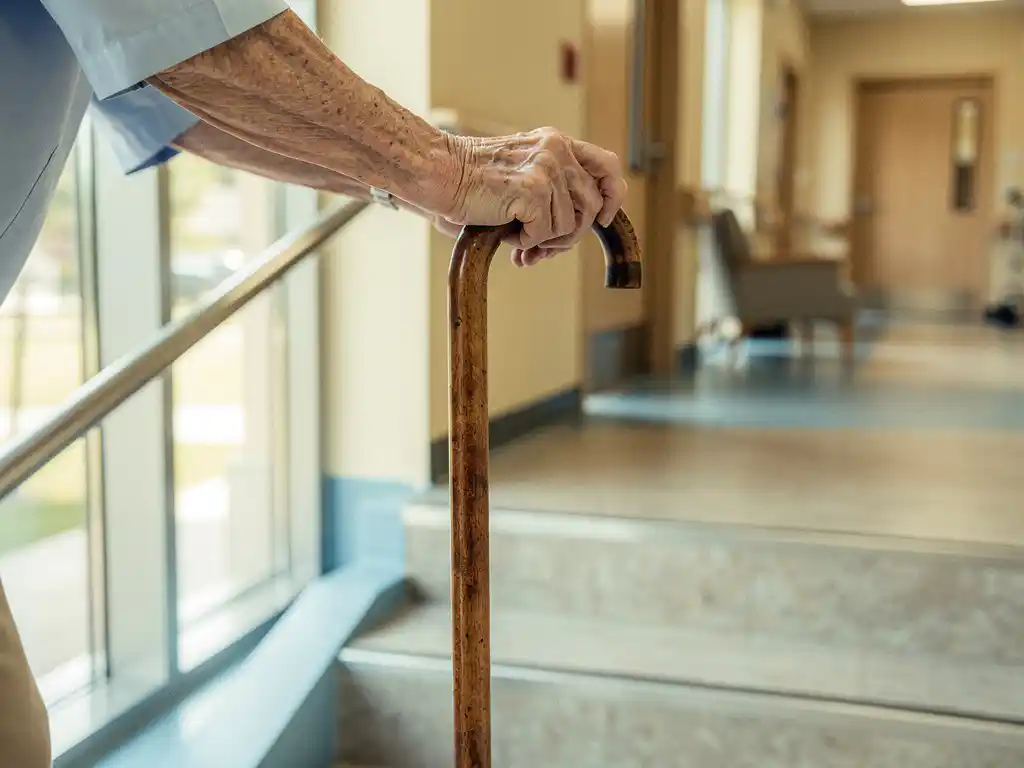
Fall prevention for elderly residents is becoming an increasingly important investment for healthcare organizations facing growing staff shortages and rising care costs. With an aging population and healthcare demand growing by 6% annually, elderly care facilities are seeking smart solutions to ensure resident safety without further increasing staffing costs. Innovative technologies make it possible to provide 24/7 monitoring at a fraction of traditional staffing costs.
Fall prevention costs vary significantly depending on the chosen approach: from simple physical modifications to advanced AI systems. For healthcare organizations, it’s crucial to look not only at the initial investment but also at the long-term savings on staff, insurance, and legal costs that effective fall prevention can deliver.
What are the average costs of fall prevention in elderly care facilities?
The average costs for fall prevention in elderly care facilities range between $500 and $5,000 per resident per year, depending on the chosen technology and approach. Basic fall prevention with physical modifications costs approximately $500-1,500 per resident per year, while advanced AI systems cost between $2,000 and $5,000 per resident per year.
Physical fall prevention includes measures such as anti-slip mats, handrails, adapted lighting, and modified furniture. These modifications have low maintenance costs but offer limited monitoring capabilities. Traditional alarm systems, such as wristband alarms, cost approximately $1,000-2,500 per resident per year, including monitoring and maintenance.
Modern, AI-based fall systems have higher initial costs but offer extensive capabilities, such as real-time detection, fall prevention, and automatic alerting. These systems can reduce total care costs by decreasing staff deployment for continuous monitoring and preventing costly injuries through rapid response.
What factors determine the costs of fall detection systems?
The costs of fall detection systems are primarily determined by technology, accuracy, installation complexity, and maintenance requirements. Advanced AI systems with high accuracy cost more than basic sensor systems but generate significantly fewer false alarms and provide better protection.
The main cost factors are:
- Technology type: Camera-based AI systems are more expensive than simple sensors but offer much more accurate detection.
- Accuracy: Systems with fewer false alarms cost more to purchase but save significantly on staffing costs.
- Installation complexity: Plug-and-play systems have lower installation costs than systems requiring extensive infrastructure changes.
- Scale: Larger installations benefit from economies of scale and lower costs per room.
- Maintenance and support costs: Cloud-based systems often have lower maintenance costs than on-premise solutions.
Privacy compliance and certifications such as ISO 27001 and NEN 7510 may increase initial costs but are essential for healthcare organizations and help prevent potential fines and legal issues.
How do costs compare to savings on staffing expenses?
Fall prevention systems can reduce staffing costs by 30-50% by reducing nighttime rounds and optimizing staff deployment. A full-time night nurse costs approximately $45,000-55,000 per year, while an AI fall system for multiple rooms costs between $2,000 and $5,000 per room per year.
The main savings come from:
- Reduced nighttime staff: AI systems can provide 24/7 monitoring without continuous staff presence.
- More efficient staff deployment: Staff only need to respond to actual emergencies instead of routine checks.
- Prevention of costly injuries: Rapid detection and response prevent serious injuries that can cause thousands of dollars in treatment costs.
- Lower insurance premiums: Proven fall prevention can lead to lower liability insurance premiums.
Organizations with high-accuracy systems that generate on average only one false alarm per 92 days experience the greatest savings, as staff are not disturbed by unnecessary alarms and maintain confidence in the system.
What are the hidden costs when implementing fall prevention?
Hidden costs in fall prevention implementation include staff training, system integration, compliance audits, and change management, which can add 20-40% to the initial investment. These costs are often underestimated but are crucial for successful implementation.
The main hidden costs are:
- Staff training and change management: $1,000-3,000 per organization for training staff and adapting work processes.
- IT integration: $2,000-8,000 for integrating new systems with existing hospital information systems.
- Compliance and audit costs: $1,500-5,000 per year for maintaining privacy and security certifications.
- Infrastructure modifications: $500-2,000 per room for network upgrades and electrical modifications.
- Backup and redundancy: $1,000-3,000 for backup systems and redundant internet connections.
Organizations that choose plug-and-play systems with comprehensive support can avoid many of these hidden costs. It’s important to inquire with vendors about total implementation costs, including training and support.
How Kepler Vision Technologies helps with fall prevention for elderly care
We provide a cost-effective solution for fall prevention in elderly care with our AI systems Kepler Night Nurse and Kepler NurseAssist. Our technology helps healthcare organizations reduce staffing costs while improving care quality through 24/7 monitoring with unprecedented accuracy.
Our solution offers:
- Exceptional accuracy: Only one false alarm per 92 days, 1,000 times better than traditional technologies.
- Complete privacy protection: Images are never viewed by humans; staff are only alerted during real emergencies.
- Plug-and-play installation: Minimal hidden costs thanks to simple implementation without infrastructure changes.
- Proven ROI: Significant savings on staffing costs through optimized monitoring and response.
- Full compliance: ISO 27001 and NEN 7510 certified for maximum security and privacy.
Discover how our fall prevention solution can help your organization save costs while improving care quality. Contact us for a free demo and cost calculation specific to your situation.
Frequently Asked Questions
How long is the payback period for an AI fall detection system?
The average payback period is between 12-24 months, depending on the size of your facility and current staffing costs. For facilities with 50+ rooms, the investment is often recouped within 12 months through savings on night staff and reduced insurance claims.
What technical requirements are needed for installing an AI fall system?
For modern plug-and-play systems, you only need a stable internet connection (minimum 10 Mbps) and standard power supply. Cameras are installed wirelessly and AI processing happens in the cloud, eliminating the need for expensive server infrastructure.
How do you handle privacy and GDPR compliance with camera-based monitoring?
Advanced AI systems like those from Kepler Vision process images locally in the camera without storing visual material. Only metadata is transmitted and staff never see actual images. This fully complies with GDPR requirements and NEN 7510 standards for healthcare.
What happens if the system goes offline or has technical problems?
Professional systems have built-in redundancy with local backup and automatic failover to mobile internet connections. During technical problems, staff receive immediate notification, and most vendors offer 24/7 technical support with response times of maximum 4 hours.
Can fall detection systems also detect other emergency situations?
Yes, modern AI systems can detect other critical situations besides falls, such as prolonged inactivity, unusual movement patterns, or residents leaving their beds. This makes the investment even more valuable through broader safety monitoring with one system.
How do I prepare my staff for the transition to automated fall detection?
Start with a pilot project in a limited number of rooms and actively involve staff in the implementation. Organize practical training, show concrete benefits like fewer false alarms, and ensure clear protocols. Most employees appreciate the technology because it makes their work more efficient.
What financing options are available for fall prevention investments?
Many healthcare organizations finance fall prevention through operational leasing ($200-400 per room per month), government innovation subsidies, or through savings on insurance premiums. Some insurers offer discounts up to 15% on liability insurance for proven fall prevention systems.
Related Articles
- How does a good employer deal with work pressure?
- What are the signs of excessive workload in the workplace?
- How do you prevent staff shortages in your organization?
- How does aging affect the labor shortage?
- What role does environmental modification play in fall prevention for older adults?
This content was generated with the help of AI and it may contain mistakes