


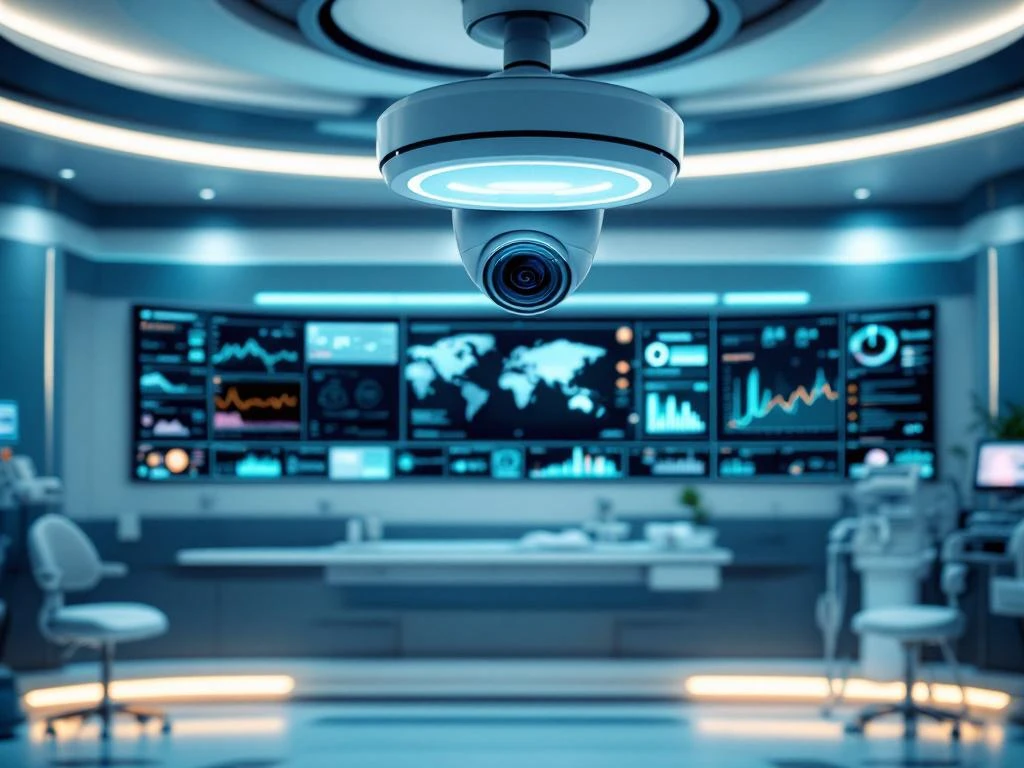
Real-time care monitoring means that healthcare facilities can monitor patients 24/7 using AI in healthcare, without constantly present care staff. This technology directly detects unsafe situations, such as falls, and automatically sends alerts to the appropriate personnel. It helps healthcare facilities address staff shortages while improving care quality.
What exactly is real-time care monitoring?
Real-time care monitoring is a system that continuously monitors patients using cameras and artificial intelligence, without requiring care staff to be physically present. It differs from traditional monitoring because it automatically recognizes dangerous situations and immediately alerts when help is needed.
Traditional monitoring methods require staff to regularly check rooms or patients to call for help themselves. This system works differently: AI in healthcare analyzes images in real-time and recognizes patterns that indicate problems. Think of a fall, a patient falling out of bed, or someone lying in an unsafe position for too long.
The technology behind real-time monitoring combines advanced cameras with machine learning algorithms. These systems learn from thousands of situations and become increasingly better at recognizing genuine emergency situations. They can distinguish between normal movements and actual problems, keeping false alarms to a minimum.
Why do healthcare facilities need real-time monitoring?
Healthcare facilities face serious staff shortages, while care demand increases by approximately 6% annually. Real-time monitoring offers a solution by deploying existing staff more effectively and ensuring patient safety, even during busy periods or night shifts.
The biggest problem in healthcare is that you cannot be everywhere at once. Care staff often must monitor dozens of patients, which means dangerous situations can go unnoticed. A patient who falls during the night may lie there for hours before someone finds them.
Automated monitoring solves this by:
- Direct detection of emergency situations, even when no one is nearby
- Faster response times, preventing complications
- More efficient staff deployment, allowing focus on direct care delivery
- Better incident documentation for quality improvement
For patients, this means greater safety and faster help when needed. For care staff, it means less stress and the assurance that no emergency situation goes unnoticed.
How does AI-driven patient monitoring work in practice?
AI in healthcare works by placing cameras in patient rooms that transmit images to intelligent software. This software analyzes movements, body postures, and behavioral patterns to determine if an emergency situation is developing. When an incident occurs, the system sends an alert to the appropriate care staff within seconds.
The system recognizes various situations that require attention. Fall detection is the most well-known function: as soon as someone falls, this is immediately detected and reported. But modern systems can do much more, such as recognizing patients trying to get out of bed when it’s unsafe, or signaling unusual movement patterns that indicate problems.
The reliability of modern AI systems is impressive. Advanced systems generate only one false alarm every three months, meaning care staff can trust the notifications they receive. This is possible because the AI learns from every situation and becomes increasingly better at distinguishing genuine emergency situations from normal activities.
When the system detects an incident, care staff receive a notification on their phone or pager with information about what’s happening and in which room. This allows them to take immediate appropriate action without wasting time checking all rooms.
What does real-time monitoring mean for patient privacy?
Modern real-time monitoring systems protect patient privacy by never allowing images to be viewed by humans. Only the AI software analyzes the camera images, and care staff only receive a notification when the system detects a problem. They only need to enter the room when actually necessary.
This is a fundamental difference from traditional camera surveillance, where people look at screens. With AI-driven monitoring, all analysis is performed automatically. The software recognizes situations and patterns but doesn’t store images that can be viewed by humans.
For healthcare facilities, compliance requirements are important. Systems must meet strict standards such as ISO 27001 and NEN 7510, which ensure the security and privacy of patient data. These certifications mean that:
- All data is securely stored and processed
- Access to systems is strictly controlled
- Privacy by design is applied in all functionalities
- Patients retain control over their data
Patients can therefore trust that their privacy remains protected while still receiving the benefits of continuous monitoring and quick help in emergency situations.
How Kepler Vision helps with real-time care monitoring
Kepler Vision provides healthcare facilities with complete AI in healthcare solutions that watch over patients 24/7 without violating privacy. Our software detects falls, fall risks, and unsafe situations with unprecedented accuracy of only one false alarm every 92 days.
Our solutions are specifically designed for the challenges healthcare facilities face:
- Kepler Night Nurse: monitors patients during night shifts, when fewer staff are present
- Kepler NurseAssist: supports care staff during the day in monitoring multiple patients simultaneously
- Plug-and-play installation: easy to implement, without complex technical modifications
- Privacy-proof: images are never viewed by humans, only by our AI software
Our systems have already been successfully implemented at international healthcare organizations and help them address staff shortages while improving care quality. We provide complete support with implementation and training of your team.
Want to know how real-time care monitoring can help your healthcare facility? Contact us for a demonstration of our solutions.
Frequently Asked Questions
How does AI detect patient emergencies?
AI analyzes camera footage in real-time, recognizing dangerous patterns like falls or unsafe positions. The system learns from thousands of situations to distinguish emergencies from normal activities.
Is patient privacy protected with monitoring cameras?
Yes, images are never viewed by humans. Only AI software analyzes footage, and staff only receive alerts when problems are detected. Systems comply with strict privacy standards.
How accurate are real-time monitoring systems?
Modern AI systems are highly reliable, generating only one false alarm every 92 days. This accuracy allows care staff to trust notifications and respond quickly to genuine emergencies.